
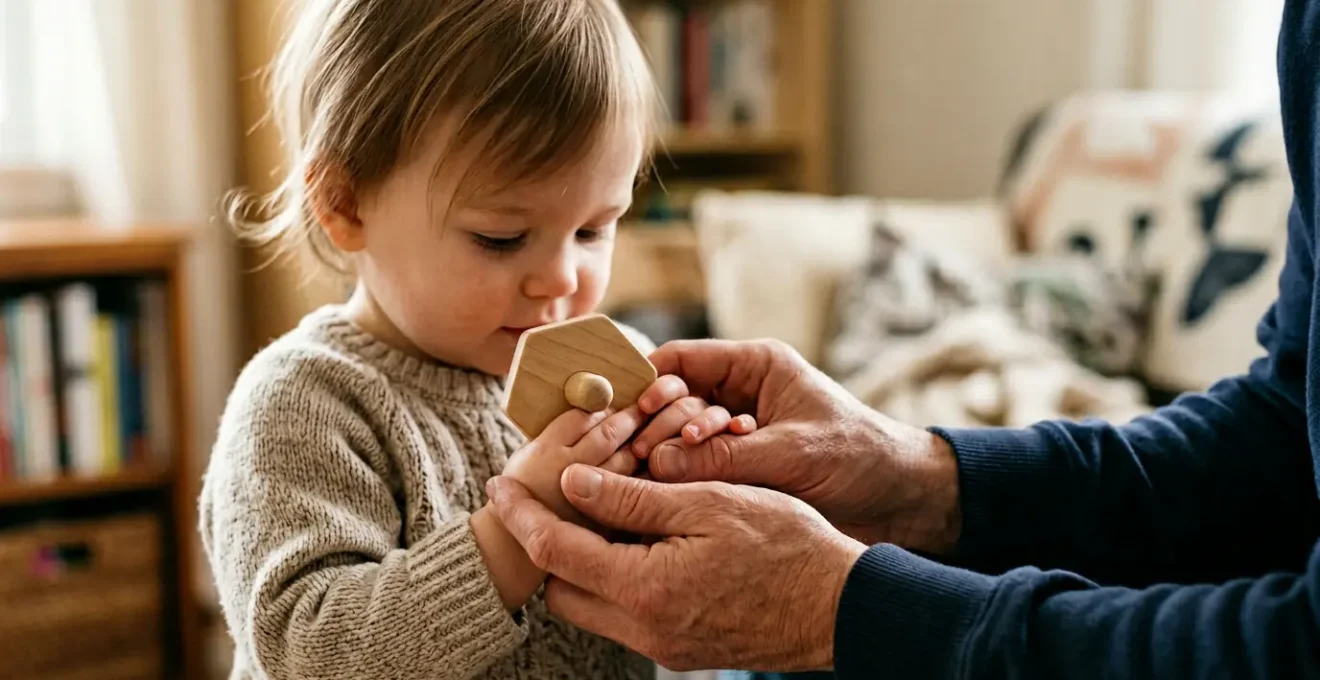
The key to promoting your child’s health isn’t tracking milestones, but learning the art of confident observation.
- Your child’s individual growth pattern (their “growth channel”) is a far better indicator of health than a single number on a chart.
- A child’s behavior—their level of play, comfort, and engagement—is the most critical vital sign, more so than the number on a thermometer.
Recommendation: Shift your focus from a checklist of ‘what’ your child should do to understanding ‘how’ they are developing, turning anxiety into empowerment.
As a pediatrician, I see it every day. A parent comes into my office, their brow furrowed with worry, holding a printout of developmental milestones. Their concern is always the same: “Is my child normal?” The anxiety that comes from comparing your child to a standardized chart is immense, and frankly, often counterproductive. We’ve been told to track everything, from grams gained to first words, but this hyper-vigilance can rob us of the joy of watching our children unfold.
The common advice to “not compare” or that “every child develops at their own pace” feels dismissive when you’re awake at 2 a.m. worrying. But what if the solution wasn’t to stop tracking, but to change *how* we track? What if we moved beyond the rigid checklist and instead learned the skill of confident observation? This is the core of a pediatrician’s work: looking at the whole child, not just a single data point. It’s about understanding their unique developmental trajectory.
This article is designed to give you that pediatrician’s perspective. We will move away from a simple ‘pass/fail’ approach to milestones. Instead, we will explore how to interpret growth, understand common fears like fevers and regression, and learn to trust your instincts as a parent. We will transform you from an anxious tracker into your child’s most skilled and confident observer.
To help you navigate these crucial topics, this guide is structured to address the most common parental concerns, providing practical tools and evidence-based reassurance at each step.
Summary: A Pediatrician’s Guide to Child Development Without Anxiety
- The Red Book (PCHR): How to Interpret Your Child’s Growth Lines?
- Regression: When Should You Worry About Lost Skills?
- Fever Phobia: When to Treat and When to Call 111?
- Squinting: Early Signs of Vision Problems in Toddlers
- First Tooth, First Visit: Why Take a Baby to the Dentist?
- Herd Immunity: Why Your Child’s Vaccine Protects Vulnerable Kids?
- Following the Lead: Deep Diving into Dinosaurs or Trains
- How to Provide Cognitive Stimulation for Babies Without Overwhelming Them?
The Red Book (PCHR): How to Interpret Your Child’s Growth Lines?
The growth chart in your child’s Personal Child Health Record (PCHR), or “Red Book,” is often the first source of parental anxiety. Seeing your child’s dot land on the 25th percentile for weight can feel like a failing grade. But these charts are not a test. Their purpose is not to rank children but to track an individual’s developmental trajectory over time. A healthy child can thrive on the 10th percentile just as much as one on the 90th.
The most important concept to grasp is the “growth channel.” We expect a child to follow their own curve, staying roughly within the same one or two centile lines over time. A sudden drop or jump across two or more major centile lines is what catches a pediatrician’s attention, not the number itself. It’s also crucial to remember that different charts yield different distributions; for instance, roughly twice as many children will be above the 98th centile for weight on the current UK-WHO charts compared to older versions. This highlights that “normal” is a wide and shifting range.
Instead of focusing on the single dot from today’s measurement, look at the pattern. Is the line of dots following the gentle upward curve of the pre-printed lines? That is the true sign of healthy, steady growth. Your role is not to force your child up the charts, but to provide a loving and nourishing environment that allows them to follow their unique, genetically determined path.
Approaching your doctor’s appointments with this knowledge allows for a more productive conversation, focusing on trends rather than a single measurement.
Regression: When Should You Worry About Lost Skills?
One of the most terrifying moments for a parent is seeing a child lose a skill they once had. Suddenly, the baby who was babbling is quiet, or the toddler who waved “bye-bye” has stopped. This is known as developmental regression. While any significant loss of skills warrants a discussion with your pediatrician, it’s important to understand that minor, temporary regressions are a very normal part of development. The brain is not a linear machine; it’s a dynamic system that often reallocates resources.
Often, a temporary pause or step back in one area occurs when the child is pouring immense energy into mastering a new, complex skill. For example, it’s very common for a baby’s babbling to decrease in the weeks leading up to them learning to crawl or walk. Their cognitive energy is simply focused elsewhere. The key is confident observation. A temporary, short-term regression in a child who is otherwise healthy, happy, and engaged is usually not a cause for alarm. A true regression is the persistent loss of a well-established skill across all contexts, and it is rare.
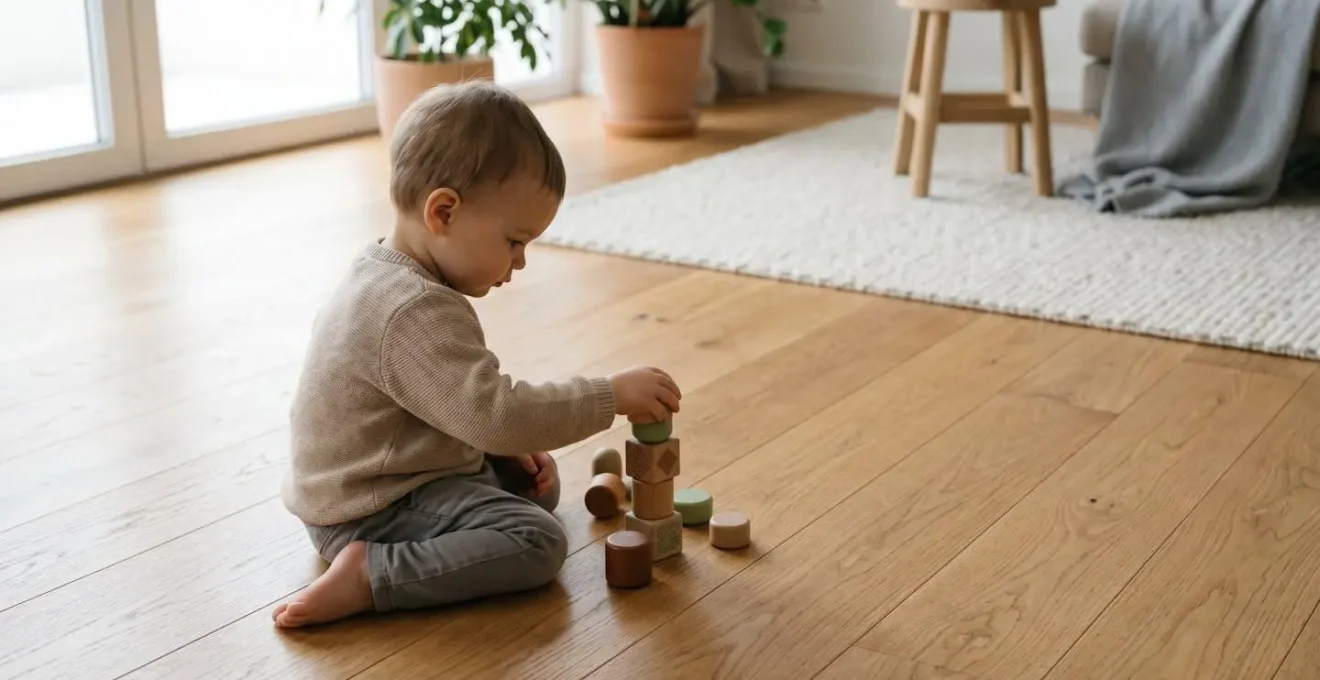
Before panic sets in, take a step back and observe the whole child. Are they still making eye contact? Are they still enjoying playtime? Are their eating and sleeping patterns stable? Often, the answer is yes, and the “lost” skill reappears a few weeks later, sometimes stronger than before. This is the brain’s natural process of consolidating learning.
Your 5-Step Audit for Developmental Worries
- Observe the Context: Is the child tired, hungry, sick, or focusing on a new major skill (like walking)? Document these factors alongside the ‘lost’ skill.
- Assess the Pattern: Is this a one-off event, or a consistent loss of a firmly established skill over several days or weeks?
- Check for Other Cues: Look at the ‘whole child’. Are they still happy, engaged, eating, sleeping well, and interacting with you?
- Stimulate, Don’t Test: Gently re-introduce the activity in a playful, no-pressure way. Avoid creating anxiety by repeatedly asking them to perform.
- Formulate Your Question: Instead of “My child stopped waving,” prepare to ask your doctor, “I’ve noticed a decreased use of waving for two weeks, while he’s been focused on learning to climb. Is this a typical pattern?”
This structured approach helps you gather useful information for your healthcare provider, transforming your anxiety into a focused, collaborative conversation.
Fever Phobia: When to Treat and When to Call 111?
Few things send a parent into a panic faster than a high number on a thermometer. This “fever phobia” is a well-documented phenomenon. Many parents harbor deep-seated fears about fever itself causing harm, and a study on fever phobia revealed that 24% of caregivers were concerned it could cause brain damage. As a pediatrician, I want to be very clear: fever is not the enemy. It is a sign that the body’s immune system is working exactly as it should be, fighting off an infection.
Our primary rule in pediatrics is to treat the child, not the number. A child with a 39.5°C fever who is still playing and taking fluids is often less concerning than a child with a 38.2°C fever who is lethargic, refusing to drink, and cannot be comforted. Your observation of your child’s behavior is a far more important vital sign than the number on the screen. The goal of giving medicine like paracetamol or ibuprofen is not to erase the fever, but to make the child comfortable enough to rest and, most importantly, to stay hydrated.
The decision to seek medical advice should be based on these behavioral cues and other factors, not just the temperature. A fever in a very young infant (under 3 months), a fever accompanied by a stiff neck, a non-blanching rash, or difficulty breathing always requires an urgent medical assessment. For older children, the key is their overall state. Are they responsive? Can you get them to drink small sips? Are they making wet diapers? Trust your observational skills.
This table helps illustrate the principle of observing behavior over temperature, but always consult a healthcare professional if you are concerned.
| Temperature Range | Child Appearance: Playful & Alert | Child Appearance: Lethargic & Refusing Fluids | Action Recommended |
|---|---|---|---|
| 38.0-38.9°C | Observe at home, ensure hydration, comfort measures | Contact healthcare provider same day | Focus on child’s behavior, not the number |
| 39.0-39.5°C | Monitor closely, offer fluids, consider antipyretics if distressed | Seek medical advice within hours | Watch for hydration, activity level, rash |
| Above 39.5°C | Antipyretics if uncomfortable, continue monitoring | Urgent medical assessment required | Behavioral observation is key indicator |
| Any age under 3 months with fever >38.0°C | Immediate pediatric evaluation required regardless of appearance | Contact pediatrician immediately | |
This approach empowers you to manage most common illnesses at home confidently and know precisely when it’s time to call for help.
Squinting: Early Signs of Vision Problems in Toddlers
A child’s vision is fundamental to their learning and interaction with the world. Yet, unlike a fever or a cough, vision problems in toddlers can be incredibly subtle. They can’t tell you “the board is blurry” or “I’m seeing double.” Instead, they adapt, and their brain works hard to compensate. This is why parental observation is so critical. Experts estimate that about 10% of preschoolers have eye or vision problems, but many go undetected until they start school.
Squinting is one of the more obvious signs, as it’s a conscious effort to focus the eyes. However, many other behavioral cues can point to an underlying issue. Does your child consistently tilt their head to one side when looking at a book? Do they cover one eye when trying to focus? Do they seem clumsier than their peers, frequently bumping into things on one side? These are not “quirks”; they are potential signs that one eye is not seeing as well as the other, or that the eyes are not working together properly.
Your home is the best vision screening laboratory. Everyday activities provide a wealth of information if you know what to look for. Paying attention to these small but significant behavioral cues can lead to early detection and intervention, which can make a lifelong difference in a child’s sight. Don’t wait for routine school screenings; your attentive observation is the first and most important line of defense.
- Consistently tilts head during story time or when looking at picture books
- Bumps into objects on one particular side more frequently
- Holds toys or books unusually close to their face
- Shows aversion to bright lights or squints excessively outdoors
- Rubs eyes frequently when not tired or sleepy
- Lacks interest in ‘I Spy’ games or activities requiring looking at distant objects
- Covers one eye when trying to focus on something
- Closes one eye when concentrating on visual tasks
If you notice any of these signs consistently, schedule a comprehensive eye exam with an optometrist or ophthalmologist who specializes in pediatric care.
First Tooth, First Visit: Why Take a Baby to the Dentist?
The recommendation to take a baby to the dentist by their first birthday or when their first tooth appears often surprises parents. What can a dentist possibly do for a baby with only two tiny teeth? The answer has very little to do with drilling and filling, and everything to do with prevention and psychology. This first visit is about setting the stage for a lifetime of positive oral health.
The primary goals are education for the parent and familiarization for the child. The dentist will provide crucial, personalized advice on cleaning those first teeth, teething discomfort, and dietary habits that prevent decay (like avoiding sugary drinks in bottles). They can also assess the baby’s oral development and spot any early issues. For the child, the visit is a low-stakes sensory experience: the feel of the chair going up and down, the friendly face in a mask, the bright light. It normalizes the environment.
This proactive approach is a powerful tool against dental fear, which is a major barrier to care in adulthood. As experts in the field emphasize, the psychological benefit is as important as the clinical one.
The primary goal is to make the dental office a normal, non-scary place for the child, which dramatically reduces future dental phobia.
– American Academy of Pediatric Dentistry, Early Childhood Oral Health Guidelines
Think of it not as a check-up for a problem, but as a welcome into a lifetime of healthy smiles, for both you and your child.
Herd Immunity: Why Your Child’s Vaccine Protects Vulnerable Kids?
When we make decisions about our child’s health, we naturally think about them as an individual. However, vaccination is one of the few medical interventions where a personal choice has a profound and direct impact on the entire community. This is because of a powerful concept called herd immunity, or community immunity. It’s the invisible shield that protects the most vulnerable among us.
Herd immunity occurs when a large percentage of a population is immune to a disease, making the spread of that disease from person to person unlikely. This effectively protects individuals who are not or cannot be vaccinated. This includes newborn babies too young to receive their first shots, people with compromised immune systems (like those undergoing chemotherapy), and the small number of people for whom a vaccine is not effective. For a highly contagious disease like measles, the World Health Organization data shows that approximately 95% of the population needs to be vaccinated to achieve this protective effect.
When your child is vaccinated, you are not just protecting them. You are contributing a “brick” to this wall of community protection. You are ensuring that the playgroup, the nursery, and the supermarket are safer spaces for everyone. This abstract idea can become deeply personal.
One parent shared how their child’s vaccination became meaningful when they learned their neighbor’s baby, too young for vaccines, was protected by the immunity coverage in their playgroup. This realization transformed vaccination from a purely personal health decision into an act of community care and social responsibility.
– Parent Perspective on Community Protection Through Vaccination
It’s a concrete way you are helping to care for every child in your community, especially those who cannot care for themselves.
Key takeaways
- Your child’s personal growth curve, their “growth channel,” is a far better indicator of health than their specific centile number.
- Observe the child, not just the symptom. Their behavior, comfort, and engagement are the most critical vital signs during an illness like a fever.
- Responsive, back-and-forth interaction (“serve and return”) is the most powerful and scientifically-backed form of cognitive stimulation for a baby.
Following the Lead: Deep Diving into Dinosaurs or Trains
At some point, many toddlers develop an intense, all-consuming interest. Suddenly, your home is filled with dinosaurs, every conversation is about train schedules, or every piece of clothing must feature a specific character. While it can be exhausting for parents, it’s tempting to try and broaden their horizons, to introduce “more educational” topics. My advice? Don’t. Lean into the obsession. These deep dives are one of the most powerful forms of self-directed learning a child can engage in.
When a child becomes an expert on Tyrannosaurus Rex, they aren’t just memorizing facts. They are building a complex mental library, organizing information into categories (herbivore vs. carnivore, Jurassic vs. Cretaceous), and developing an incredible capacity for concentration. This focused passion is a cognitive workout.
A child’s intense interest in one topic fosters deep concentration, memory skills, and categorical thinking—skills that are far more valuable than shallow exposure to many educational topics.
– Dr. Rebecca Parlakian, Zero to Three: Child Development Research
Your role is not to be a teacher, but a facilitator and an enthusiastic student. Use their passion as a gateway. A love for trains can become a lesson in numbers (counting wheels), physics (how they stay on tracks), and geography (where they go). A love for dinosaurs can spark an interest in paleontology, biology, and even art. By showing respect for their expertise and following their lead, you are not only boosting their cognitive skills but also reinforcing their self-esteem and confidence as capable learners. Here are some ways to support their interest without taking over:
- Ask open-ended questions: ‘What do you think that dinosaur ate?’ or ‘Where do you think this train is going?’
- Link the interest to other activities: Make dinosaur shapes from play-doh, count train cars, draw favorite characters.
- Visit relevant locations: Museums, libraries, or parks with themed exhibits related to their passion.
- Follow their lead during play: Let them direct the narrative and exploration rather than structuring it yourself.
- Use the obsession as a learning gateway: Point out letters (T for Truck), numbers (counting dinosaurs), or colors.
- Celebrate their expertise: Let them teach you what they know, reinforcing their confidence and communication skills.
This shared enthusiasm builds a powerful connection and shows your child that what matters to them, matters to you.
How to Provide Cognitive Stimulation for Babies Without Overwhelming Them?
In our modern world, parents are bombarded with products promising to create a “genius baby”: flashcards, educational apps, and high-contrast toys. This pressure can lead to a frantic effort to provide constant stimulation, which often results in an overstimulated, fussy baby and an exhausted parent. The good news is that the most powerful, brain-building stimulation is not something you can buy. It’s free, simple, and you’re already equipped to provide it: responsive interaction.
Babies learn about the world through their relationships. The simple, back-and-forth rhythm of interaction with a loving caregiver is the single most important factor in cognitive development. This concept, known as “serve and return,” is at the heart of early brain development. When your baby “serves” by cooing, pointing, or making a facial expression, and you “return” that serve by responding with your own words, smiles, and attention, you are physically building and strengthening neural connections in their brain.
The key is learning to read your baby’s behavioral cues. They will tell you when they are engaged and ready to interact, and when they are feeling overwhelmed and need a break. An engaged baby makes eye contact, smiles, and babbles. An overstimulated baby might turn their head away, arch their back, clench their fists, or become fussy. Learning to spot these signs of disengagement is just as important as encouraging interaction. It teaches your baby that you are a safe, responsive base they can always return to.
Case Study: The Power of Serve and Return
Research from Harvard’s Center on the Developing Child has shown how these responsive interactions build neural connections more effectively than passive exposure to educational content. A key study found that infants whose parents engaged in high levels of back-and-forth communication showed significantly stronger language skills by age 3, proving that the quality of interaction trumps the quantity of educational toys.
Embrace your role as your child’s expert observer and play partner. Your engaged, loving attention is the most powerful tool you have to support their unique and wonderful journey.