
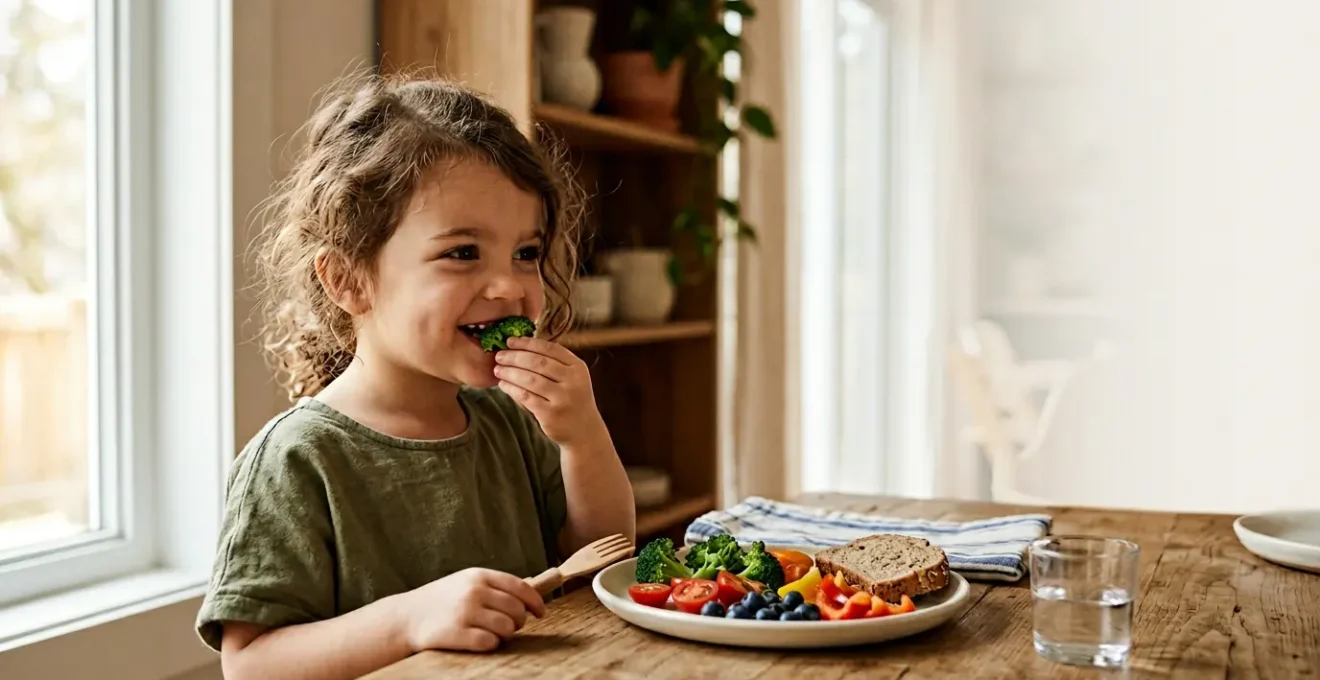
In summary:
- Shift the focus from parental control to fostering your child’s food autonomy through methods like family-style serving.
- Understand that nutrition is an ecosystem; factors like sleep have a direct hormonal impact on your child’s appetite and food cravings.
- Make mealtimes about low-pressure exploration, not a battle of wills, by using sensory games and structured, repeated exposure to new foods.
- Become a “sugar detective” to identify hidden sugars in seemingly healthy snacks and prioritize whole, unprocessed alternatives.
- Safely introduce allergens like peanuts and eggs early (4-6 months) to drastically reduce allergy risk, following a clear, step-by-step plan.
The daily struggle at the dinner table is a familiar scene for many parents: the endless negotiations, the plate of untouched vegetables, and the guilt-ridden reach for a convenient, processed snack you know isn’t ideal. You’re told to “be patient” and “just keep offering,” but in a world saturated with hyper-palatable kids’ foods, this advice often feels inadequate and frustrating. You’ve likely tried hiding vegetables in sauces or using fun-shaped cookie cutters, only to find these short-term tricks don’t build long-term healthy habits.
This approach places the entire burden on winning a daily battle of wills. But what if the key to raising a healthy eater wasn’t about control or trickery, but about architecture? What if, as a pediatric nutritionist, I told you the focus should be on building a complete nutritional ecosystem for your child? This system considers everything from their developing palate and immune system to their sense of independence and even their sleep quality. It’s about shaping their environment so that healthy choices become the natural, easy, and even desired path, rather than a source of conflict.
This guide moves beyond the platitudes. We will systematically deconstruct this ecosystem, providing evidence-based strategies for each critical component. We will explore the foundations of taste preference, demystify the science of allergens and hidden sugars, and reveal how concepts like serving style and sleep hygiene are powerful, interconnected tools in your nutritional toolkit. By the end, you’ll have a blueprint for not just feeding your child, but empowering them to become a competent, adventurous, and healthy eater for life.
To help you navigate this comprehensive approach, this article is structured to address the most critical pillars of your child’s nutritional development. You can explore each section to build a complete strategy or jump directly to the topic that meets your most pressing needs right now.
Summary: A Pediatric Nutritionist’s Guide to Healthy Eating
- Baby-Led Weaning vs Purees: Which Is Best for Oral Development?
- Hidden Sugars: How to Spot Sugar in “Healthy” Kids’ Snacks?
- Water vs Juice: Why Fruit Juice Is No Longer Recommended as a Daily Drink?
- The 14 Allergens: How to Introduce Peanuts and Eggs Safely?
- Family Style Serving: How It Encourages Trying New Foods?
- Iron-Rich Foods: How to Avoid Anemia Without Constipating Supplements?
- The Taste Test: Using Blindfolds to Explore Flavors
- Sleep Hygiene for Kids: Creating a Bedtime Routine That Works
Baby-Led Weaning vs Purees: Which Is Best for Oral Development?
The very first decision in a child’s feeding journey—purees or solid pieces—is where the architecture of their palate begins. Traditional spoon-feeding of purees offers parents precise control over intake, but it can position the child as a passive recipient. In contrast, Baby-Led Weaning (BLW), where infants 6 months and older feed themselves soft, graspable pieces of whole foods, is built on the principle of autonomy. This early independence is foundational for developing self-regulation and a positive relationship with food.
The benefits extend beyond behavior. BLW inherently exposes infants to a wider variety of textures and flavors from the start, which is crucial for oral-motor development and preventing pickiness later. In fact, one study found that baby-led weaning infants were offered 73% more vegetables than their spoon-fed peers. This broader exposure helps build a more adventurous palate. While parents often worry about choking, a core part of BLW is understanding the difference between harmless gagging (a protective reflex) and actual choking. A 2024 study on BLW confirmed that while gagging is common, choking events requiring medical intervention are extremely rare when safety guidelines are followed.
Case in Point: The Polish BLW Study
A 2024 cross-sectional study of Polish children provided strong evidence for BLW’s benefits. It found that children who followed a BLW approach showed significantly greater autonomy in their eating decisions and had more frequent exposure to varied food textures compared to their spoon-fed counterparts. While parents reported gagging (64.8%) and spitting out food (77.1%), these are considered normal parts of learning to eat. Crucially, true choking incidents were low (12.3%), with those requiring medical help being exceptionally rare (0.2%). The study concluded that BLW, when practiced with supervision, is a safe method that supports motor development and fosters lifelong healthy eating habits.
Ultimately, the “best” method can be a hybrid. You can offer a pre-loaded spoon with thick puree for the child to bring to their own mouth, alongside soft-cooked broccoli florets. The core principle to preserve is empowering the child to be an active participant in their feeding, laying the groundwork for a lifetime of food autonomy.
Hidden Sugars: How to Spot Sugar in “Healthy” Kids’ Snacks?
In our modern food environment, sugar is the master of disguise. It lurks in foods marketed as “healthy,” “natural,” or “for kids,” from fruit snacks and granola bars to flavored yogurts and cereals. The first step to managing sugar is understanding the scale of the problem. In 2017-2018, children aged 2-19 consumed an average of 17 teaspoons of added sugars daily, nearly triple the American Heart Association’s recommended maximum of 6 teaspoons. This excess sugar contributes to a host of issues, including poor diet quality, weight gain, and a palate that is trained to expect intense sweetness in everything.
To protect your child’s nutritional ecosystem, you must become a “sugar detective.” This means moving beyond the front-of-package claims and scrutinizing the Nutrition Facts label and ingredients list. Added sugars hide under at least 60 different names, including high-fructose corn syrup, agave nectar, cane juice, and dextrose. A good rule of thumb: if a form of sugar is in the first few ingredients, the product is likely a dessert in disguise.
The goal isn’t to eliminate all sugar but to be intentional about it. A cookie enjoyed as a deliberate treat is different from 15 grams of sugar unknowingly consumed in a small cup of flavored yogurt. Swapping out just a few of these “healthy impostors” for whole-food alternatives can dramatically reduce your child’s daily sugar load, recalibrate their taste buds, and make more room for nutrient-dense foods.
This table illustrates how simple swaps can make a huge difference. The key is to replace processed convenience with whole foods, giving you control over the sweetness.
| Product Category | Typical Sugar Content | Better Alternative | Sugar Savings |
|---|---|---|---|
| Flavored Yogurt (6 oz) | 15-20g added sugar | Plain Greek yogurt + fresh berries | 12-17g less sugar |
| Granola Bar | 10-14g sugar | Homemade oat bars with dates | 6-9g less sugar |
| Fruit Snacks (1 pouch) | 10-12g sugar | Whole fresh fruit | 10-12g less added sugar |
| Instant Oatmeal (flavored) | 12-15g sugar | Plain oatmeal + cinnamon + banana | 10-13g less sugar |
| Kids’ Cereal (1 cup) | 12-18g sugar | Whole grain cereal + fresh fruit | 9-15g less sugar |
Water vs Juice: Why Fruit Juice Is No Longer Recommended as a Daily Drink?
For decades, a small glass of fruit juice was considered a healthy part of a child’s breakfast. However, pediatric nutritional guidance has made a significant shift, and 100% fruit juice is no longer recommended as a routine or daily beverage. The reason is simple: juice is not the same as fruit. When a fruit is juiced, it is stripped of its most valuable component for satiety and digestive health: dietary fiber. What remains is primarily sugar and water, a combination that leads to a rapid spike in blood sugar without the corresponding feeling of fullness that whole fruit provides.
The data highlights a concerning trend. A landmark 2017 study published in Pediatrics found that children aged 2-18 consume nearly half of their total fruit intake in the form of juice. This displaces consumption of whole fruits and predisposes children to excessive caloric intake. A small 4-6 ounce serving of apple juice can contain the same amount of sugar as a can of soda, without any of the fiber, protein, or fat that would slow its absorption. This “empty” liquid sugar contributes to the over-conditioning of a child’s palate for sweetness and can displace their thirst for the single best hydrator: water.
Transitioning a child from juice to water can be challenging, but it is a critical step in building a healthy nutritional ecosystem. The goal is to make water the default, appealing option for hydration. Here are some effective strategies:
- Infuse a pitcher of water with fresh fruit slices like strawberries, oranges, or cucumber for a hint of natural flavor.
- Create fun ice cubes by freezing berries, small melon chunks, or mint leaves inside the tray.
- Offer unsweetened carbonated or sparkling water for children who enjoy the “fizz” sensation.
- Use colorful, character-themed, or “special” reusable water bottles to increase their appeal and create a sense of ownership.
- If you must, dilute juice gradually over several weeks. Start with 75% juice and 25% water, and slowly shift the ratio until you are serving mostly water with just a splash of juice for flavor, reserving full juice for rare, special occasions.
The 14 Allergens: How to Introduce Peanuts and Eggs Safely?
Perhaps no area of pediatric nutrition has undergone a more dramatic reversal than allergen introduction. The old advice was to delay exposure to common allergens like peanuts, tree nuts, and eggs until after the first year. We now know, thanks to groundbreaking research, that this approach was not only wrong but likely contributed to the rise in food allergies. The current, evidence-based recommendation is to introduce common allergens early and often, starting between 4 and 6 months of age, in line with your baby’s developmental readiness.
This paradigm shift is largely thanks to the Learning Early About Peanut Allergy (LEAP) study. Its findings were stunning: early introduction of peanut products reduced the risk of developing a peanut allergy by 81% in high-risk infants. This research demonstrates that the infant immune system can be “trained” to tolerate allergens through early, consistent exposure. This is a cornerstone of building a resilient nutritional ecosystem.
The protective effect of early peanut consumption lasted without the need to eat peanut products consistently throughout childhood and early adolescence.
– Dr. Gideon Lack, King’s College London, NIH Press Release on LEAP-Trio Study
For parents, especially those with a family history of allergies or eczema, this can feel daunting. The key is to have a methodical, safe plan. Always consult your pediatrician before starting, particularly if your baby has severe eczema or an existing food allergy. The process is not about giving a baby whole nuts (a choking hazard), but about introducing the allergen protein in an age-appropriate form, like thinning smooth peanut butter with water or breastmilk. The following checklist provides a general, safe framework for that first exposure.
Your Action Plan: First Allergen Exposure
- Consult & Assess: Speak with your pediatrician before starting, especially if your baby has severe eczema or a known egg allergy, as they are at higher risk.
- Time It Right: Introduce allergens between 4-6 months, but only after your baby tolerates a few low-risk solids (like oat cereal or avocado). Introduce at home, during daytime hours on a day when you can observe them closely.
- Start Small (Micro-Dose): For the very first exposure, begin with a tiny amount. For peanut, this could be 1/4 teaspoon of smooth peanut butter thinned with water or a single peanut puff that dissolves easily.
- Observe for 2 Hours: Watch carefully for any signs of an allergic reaction. These include hives, rash, swelling of the lips or face, vomiting, or difficulty breathing. If you see any concerning signs, contact your doctor or emergency services.
- Maintain Exposure: If the first exposure is successful, the key to building tolerance is consistency. Aim to offer the allergen (e.g., about 2 teaspoons of peanut butter) at least 3 times per week. Introduce new allergens one at a time, waiting 3-5 days between each new food.
Family Style Serving: How It Encourages Trying New Foods?
One of the most powerful and transformative strategies for overcoming picky eating has nothing to do with the food itself, but with how it is served. “Family-style serving” is the practice of placing all the meal components in shared dishes in the center of the table and allowing everyone, including young children, to serve themselves. This simple shift in logistics creates a profound shift in power dynamics, directly promoting food autonomy and reducing mealtime stress.
When you pre-plate a child’s food, you make decisions for them: what they will eat and how much. This can trigger a natural desire for control, leading to refusal. By allowing a child to build their own plate, you give them ownership. They decide whether to put broccoli on their plate and how much. Even if they choose to take only a single pea—or none at all—they have been exposed to it in a low-pressure environment. This method removes you from the role of “food police” and recasts you as a fellow diner. The pressure to “just take one bite” vanishes, and with it, much of the anxiety and conflict that fuels picky eating.
To make this strategy effective, especially for hesitant eaters, use a structured approach often called the “Rule of 3.” This ensures there is always something the child will feel comfortable eating, which is the key to making the whole meal feel safe.
- The Safe Food: Always include at least one item on the table that you know your child loves and will reliably eat. This could be plain bread, a simple pasta, cheese, or a favorite fruit. This is their safety net.
- The Familiar Food: Include an item the child is familiar with and sometimes eats. Maybe it’s roasted carrots or chicken they’ve had before without protest.
- The New/Learning Food: This is your opportunity for exposure. Add a small portion of a new or previously rejected food to a serving platter, like roasted Brussels sprouts or quinoa.
By using this method, the child feels empowered. They may only eat the “safe food” for several meals, and that is perfectly fine. The victory is the repeated, peaceful exposure to the other foods on the table, which dramatically increases the likelihood of them trying it on their own terms in the future.
Iron-Rich Foods: How to Avoid Anemia Without Constipating Supplements?
Iron is a critical micronutrient for a child’s cognitive development, energy levels, and overall growth. Iron deficiency anemia is one of the most common nutritional deficiencies in children, yet the solution isn’t always as simple as reaching for a supplement. Iron supplements are notorious for causing constipation, a side effect that can create a new set of feeding challenges and discomfort for your child. A food-first approach is the best strategy for building and maintaining healthy iron stores.
The key is to understand that not all iron is created equal. There are two types of dietary iron: heme iron (from animal sources like meat and fish) and non-heme iron (from plant sources like beans, lentils, spinach, and fortified cereals). Heme iron is more easily absorbed by the body. However, you can dramatically increase the absorption of non-heme iron by pairing it with a source of Vitamin C. This synergistic effect is a powerful tool in your nutritional arsenal, allowing you to build iron-rich meals from a variety of plant-based sources.
The following table provides concrete examples of these “power combos,” turning good iron sources into great ones.
| Iron-Rich Base Food | Vitamin C Pairing | Complete Meal Example | Why It Works |
|---|---|---|---|
| Lentil soup | Diced tomatoes | Tomato-lentil soup with whole wheat bread | Ascorbic acid in tomatoes increases iron absorption by 2-fold |
| Black beans | Bell peppers | Black bean burger with roasted red peppers | Vitamin C enhances non-heme iron bioavailability |
| Spinach | Strawberries | Spinach salad with sliced strawberries | Fruit vitamin C counteracts iron-binding oxalates |
| Fortified oatmeal | Orange slices | Oatmeal topped with fresh orange segments | Citrus doubles absorption of fortified iron |
| Chickpeas | Lemon juice | Hummus with fresh lemon dressing | Citric acid enhances iron solubility in gut |
To combat the constipation risk associated with increased iron intake, focus on foods that are rich in both iron and fiber. This dual-action approach supports iron levels while promoting digestive regularity. Here are some excellent high-iron, high-fiber options:
- Prune-sweetened oatmeal: Use pureed prunes to sweeten fortified oats, providing iron plus the natural laxative sorbitol.
- White beans and lentils: These legumes are packed with both iron and fiber. Add them to soups, stews, or pasta sauces.
- Blackstrap molasses: Just one tablespoon contains a significant amount of iron and magnesium, which aids bowel motility. Try “pirate pancakes” made with a swirl of molasses.
- Quinoa and Teff: These ancient grains are excellent sources of iron and fiber, serving as a great alternative to rice or pasta.
- Pumpkin seeds: A great snack, sprinkle on yogurt or oatmeal for an iron and healthy fat boost.
The Taste Test: Using Blindfolds to Explore Flavors
For a child who is hesitant with new foods, the simple sight of an unfamiliar item can trigger an immediate “no.” The brain’s preconceived notions and visual biases get in the way of a true sensory experience. One of the most effective and enjoyable ways to bypass this visual roadblock is to turn eating into a game of sensory exploration. Using a blindfold removes the visual pressure and encourages a child to rely on their other senses: smell, touch, sound, and, ultimately, taste.
This approach reframes the goal from “eating your broccoli” to “being a flavor detective.” It’s not about passing or failing; it’s about discovery. When a child is blindfolded and bites into a carrot stick, they might notice the loud crunch, the sweet smell, or the bumpy texture for the first time. This creates new, positive, and non-threatening neural pathways associated with that food. The focus shifts from the pressure to swallow to the fun of guessing. This low-stakes game gives them a sense of control and curiosity, two powerful drivers that are often absent in high-stress mealtime environments.
You can set up a “Sensory Exploration Station” as a fun family activity, completely separate from the pressure of a meal. The goal is interaction, not consumption. Here is a blueprint for a multi-sensory food training game:
- The Blindfolded Taste Test: Offer small pieces of 5 foods with distinct tastes: a sweet apple slice, a salty pretzel, a sour lemon wedge (or water with lemon), a bitter piece of dark chocolate or kale chip, and an umami mushroom. The child’s job is to taste and identify the flavor profile.
- The Smell Test: Place different spices (cinnamon, vanilla, basil, garlic powder) in small, opaque containers. The blindfolded child sniffs and tries to identify each one.
- The Sound Test: Prepare crunchy raw vegetables like carrots, celery, and bell peppers. With eyes closed, the child bites into each and identifies the food by its distinctive crunch.
- The Touch Test: Place different food textures in a “mystery box” (e.g., slimy cooked spaghetti, bumpy broccoli florets, smooth avocado). The child feels and describes the texture, then guesses the food.
By engaging all the senses in a playful manner, you are doing critical work in desensitizing food neophobia (fear of new foods) and building a rich library of food experiences that will serve as the foundation for a more adventurous palate.
Key takeaways
- Embrace Autonomy: Your role is to provide healthy options; your child’s role is to decide what and how much to eat. Methods like family-style serving are tools for fostering this crucial skill.
- Sleep is a Nutritional Tool: Poor sleep disrupts hunger and fullness hormones (ghrelin and leptin), leading to cravings for sugar and fat. A consistent bedtime routine is as important as a balanced diet.
- Early, Repeated Exposure is Key: Whether it’s introducing allergens between 4-6 months or offering a new vegetable 15 times, consistency in a low-pressure environment is the scientific basis for building tolerance and acceptance.
Sleep Hygiene for Kids: Creating a Bedtime Routine That Works
It may seem disconnected, but one of the most impactful levers you can pull to improve your child’s nutrition is their sleep schedule. Sleep is not just for rest; it is a critical period of hormonal regulation that directly governs appetite. When a child is sleep-deprived, their body produces more ghrelin, the “hunger hormone,” and less leptin, the “fullness hormone.” This hormonal imbalance creates intense cravings, particularly for high-sugar, high-fat foods, as the body desperately seeks a quick energy source. This makes your job of promoting healthy eating infinitely harder.
Lack of sleep increases ghrelin (the hunger hormone) and decreases leptin (the fullness hormone), leading to cravings for high-sugar, high-fat foods.
– Sleep and Nutrition Research, Healthy Eating Research Consensus Statement
Therefore, a consistent, calming bedtime routine is a non-negotiable pillar of a healthy nutritional ecosystem. This includes not only the time they go to bed, but also the foods they eat in the hours leading up to it. A large, heavy meal, or a snack high in sugar, can disrupt blood glucose levels and digestive comfort, preventing the deep, restorative sleep they need. Conversely, a small, smart snack can actually promote sleep.
This table contrasts foods that help and hinder sleep, providing a clear guide for that pre-bedtime window.
| Sleep-Promoting Snacks | Key Nutrient | Sleep-Disrupting Foods | Why to Avoid |
|---|---|---|---|
| Small bowl of oatmeal | Complex carbs + melatonin | Sugary cereal | Blood sugar spike and crash disrupts sleep cycles |
| Banana with almond butter | Magnesium + tryptophan | Chocolate or candy | Caffeine and sugar overstimulate nervous system |
| Warm milk (dairy or fortified plant-based) | Calcium + tryptophan | Heavy, fried foods | Digestive discomfort prevents deep sleep |
| Whole grain crackers with cheese | Protein + complex carbs | Citrus fruits or juice | Acidity can cause reflux when lying down |
| Greek yogurt with berries | Protein + antioxidants | Soda or sugary drinks | Caffeine and sugar prevent sleep onset |
A truly effective routine aligns with the body’s natural circadian rhythm. This involves more than just a consistent bedtime; it’s a sequence of events that signals to the body that it’s time to wind down. Implementing a circadian-aligned routine can stabilize appetite hormones for the next day, setting your child up for nutritional success.
- Consistent Dinner Time: Aim to serve the last main meal 2-3 hours before bed.
- Tryptophan-Rich Dinner: Foods like chicken, turkey, and eggs can help promote natural melatonin production.
- Hydration and Sugar Cutoff: Limit fluids 1 hour before bed and all added sugars 2-3 hours before bed.
- Light & Screen Management: Dim household lights and shut off all screens at least 1 hour before bedtime, as blue light suppresses melatonin release.
By viewing child nutrition not as a series of isolated meals but as an interconnected ecosystem, you shift from a reactive problem-solver to a proactive architect. Start by implementing just one of these strategies—perhaps family-style serving at your next dinner or a new, screen-free bedtime routine tonight. Each small change is a step towards building a resilient, healthy, and positive food environment for your child to thrive in.