
Family life can feel like a never-ending juggling act. Between school drop-offs, work deadlines, meal preparation, and bedtime battles, many parents find themselves running on empty, wondering why everyone else seems to have it together. The truth? They don’t. But what organized families do have are systems—simple, repeatable structures that reduce decision fatigue and create predictability in an otherwise chaotic world.
Organization in family life isn’t about perfection or pristine homes worthy of magazine covers. It’s about creating functional systems that help everyone in the household know what to expect, where things belong, and what their role is. When done well, family organization reduces morning stress, minimizes conflicts over chores, and frees up mental space for the moments that truly matter.
This comprehensive resource explores the core principles of family organization: from building sustainable daily routines and creating child-friendly systems, to managing the mental load, decluttering effectively, and finding work-life balance. Whether you’re drowning in toys or struggling to get everyone out the door on time, these evidence-based strategies will help you build a calmer, more organized household.
Routines are the backbone of organized family life. They create predictable patterns that help children feel secure and reduce the number of decisions parents must make each day. The most effective routines focus on the bookends of the day: mornings and evenings.
Think of morning and bedtime routines as anchors that hold the entire day in place. A solid morning routine ensures everyone leaves the house fed, dressed, and with everything they need, while a consistent bedtime routine signals to children’s bodies that sleep is approaching. The key is consistency—following the same sequence of steps in the same order each day builds neural pathways that make the routine almost automatic over time.
One of the most powerful time-saving strategies is the night before rule: anything that can be done the evening before should be. Laying out school uniforms, packing backpacks, preparing lunch boxes, and setting out breakfast items transforms frantic mornings into calm ones. This simple shift moves tasks from the highest-stress time of day to a calmer evening window.
Many families find that a flexible rhythm works better than a rigid schedule. Rather than assigning specific clock times to every activity, rhythm follows a consistent flow: wake up, eat breakfast, get dressed, brush teeth, gather belongings, leave. This approach allows for natural variation in pace while maintaining structure, reducing power struggles over “we have to leave at exactly 8:15.”
The best organization systems are ones that children can operate independently. When kids can see what’s expected, reach what they need, and return items to their proper place without adult help, you’ve created a truly functional system. This requires thinking from a child’s perspective about both visual clarity and physical accessibility.
Non-readers benefit enormously from visual charts that show the day’s sequence through pictures rather than words. A simple morning routine chart with images of a toothbrush, clothing, breakfast, and a backpack tells a child exactly what to do without requiring reading skills or repeated parental reminders. Color coding takes this further—assigning each family member a specific color for their belongings, calendar entries, and storage spaces creates instant visual recognition.
A launch pad is a designated spot near the exit where everything leaving the house lives: backpacks, shoes, jackets, keys, and permission slips. This single location eliminates the morning scramble to find scattered items. Similarly, creating specific zones for homework (a homework caddy stocked with pencils, erasers, and rulers) or meal preparation reduces movement around the house and keeps supplies within reach.
Organization systems fail when children physically cannot use them. A hamper positioned at adult height won’t collect dirty laundry from a five-year-old. Coat hooks mounted at shoulder height for adults force children to either drop coats on the floor or seek help. Functional organization requires installing hooks, shelves, and storage at heights accessible to the shortest family members who will use them.
Modern children are often overwhelmed by the sheer volume of their possessions. Research in child development suggests that fewer toys lead to deeper, more creative play—yet most families struggle with toy overflow. Effective decluttering isn’t a one-time purge but an ongoing system that manages what comes in and what goes out.
Toy rotation involves keeping only a portion of toys accessible while storing the rest out of sight. Every few weeks, you rotate which toys are available. This approach provides several benefits: it keeps play spaces manageable, makes “old” toys feel new again when they reappear, and allows children to focus more deeply on fewer options. A family might keep out building blocks, art supplies, and dolls for three weeks, then swap them for puzzles, vehicles, and dress-up clothes.
Decluttering with children requires teaching them decision-making skills rather than making decisions for them. The three-box method—Keep, Donate, Trash—gives children clear categories and control over the process. Start with easier decisions (broken toys, outgrown clothes) before tackling items with emotional attachment. The “one in, one out” rule prevents re-accumulation by requiring that when a new toy enters the home, an old one must leave.
The ten-minute tidy is a game-changing daily ritual. Set a timer for ten minutes before dinner or bedtime, play upbeat music, and have everyone reset the common spaces. This prevents clutter from accumulating into overwhelming messes and teaches children that maintenance is everyone’s responsibility. The key is keeping it short and consistent—ten minutes daily prevents the need for exhausting weekend-long cleaning marathons.
One of the most challenging aspects of family organization isn’t the physical tasks—it’s the mental load of remembering, planning, and coordinating everything. In many households, one person (typically mothers) carries the bulk of this invisible cognitive labor: remembering permission slip deadlines, tracking when kids outgrow shoes, planning meals, scheduling appointments, and noticing when supplies run low.
The mental load is the constant background processing of household needs. It’s not just doing the laundry but remembering that the detergent is running low, deciding when to shop for more, checking if there’s a sale, and ensuring it happens before you run out. This cognitive work is exhausting precisely because it’s invisible and endless. Fair division of household labor must include dividing this planning and management work, not just the execution of tasks.
Children benefit developmentally from having family jobs—age-appropriate responsibilities that contribute to the household’s functioning. These aren’t punishments but meaningful roles that build competence and belonging. A four-year-old might be the “napkin setter” who places napkins at each seat for dinner. An eight-year-old might own the job of feeding the family pet. A twelve-year-old might manage their own laundry from start to finish. Research shows that competence leads to confidence—children who contribute meaningfully to their households develop stronger self-esteem and life skills.
There’s no virtue in doing everything yourself when outsourcing certain tasks would significantly improve family wellbeing. The calculation is simple: if hiring a cleaning service, meal delivery, or ironing service costs less per hour than you value your time and sanity, it may be worth it. Many families find that outsourcing their most dreaded tasks—even just once or twice monthly—creates breathing room that makes everything else manageable.
Coordinating multiple schedules, activities, appointments, and obligations requires a central planning system that everyone can access and understand. The right system depends on your family’s needs, tech comfort, and preferences—there’s no single solution that works for everyone.
Some families thrive with a large wall calendar in the kitchen where everyone can see the week’s commitments at a glance. Others prefer digital shared calendars that send automatic reminders and sync across devices. Many families use a hybrid approach: a visual wall calendar for children and at-home reference, plus a digital calendar for parents to manage while away. The best system is the one everyone will actually use consistently.
A short weekly family meeting—perhaps fifteen minutes on Sunday evening—allows everyone to preview the week ahead, discuss potential scheduling conflicts, and address any household issues. Starting with a positive element like sharing wins or gratitude (such as adding items to a “jar of good things”) makes children more receptive. These meetings don’t need to be formal or long; they simply create a predictable time when everyone aligns on expectations.
Strategic planning can recover significant time each week. Batch cooking—preparing multiple meals at once—can save five or more hours weekly by reducing daily cooking decisions and cleanup sessions. The Sunday reset ritual involves spending an hour planning the week ahead: reviewing the calendar, meal planning, grocery ordering, and completing any preparation that will ease the coming weekdays. This upfront investment prevents daily decision paralysis.
For working parents, the boundary between professional and family life has become increasingly blurred. Creating sustainable work-life balance requires intentional boundary-setting and recognizing that you cannot do everything perfectly—choices and tradeoffs are inevitable.
When working from home, the physical separation between work and family spaces disappears, making it psychologically difficult to “leave work at work.” Successful work-from-home parents create rituals that signal the transition: closing the office door, changing clothes, or taking a short walk to mentally shift gears. Establishing clear work hours and communicating them to both employers and family members helps everyone respect these boundaries.
The saying “it takes a village to raise a child” remains true, yet many modern families lack that village. Building a support network requires intentional effort: developing relationships with neighbors, connecting with other families from school, joining community groups, or participating in family-oriented activities. Reciprocal arrangements—trading childcare, carpooling, or meal swaps—create mutual support systems that benefit everyone involved. Don’t wait for a crisis to build your village; invest in these relationships before you desperately need them.
In the daily grind of family logistics, it’s easy to focus only on what’s going wrong or what still needs fixing. Intentionally celebrating wins—both large and small—builds family resilience and positive culture. Some families keep a jar where they drop notes about good things that happened, reading them together at year’s end. Others share daily highs and lows at dinner. These practices train our brains to notice the positive amidst the chaos.
Family organization isn’t a destination you reach but an ongoing practice you refine. The systems that work beautifully for a family with toddlers may need complete overhaul when those children become teenagers. The goal isn’t perfection but creating functional structures that reduce stress, build children’s independence, and protect time for what matters most. Start with one small system—perhaps a launch pad or a morning routine chart—and build from there. Small, consistent improvements compound over time into transformation.

The secret to a sustainably organized home with kids isn’t more bins or better labels; it’s engineering systems around the physical and cognitive reality of a child. Effective systems reduce friction by making the desired action the easiest possible option…
Read more
Teaching a child to let go of their things isn’t about tidiness; it’s a crucial life lesson in intentionality and emotional literacy. Focus on positive language like “passing the fun on” instead of “getting rid of” to frame donation as…
Read more
Effective routines aren’t about control; they’re about understanding your child’s brain to reduce their cognitive load and provide emotional security. Visual aids and preparation externalize the daily plan, freeing up a child’s precious working memory and fostering independence. Connection before…
Read more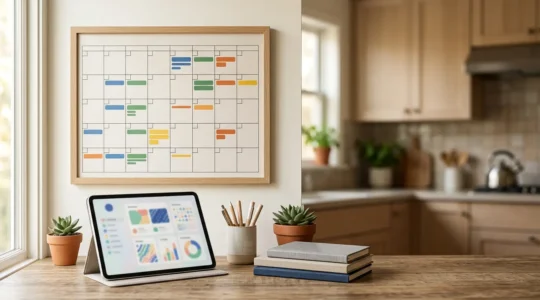
The secret to an organized family isn’t a better calendar—it’s designing a visual system that outsources your brain’s work and reduces cognitive load for everyone. Digital tools are essential for syncing data across devices, but analog systems provide crucial at-a-glance…
Read more
The secret to work-life balance isn’t more hacks, but designing a smarter “Family Operating System” that works for you. Treat invisible tasks (the mental load) as a tangible, manageable resource to prevent cognitive burnout. Strategically invest small amounts of time…
Read more