
If you’re worried about your child’s struggles with buttons or holding a pencil, the solution isn’t just more practice—it’s smarter practice. As a pediatric occupational therapist, I’ll show you how to reframe simple, fun activities into a targeted “Hand Gym” program. This guide explains the science behind each exercise, turning your anxiety into a confident action plan to build the specific, pencil-ready muscles your child needs for school success.
That one stubborn button on a coat. The crayon held in a tight, awkward fist. The frustration on your child’s face as they try to make their hands do what their brain wants. As a pediatric occupational therapist, I see these small struggles every day, and I know the parental anxiety that comes with them. You’ve probably heard the common advice: “let them play with dough,” or “practice cutting.” While well-intentioned, this advice often misses the most crucial piece of the puzzle: the “why” and the “how.”
The key isn’t simply exposing your child to these activities; it’s about transforming them into a targeted training program. Think of it as a “Hand Gym.” Just as an athlete trains specific muscle groups for their sport, we can prepare our children’s hands for the complex demands of writing and school tasks. The true power lies not in the activity itself, but in understanding the specific motor skills it develops—from hand-eye coordination to the crucial separation of the “skill” and “power” sides of the hand.
This article moves beyond generic lists. We will deconstruct each playful “exercise” to reveal the occupational therapy principles at its core. You will learn not just what to do, but why it works. Together, we’ll build a roadmap that empowers you to become your child’s first and most effective coach, building their strength, coordination, and confidence one playful movement at a time.
This guide is structured like a visit to our “Hand Gym,” with each section representing a different workout station designed to build specific, school-ready skills. Explore the full program or jump to the activity that most interests you.
Summary: Fine Motor Skills: Fun Activities to Prepare Little Hands for School
- Threading: How It Develops Hand-Eye Coordination and Concentration?
- The Pom-Pom Rescue: Using Tweezers to Save Toys from Ice
- Scissor Skills: How to Teach Cutting Safely from Snips to Shapes?
- Pegging Clothes: Strengthening the Pincer Grasp for Writing
- Sticker Art: Why Peeling Stickers Is a Serious Skill?
- Dough Gym: Strengthening Hand Muscles for Writing
- Coat and Shoes: Why Putting on Their Own Shoes Is Key for School?
- Is Your Child Ready for School? Supporting Academic Readiness and Socialization
Threading: How It Develops Hand-Eye Coordination and Concentration?
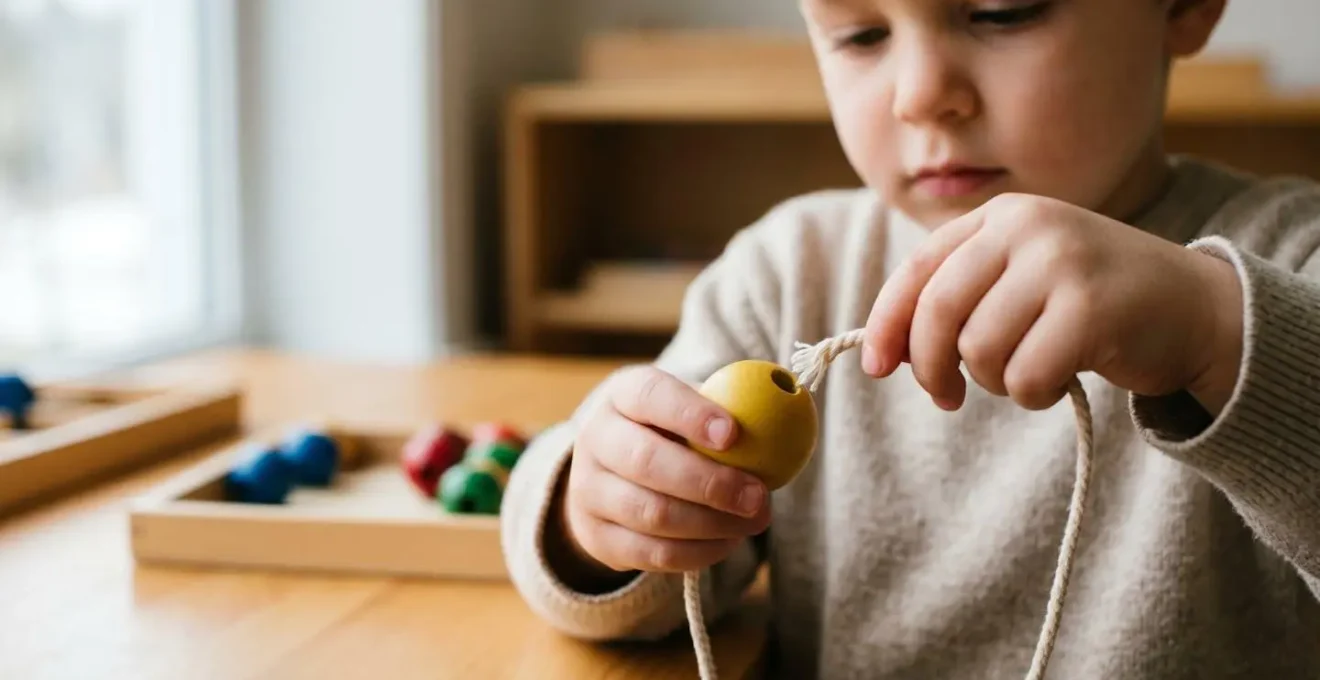
Threading is a classic fine motor activity for a reason, but its benefits go far beyond simply keeping a child busy. From an occupational therapy perspective, this is a high-level exercise in bilateral coordination. This is the skill of using both hands together for a single task, with each hand performing a different but complementary job. One hand acts as the stabilizer, holding the string taut and still, while the other acts as the worker, manipulating the bead. This teamwork is the exact same foundation needed for writing, where one hand stabilizes the paper while the other controls the pencil.
This activity is also a powerful workout for visual-motor integration—the brain’s ability to process visual information and use it to guide a motor action. Your child’s eyes must locate the hole, their brain must calculate the trajectory, and their fingers must execute the precise movement to guide the string through. This builds focus and concentration, training the brain to filter out distractions and sustain attention on a goal-oriented task.
Case Study: The Two-Handed Teamwork of Threading
Tasks like stringing beads require one hand to stabilize the string while the other threads, demonstrating what we call asymmetrical bilateral coordination. Each hand has a distinct but complementary role. According to an analysis by the NAPA Center on bilateral coordination, this developmental skill is essential for academic tasks such as holding paper steady while writing with the other hand. By practicing threading, a child isn’t just making a necklace; they are programming a fundamental motor pattern for future classroom success.
To make this “workout” effective, start with larger items to build confidence, like threading pool noodle chunks onto a rope. As your child’s coordination improves, you can progress to smaller beads and thinner strings. This progressive difficulty ensures they are always challenged but never overwhelmed, making the development of these critical skills feel like pure, satisfying play.
The Pom-Pom Rescue: Using Tweezers to Save Toys from Ice
The “Pom-Pom Rescue” is a wonderfully engaging sensory activity that doubles as a precision tool for developing the pincer grasp. Freezing colorful pom-poms in an ice cube tray and then providing your child with warm water and tweezers transforms a simple afternoon into a mission-driven “Hand Gym” workout. The primary tool here, the tweezers, is the star of the show. As Fun Learning for Kids notes, “Kids grip the tweezer tongs that come with the game like they would hold a pencil, so it is awesome for developing the fine motor skills necessary for writing.”
This activity forces the thumb, index, and middle fingers—what we call the “skill fingers”—to work together in a coordinated, three-jaw chuck grasp. This is the precursor to a mature and efficient tripod pencil grip. Squeezing the tweezers to grasp a slippery, partially-frozen pom-pom strengthens the small intrinsic muscles within the hand. This is the endurance strength your child will need to hold a pencil correctly for extended periods without fatigue.
The sensory feedback is also critical. The contrast between the cold, hard ice and the soft, yielding pom-pom provides rich tactile information to the brain. The added challenge of the pom-pom being slippery and the ice melting requires constant adjustments in pressure and grip, refining your child’s motor control and problem-solving skills in real-time. They aren’t just rescuing toys; they are building a sophisticated feedback loop between their fingers and their brain.
Scissor Skills: How to Teach Cutting Safely from Snips to Shapes?
Introducing scissors can feel daunting for many parents, but it’s one of the most beneficial activities for school readiness. Cutting is a complex skill that integrates many of the abilities we’ve already discussed. It requires immense hand-eye coordination to keep the scissors on the line, and strong bilateral coordination as the “helper hand” must continuously rotate and guide the paper while the “worker hand” cuts. The open-close motion of the scissors is a fantastic exercise for strengthening the very same hand muscles needed for writing stamina.
The importance of these underlying skills cannot be overstated. When children struggle with tasks like cutting, it can be a sign of broader developmental challenges. In fact, research highlights that 68% of children referred for learning assessments showed notable bilateral coordination difficulties, making activities like cutting a crucial diagnostic and developmental tool. The key is to introduce this skill progressively and safely, turning potential frustration into a series of rewarding accomplishments.
Start with simple, satisfying snips. Having a child snip play-doh “snakes” or drinking straws allows them to focus solely on the open-close motion without worrying about moving the scissors forward. As they master this, you can move to snipping the edge of a piece of paper to create “fringe,” and then progress to cutting along thick, straight lines. This structured approach builds muscle memory, coordination, and, most importantly, confidence.
Your Action Plan: 5-Stage Cutting Curriculum for Developing Scissor Skills
- Stage 1 – Snips (Ages 2-2.5): Practice single snips on play-doh, straws, or thick paper strips without forward movement to build the open-close motion.
- Stage 2 – Fringing (Ages 2.5-3): Make short snips toward a line on the edge of paper, creating a fringe effect without cutting through.
- Stage 3 – Straight Lines (Ages 3-4): Cut across a 6-inch strip of paper in a forward motion, staying within ½ inch of the line.
- Stage 4 – Curved Lines & Circles (Ages 4-5): Cut along curved lines and basic circular shapes, developing controlled paper rotation with the helper hand.
- Stage 5 – Complex Shapes (Ages 5-6): Cut intricate shapes including squares, triangles, and multi-sided figures with precision and continuous motion.
Pegging Clothes: Strengthening the Pincer Grasp for Writing
Hanging laundry might seem like a chore to adults, but for a child, it’s a high-impact workout station in our Hand Gym. The simple act of using a clothespin is a surprisingly complex and effective exercise for building the foundational components of pencil control. From an OT perspective, we can break the action down into three distinct, muscle-building phases that directly translate to handwriting skills.
First is the wide grasp to open the peg. This movement stretches the small muscles of the hand (the interossei and lumbricals), building flexibility and range of motion. Think of this as the “stretching” phase of the workout. Second is the sustained pinch required to hold the peg open while moving it to the clothesline. This develops isometric hand strength, which is the exact type of endurance needed to maintain pressure on a pencil without the hand cramping or tiring quickly. This is the “strength training” phase.
Finally, the precise placement of the peg onto the line requires sophisticated hand-eye coordination and motor planning. The child must visually target the spot and execute a controlled movement to attach the peg successfully. This is the “coordination and skill” phase. When you combine these three actions, the humble clothespin becomes a comprehensive training tool that prepares the hand for the dynamic and demanding task of forming letters.
Case Study: The Three Actions of Clothespin Use
As identified by occupational therapists at the NAPA Center, the process of using a clothespin is a mini-workout in itself. The wide grasp stretches muscles, the sustained pinch builds isometric strength for pencil pressure, and the precise placement hones hand-eye coordination for letter formation. This sequence comprehensively prepares the hand for the complex demands of handwriting, turning a simple household chore into a powerful therapeutic activity.
Sticker Art: Why Peeling Stickers Is a Serious Skill?
Stickers are a universal currency of childhood joy, but their developmental value is often underestimated. The simple act of peeling a sticker from its backing is one of the best exercises for developing a critical fine motor skill: hand separation. This is the ability to use the “skill side” of the hand (the thumb, index, and middle fingers) independently from the “power side” (the ring and pinky fingers).
When a child peels a sticker, they must use their thumb and index finger in a precise pincer grasp to lift the edge. Simultaneously, the other fingers must tuck into the palm to stabilize the hand. This separation is the absolute foundation of a mature and efficient pencil grasp, where the skill fingers manipulate the writing tool while the power fingers provide a stable base against the paper. As OT experts explain, this is a non-negotiable step in handwriting development.
Peeling a sticker forces a child to use the ‘skill side’ of the hand (thumb, index, middle finger) independently from the ‘power side’ (ring and pinky fingers, which tuck away). This separation is the foundation of a mature and efficient tripod grasp.
– NAPA Center Occupational Therapists, 35 Fine Motor Activities: Therapists’ Ultimate List
You can easily scale this activity to match your child’s ability, creating a progressive workout. Start with large, puffy stickers that are easy to grip. As their skills improve, move to standard stickers on a sheet, and finally, challenge them with tiny, delicate stickers from a roll. Each level demands a greater degree of precision and control, systematically building the fine-tuned dexterity needed for school.
The following table, based on recommendations from the NAPA Center’s list of activities, can help you structure this progression.
| Skill Level | Sticker Type | Size & Characteristics | Motor Skills Developed |
|---|---|---|---|
| Beginner | Puffy Stickers | Large (1-2 inches), thick, raised texture | Basic pincer grasp, gross hand coordination |
| Intermediate | Sheet Stickers | Medium (0.5-1 inch), standard paper backing | Hand separation, controlled peeling motion |
| Advanced | Small Detail Stickers | Small (under 0.5 inch), delicate, on continuous roll | Refined pincer precision, sustained finger control |
Dough Gym: Strengthening Hand Muscles for Writing
If the Hand Gym had a warm-up area, it would be the play-doh station. While “play with dough” is common advice, we can elevate it from a simple pastime to a targeted muscle-building routine. The unique resistance of dough provides excellent proprioceptive feedback—the sense of how much force the muscles are using—which is crucial for learning to regulate pencil pressure. By guiding the play, we can isolate and strengthen all the tiny intrinsic muscles of the hand.
Let’s move beyond random squishing and introduce specific “exercises” in our Dough Gym:
- The Snake Roll: Have your child roll dough into long “snakes” using the palms of their hands on the table. This is a great bilateral coordination exercise. Then, challenge them to roll tiny snakes using only their fingertips, which isolates finger dexterity.
- The Pancake Press: Encourage your child to press a ball of dough flat using the palm of their hand. This action strengthens the palmar arches, which are essential for cupping the hand around a pencil.
- The Pinch and Pull: Roll a snake and have your child pinch off small pieces using their thumb and index finger. This directly works the pincer grasp and builds the strength needed for tasks like fastening snaps and zipping.
- The Squeeze and Hide: Hide a small object like a bead or a coin inside a ball of dough and have your child squeeze and manipulate the dough to find it. This builds overall hand strength and endurance.
By framing these actions as a fun workout, you’re not only building hand strength and dexterity but also teaching your child about sustained effort and motor planning. They are learning to use their hands with purpose and power, creating the muscular foundation that will support them throughout their academic journey.
Coat and Shoes: Why Putting on Their Own Shoes Is Key for School?
The morning rush to get out the door is a universal parenting challenge. It can be tempting to quickly do up your child’s coat and shoes for them, but resisting that urge is a powerful investment in their school readiness. Self-care tasks like dressing are a daily, real-world application of fine motor skills. They are the “final exam” of our Hand Gym, requiring strength, coordination, sequencing, and problem-solving all at once.
When a child zips a coat, they are practicing the pincer grasp to hold the pull, bilateral coordination to hold the two sides of the jacket together, and sustained motor control to pull the zipper up. When they tie their shoelaces, they are performing one of the most complex bilateral tasks, requiring intricate motor planning and working memory. These aren’t just “life skills”; they are high-level academic-readiness exercises. The need for these skills in the classroom is significant; studies show that kindergarteners spend on average 46% of their in-class time engaged in fine motor activities. A child who arrives at school already practiced in these skills has a distinct advantage.
Different fasteners offer different levels of challenge, creating a natural developmental curriculum right in your child’s closet. Understanding this hierarchy allows you to support your child at their current level and gently encourage them toward the next.
This hierarchy demonstrates how mastering one fastener builds the skills needed for the next, directly transferring to academic readiness.
| Fastener Type | Age Mastery | Motor Skills Required | Academic Transfer Benefit |
|---|---|---|---|
| Velcro | 2-3 years | Basic pull strength, minimal precision | Low – limited fine motor development |
| Large Snaps | 3-4 years | Pincer grasp, alignment skills | Medium – builds hand strength and coordination |
| Large Buttons | 4-5 years | Bilateral coordination, sustained pinch | High – directly transfers to pencil control |
| Zippers | 4-5 years | Pincer grasp, continuous fine motor control | High – develops hand-eye precision |
| Shoelaces | 5-6 years | Complex bilateral coordination, sequencing | Very High – builds working memory and motor planning |
Key Takeaways
- Purposeful Play: Reframe everyday activities into a targeted “Hand Gym” by understanding the specific skill each one develops (e.g., pincer grasp, bilateral coordination).
- Progression is Key: Start with simpler versions of an activity (large beads, puffy stickers) and gradually increase the difficulty to build skills and confidence without frustration.
- Process Over Product: The goal isn’t a perfect necklace or a perfectly cut circle; it’s the development of muscle strength, coordination, and concentration that happens during the process.
Is Your Child Ready for School? Supporting Academic Readiness and Socialization
The question of “school readiness” often brings to mind academic benchmarks like knowing letters and numbers. However, from a developmental perspective, true readiness is built on a foundation of physical and social-emotional skills. A child who can confidently manage their own coat and lunchbox, who can sit and engage with materials without their hands tiring, and who can participate in art projects alongside their peers is a child who is ready to learn. The fine motor skills we’ve explored are the bedrock of this practical independence and social participation.
It’s natural to have concerns, especially if you notice your child struggling. It’s important to know you’re not alone and that these challenges are common. Several studies estimate that between 10% and 24% of preschool-aged children have fine motor skill deficits. The key is not to panic, but to take proactive, playful action. The activities in this Hand Gym are not just about preparing for writing; they are about building a child’s sense of competence and agency. Every sticker peeled and every bead threaded is a small declaration of “I can do it!”
In our tech-saturated world, the value of these hands-on, manipulative activities is higher than ever. Research increasingly shows a connection between time spent on real-world fine motor tasks and the development of a proper pencil grip. By consciously choosing to build these “workouts” into your daily routine, you are giving your child a profound gift that screens cannot replicate: the physical dexterity and mental focus to succeed in a classroom environment.
Start today. Choose one activity from our Hand Gym that feels fun and achievable for you and your child. See yourself not just as a parent, but as their most important coach, turning moments of potential frustration into opportunities for connection, growth, and joyful learning.