
In summary:
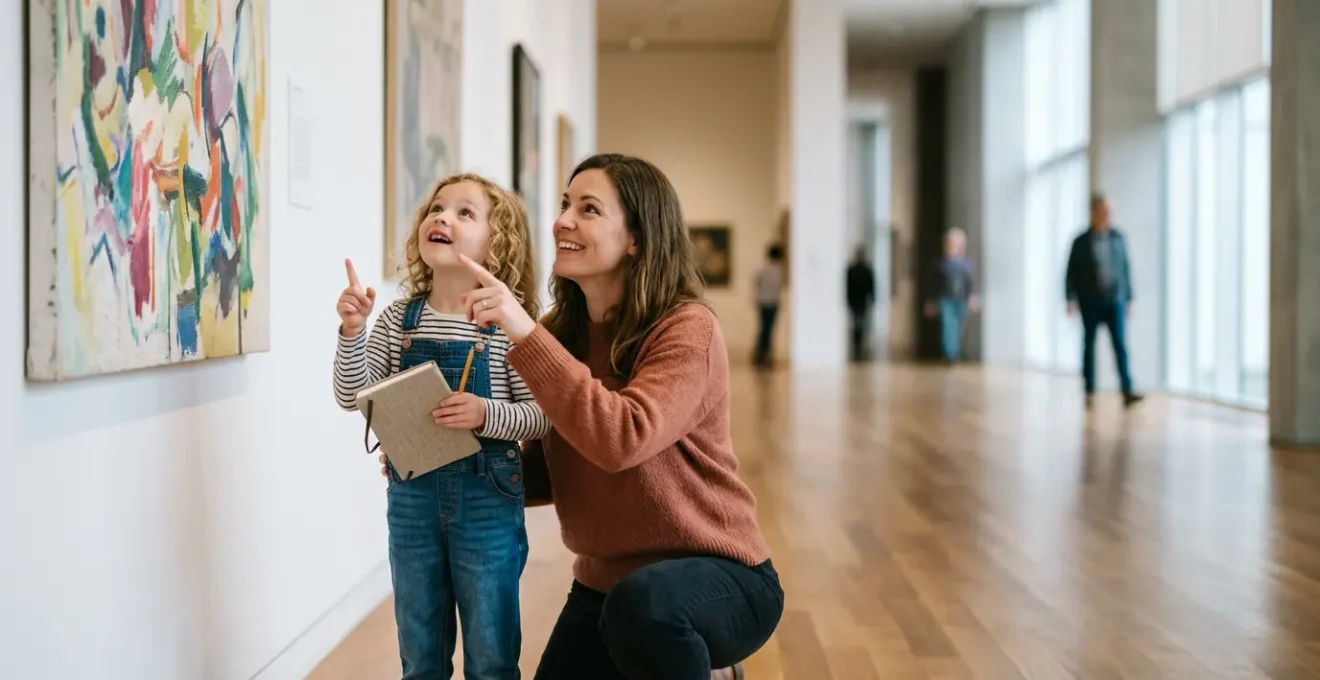
- Transform museum trips from passive viewing into an active quest by preparing with online resources and setting a “mission.”
- Use games like “Museum Bingo” and storytelling prompts to keep children actively engaged and observing their surroundings.
- Respect a child’s cognitive limits with short visits (max 90 minutes) and a “one-activity per day” rule to ensure the experience ends on a high note.
- Encourage drawing over photography, as studies show it dramatically improves memory and detailed observation.
- Focus on asking open-ended questions like “What’s going on in this picture?” to spark curiosity and build child agency.
The scene is familiar to many parents: you’re standing in a beautiful museum gallery, trying to absorb a masterpiece, while your child is pulling at your sleeve, complaining of boredom, or heading towards a full-blown meltdown. The dream of a culturally enriching family outing quickly dissolves into a stressful exercise in damage control. Many will tell you to simply “keep it short” or “bring snacks,” but this advice only treats the symptoms, not the cause of the problem.
As a museum educator, I’ve seen countless families struggle with this exact scenario. The common mistake is approaching a museum as a place for passive consumption, a quiet hall where children are expected to look and listen. But what if the secret wasn’t just about surviving the visit, but transforming it entirely? The real key is to shift from a parent-led tour to a child-led cognitive adventure. It’s about understanding the simple psychological triggers that turn passive viewing into active engagement and prevent the mental fatigue that leads to meltdowns.
This guide moves beyond the basic tips. We will explore proven strategies that leverage a child’s natural curiosity. We’ll cover how to prepare for success before you even leave the house, turn the visit into a captivating game, use specific questioning techniques to foster critical thinking, and structure your time to create positive, lasting memories. By applying these methods, you can reframe the museum experience as an exciting mission rather than a chore.
This article provides a complete roadmap for making your next cultural visit a success. Below is a summary of the key strategies we’ll explore to help you build fun, engaging, and meltdown-free museum adventures with your children.
Summary: A Guide to Meltdown-Free Museum Adventures
- The Pre-Visit: Looking at Pictures Online to Build Excitement
- Museum Bingo: Turning a Gallery Visit into a Treasure Hunt
- Short and Sweet: Why 90 Minutes Is the Max for Young Kids?
- Visual Thinking: Asking “What’s Going On in This Picture?”
- Sketchpads: Why Drawing Is Better Than Taking Photos?
- The One-Activity Rule: Avoiding Overtired Kids on Holiday
- Music Painting: Expressing Energy Through Brushstrokes
- Weekend Getaways: Planning Stress-Free Family Trips in the UK
The Pre-Visit: Looking at Pictures Online to Build Excitement
A successful museum visit begins long before you step through the doors. The goal of the pre-visit is to transform the unknown into the familiar, turning a potentially overwhelming space into a field of exciting discoveries. When a child knows what to expect and has a mission, anxiety decreases and child agency—their sense of control and purpose—increases dramatically. Instead of being dragged along, they become the leader of an expedition.
Start by exploring the museum’s website together. Don’t just browse aimlessly; treat it like a mission briefing. Identify three or four specific artworks, artifacts, or exhibits that you will hunt for during your visit. You can print out images of these “targets” and create a simple folder for your child. This simple act reframes the entire experience from “let’s go look at art” to “we need to find the painting of the ship in a storm!”
A particularly effective strategy is the postcard scavenger hunt. This involves a quick stop at the museum gift shop *first*. Let your child choose a few postcards of artworks that catch their eye. The visit then becomes a real-life treasure hunt to find the original pieces matching their cards. This gives them ownership over the experience and a tangible goal to focus on, turning them from passive spectators into active participants. Connecting the themes in the art to movies, books, or stories they already love also helps build an emotional bridge to the work before they even see it in person.
Museum Bingo: Turning a Gallery Visit into a Treasure Hunt
Once inside the museum, the primary challenge is to encourage children to look closely and thoughtfully. A child’s natural mode is to scan and move on, but the richness of a museum experience lies in detailed observation. This is where gamification becomes a powerful educational tool. “Museum Bingo” or a scavenger hunt is not just a distraction; it’s a framework for active engagement, guiding a child’s eyes toward details they would otherwise miss.
Instead of creating a list of specific objects to find, design your bingo card around concepts, emotions, and elements. This encourages interpretation rather than just identification. A well-designed card can become a fantastic tool for developing visual and emotional literacy. Some powerful ideas include:
- Emotion Bingo: Create squares with prompts like “Find someone who looks happy,” “Find a painting that feels mysterious,” or “Find a person who seems worried.” This teaches children to read visual cues and empathize with subjects in the art.
- Sensory Bingo: Use prompts that engage other senses, such as “Find a color that looks warm,” “Find a texture that appears rough,” or “Find a picture where you can almost hear a sound.”
- Art Elements Hunt: Include squares for “An artist’s signature,” “A sculpture made of bronze,” “A frame decorated with gold,” or “A painting that tells a story.” This introduces basic art history concepts in a playful way.
These games work because they provide structure and a clear, achievable goal. The thrill of the hunt keeps energy levels high and focuses attention. Research into interactive exhibits has shown impressive results, confirming that when children can actively participate rather than just observe, their engagement and learning skyrocket. The simple act of searching for “a dog” or “a baby” can lead to discovering a masterpiece.
Short and Sweet: Why 90 Minutes Is the Max for Young Kids?
One of the most common mistakes parents make is trying to “get their money’s worth” by seeing everything. This inevitably leads to exhaustion, frustration, and meltdowns. For young children, a museum is an intensely stimulating environment. Every new room presents a flood of new information, colors, and concepts, leading to significant cognitive load. Their brains are working overtime to process it all, and their attention spans are naturally short. A good rule of thumb for children under 10 is a maximum visit of 90 minutes.
The goal is not to see everything, but to enjoy a few things deeply. It’s far better to have a joyful 60-minute visit focused on one or two galleries than a miserable three-hour marathon through the entire museum. This philosophy is supported by a well-documented psychological principle.
An experience is remembered by its peak moment and its end. The goal is to end the visit on a high note before exhaustion sets in, ensuring the lasting memory is positive.
– Daniel Kahneman, Peak-End Rule research
This “Peak-End Rule” is crucial. If the visit ends with a tired, crying child being dragged out, that negative feeling will become the dominant memory of the day. By leaving while everyone is still having fun, you cement the positive “peak” moments—like finding a painting from their postcard hunt—as the defining memory. Scheduling a planned break at the museum cafe or a quiet bench can also help reset energy levels and extend this window of positive engagement.
Knowing when to stop is just as important as knowing how to start. This approach ensures that the child’s association with museums is one of fun and discovery, not exhaustion. They will be excited to return, which is the ultimate goal.
Visual Thinking: Asking “What’s Going On in This Picture?”
As an educator, the most powerful tool I use in a gallery is not stating facts, but asking questions. The instinct for many parents is to read the label and explain the artwork to their child. This positions the parent as the expert and the child as a passive recipient of information. To truly spark curiosity, you must reverse this dynamic. The goal is to empower children to construct their own meaning by using Visual Thinking Strategies (VTS).
The core of VTS is a series of simple, open-ended questions. Instead of asking “Do you like it?” (a yes/no question), or “Who is the artist?” (a factual question), you start with a broad prompt: “What’s going on in this picture?” This question has no right or wrong answer. It invites observation and interpretation. Follow up with questions like “What do you see that makes you say that?” which encourages them to provide visual evidence for their ideas. The framework is simple yet profound:
- What do you SEE? (Pure observation, listing objects, people, colors.)
- What do you THINK is happening? (Interpretation and storytelling.)
- What does it make you WONDER? (Sparks curiosity and further questions.)
This method turns children from viewers into creators. You can even use a “reporter method” by giving your child a pretend microphone to “interview” a person in a portrait. This act of storytelling builds a personal connection to the art and dramatically increases engagement and confidence.
Case Study: The Power of Storytelling and Agency
A multi-phase project at a UK science museum demonstrated the power of this approach. The study found that when children were encouraged to use their imagination and create stories about unfamiliar artifacts, their agency and engagement increased significantly. The research concluded that adults play a crucial role in facilitating this by asking open-ended questions that empower children to make their own sense of the exhibits. As one study on child agency in museums highlighted, this process of storytelling helps children connect new information to their existing knowledge, making the experience more memorable and enjoyable.
Sketchpads: Why Drawing Is Better Than Taking Photos?
In our digital age, the first impulse when seeing something interesting is often to pull out a phone and take a picture. However, when it comes to learning and memory, this can be counterproductive. Encouraging a child to sketch an object, even if it’s just a simple doodle, is a far more powerful tool for engagement than taking a photograph. The reason lies in how our brains process information.
Taking a photo is an act of outsourcing memory. The brain understands that the image will be stored externally, so it doesn’t need to work hard to retain the details. Drawing, on the other hand, is an act of active observation and processing. To draw something, a child must look closely at its lines, shapes, and textures. They must make decisions about what details to include and how to represent them. This process forces a deeper level of engagement with the artwork.
Scientific research backs this up powerfully. In fact, University of Waterloo research found that drawing enhanced memory significantly more than re-writing notes, visualizing, or even just looking at images. The act of translating visual information into motor movements with a pencil creates a much richer memory trace. Conversely, relying on digital media can have the opposite effect. For example, a recent study on digital media in museum education revealed that participants who merely observed objects exhibited considerably better memory performance than those who used digital media to photograph them.
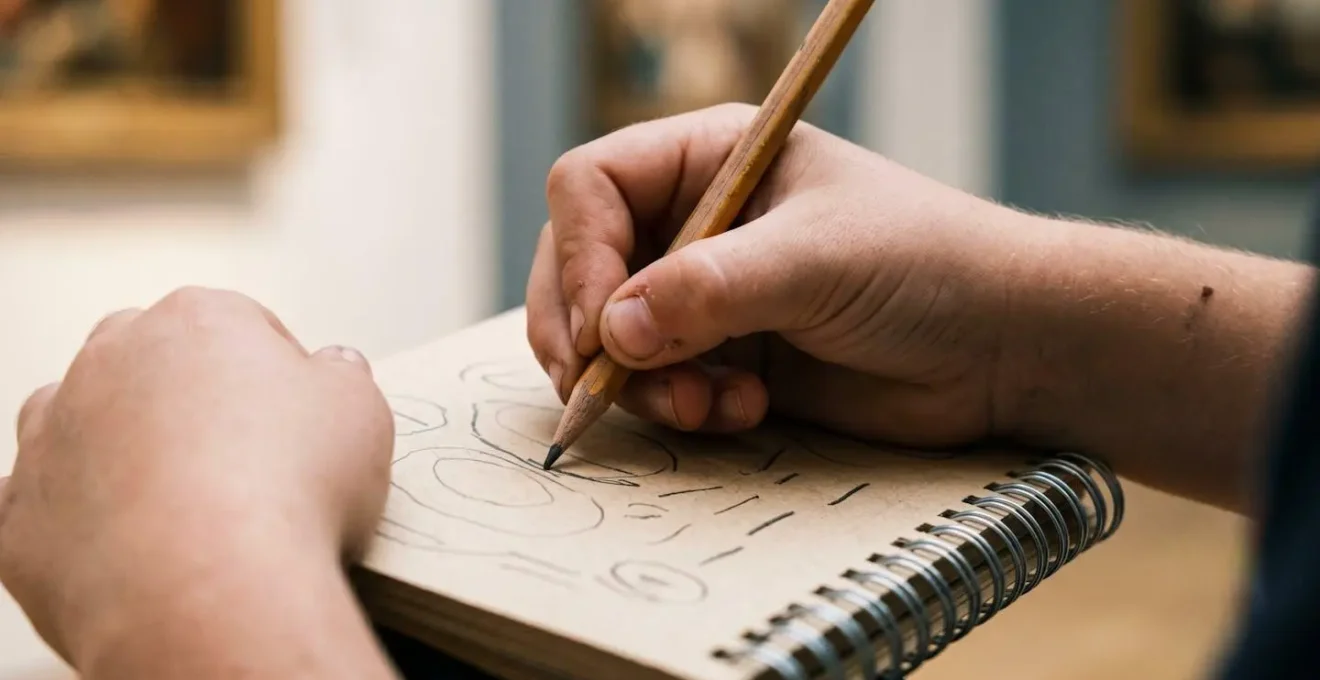
A small, inexpensive sketchbook and a pencil can be the most valuable tools you bring to a museum. It’s not about creating a masterpiece; it’s about the process of looking. Encourage your child to draw one detail that interests them from a painting, or to sketch the overall shape of a sculpture. This simple activity transforms them from a consumer of images into a creator of them.
The One-Activity Rule: Avoiding Overtired Kids on Holiday
The principle of prioritizing quality over quantity extends beyond the walls of a single museum. When on a family holiday or even just a day trip, the temptation is to pack the schedule with as many activities as possible. A morning at the museum, followed by a park, then a historical monument, and finally a special dinner can seem like a great way to maximize your time. In reality, it’s a recipe for exhaustion and sensory overload for everyone, especially children.
This is where the “One-Activity Rule” becomes a family’s best friend. The rule is simple: on any given day, designate one “Main Event” that will receive the family’s peak energy and attention. All other activities for that day should be low-key, relaxing, and optional. If you plan to visit a museum, make that the star of the day. Don’t try to squeeze it in between two other demanding outings.
Implementing this rule requires a strategic approach to planning. First, position the museum visit as the central focus of the day. Follow it with a “thematic cool-down” activity that is low-energy but reinforces the experience, like going to a nearby cafe to sketch what you saw or reading a book related to an exhibit. This allows for mental processing and rest. Within the museum itself, you can apply a micro-version of this rule: focus on one room at a time, and don’t move on until everyone is ready. This prevents the rushed, exhausting “grand tour” mentality.
Of course, basic needs are paramount. Ensure children are well-fed and rested before you even begin your main activity. A hungry or tired child has zero capacity for cultural enrichment. The core philosophy is to do less, but enjoy it more. It is always better to explore one small section of a museum in a memorable, joyful way than to see everything with a miserable family in tow.
Music Painting: Expressing Energy Through Brushstrokes
Learning is most effective when it is a multisensory experience. Museums are primarily visual environments, but engaging other senses can dramatically deepen a child’s connection to the art. One of the most accessible ways to do this is by linking the visual world of a painting to the auditory world of music. This approach, sometimes called “synesthesia,” helps children understand abstract concepts like mood, energy, and emotion in art.
A simple yet powerful activity is “Reverse Synesthesia.” Stand in front of an abstract painting and ask your child, “If this painting were music, what would it sound like? A quiet, slow lullaby or a loud, fast rock song? Why?” This encourages them to look at the artist’s use of color, line, and composition as expressions of energy and feeling. A painting with jagged, red lines feels very different from one with soft, flowing blue shapes.
Case Study: Children as ‘Experiencers’
Research evaluating engagement in a city museum found that families consistently requested more interactive and sensory experiences. The study argued that museums should view children as “experiencers” rather than just learners. When opportunities for multisensory engagement are created—connecting visual art to sound, movement, and touch—children’s participation, inclusion, and recall all increase significantly. This approach makes the museum’s collection more relevant to a child’s lived experience.
This concept can also be used as a post-visit reinforcement activity. At home, play a piece of music that you feel matches the “mood” of a favorite painting from your visit. Give your child some paint or crayons and have them create their own artwork based on what the music makes them feel. This helps solidify the memory of the museum visit by connecting it to a new, creative, kinesthetic experience. It helps them understand that art is not just a static object on a wall, but the result of an energetic, emotional process.
Key takeaways
- Transform visits into missions: Pre-visit planning and setting clear goals give children agency and reduce anxiety.
- Gamify observation: Use tools like Museum Bingo and storytelling prompts to encourage active, detailed looking.
- Prioritize quality over quantity: Respect cognitive limits with short visits and the “one-activity rule” to ensure a positive lasting memory.
Weekend Getaways: Planning Stress-Free Family Trips in the UK
Applying these principles of preparation, engagement, and energy management can transform a simple day trip into a highlight of your year. When planning a weekend getaway, making a museum or cultural site the cornerstone of your trip, rather than an afterthought, can create a deeply rewarding and stress-free experience. The key is to design the entire weekend around that one “Main Event.”
This means choosing accommodation and dining based on proximity to the museum to minimize travel time and logistical stress. Pre-purchasing timed-entry tickets is non-negotiable; skipping the queue is a massive win for family morale. Before you even enter, study the museum map to locate bathrooms, cafes, and a quiet place for a potential break. Having a pre-planned, positive exit strategy is also crucial. For example: “After we find the Egyptian sarcophagi, we’ll go get ice cream.” This creates a clear and positive end goal.
Case Study: The British Museum’s Family Engagement
The British Museum provides an excellent model for how institutions can support family visits. They offer a range of tools designed to make cultural weekends engaging and low-stress. Families can collect activity backpacks and “Museum Explorer” trails tailored to different age groups. On weekends, special workshops bring collection stories to life, and “Museum Missions” challenge families with tasks in various galleries. This multi-layered approach, detailed on the British Museum’s family visits page, allows families to choose their level of engagement while receiving the structured support needed for a memorable outing.
To put this all into practice, a clear checklist can ensure you cover all your bases for a successful cultural weekend. It’s about mastering the logistics so you can focus on the fun.
Your Action Plan: The Museum-First Weekend Checklist
- Set the Main Event: Plan the entire weekend around one priority museum or exhibition. Choose your lodging and other activities based on easy access to this central location to minimize travel fatigue.
- Master the Logistics: Pre-purchase timed-entry tickets online to skip queues. Before visiting, download a map and locate key facilities like cafes, bathrooms, and cloakrooms to avoid stressful searching.
- Gather Your Tools: Check the museum’s website for family-specific resources like activity backpacks, explorer trails, or weekend workshops. Prepare your own “mission briefing” folder or Museum Bingo cards.
- Visit at Off-Peak Times: Arrive early in the day when museums are quieter and less crowded. Families with young children are often up early and can take advantage of these calmer hours for a more relaxed experience.
- Plan Your Exit Strategy: Define a clear, positive endpoint for the visit before you begin (e.g., “We’ll leave right after we see the dinosaur skeletons”). Stick to it to ensure the day ends on a high note, before exhaustion sets in.
Armed with these educator-approved strategies, your next family trip to a museum is no longer something to be survived, but a genuine adventure to look forward to. By shifting your focus from passive viewing to active, child-led discovery, you create the foundation for a lifetime of cultural curiosity. Start planning your mission today.