
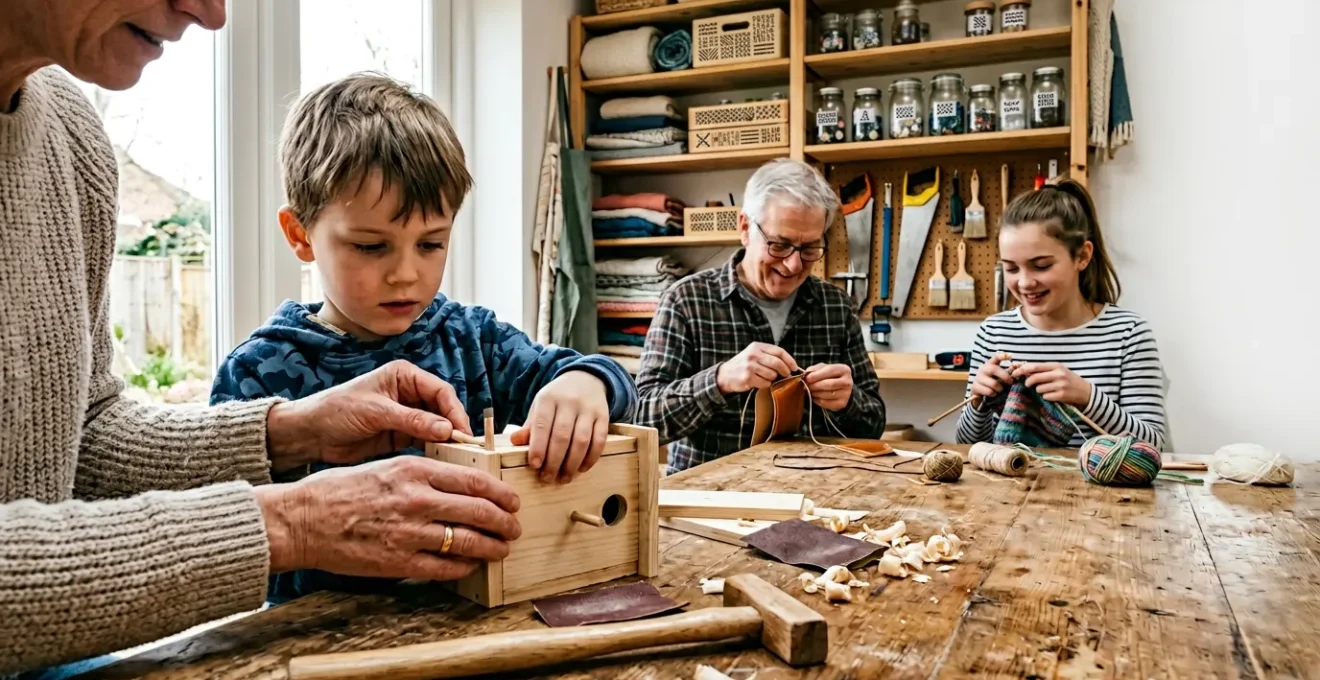
The true value of family DIY isn’t the finished object; it’s using the creative process as a deliberate curriculum for teaching essential life skills.
- Each project is a hidden lesson in science, engineering, leadership, or emotional intelligence.
- Reframing mistakes as “data” builds resilience and a problem-solving mindset.
Recommendation: Shift your focus from “making a thing” to “teaching a skill” and watch your child’s confidence and capabilities grow.
In a world of digital screens and packed schedules, the desire to connect with our children through tangible, hands-on activities has never been stronger. As a parent looking to teach practical skills, you’ve likely browsed countless lists of weekend projects. The impulse is a good one: get your hands dirty, build something together, and create a lasting memory. Yet, many of these attempts end in frustration—a half-finished project, a bigger mess than anticipated, and the feeling that the “quality time” was more stressful than serene. We often think the goal is just to have fun or be patient while they learn.
But what if the entire premise was slightly off? What if the secret to truly successful family projects isn’t just about managing the mess or choosing an “easy” craft? What if the real magic happens when we stop seeing these activities as mere diversions and start viewing them as structured lessons in disguise? The true value of making something together lies not in achieving a perfect, Pinterest-worthy result, but in intentionally using each step to impart concrete, transferable life skills. It’s about transforming a simple task into a lesson on physics, chemistry, leadership, or emotional literacy.
This guide moves beyond simple instructions. We will explore a series of family projects, but our focus will be on the hidden curriculum within each one. From woodworking to baking, we’ll break down how to use these activities to teach the core competencies that will serve your children long after the paint has dried or the last slice of pizza is gone. It’s time to shift our perspective from process over product and discover how to build not just birdhouses, but capable, confident, and resilient kids.
This article provides a roadmap for turning simple weekend activities into profound learning experiences. Below, you will find a summary of projects, each designed to teach a specific and valuable life skill.
Summary: Family DIY Projects: From Craft to Curriculum
- Bird Feeder: A Simple Woodwork Project for Beginners
- Chalkboard Table: Painting an Old Table for Drawing
- Sock Monsters: Teaching Sewing with Fun Creatures
- Pizza Night: Making Dough from Scratch as a Team
- Window Box: Planting Herbs and Flowers in Small Spaces
- Bridge Challenge: Can You Build a Bridge for a Toy Car with Paper?
- Kids’ Patches: Giving Ownership of a Square Meter of Soil
- Art Therapy at Home: Using Creativity to Process Emotions
Bird Feeder: A Simple Woodwork Project for Beginners
The bird feeder is often the first foray into family woodworking, and for good reason. It’s more than just nailing a few pieces of wood together; it’s an entry point into the world of environmental stewardship and applied science. This project takes the abstract concept of “nature” and brings it right to your window. The act of building the feeder is the first step in a longer lesson about local ecosystems, observation, and responsibility.
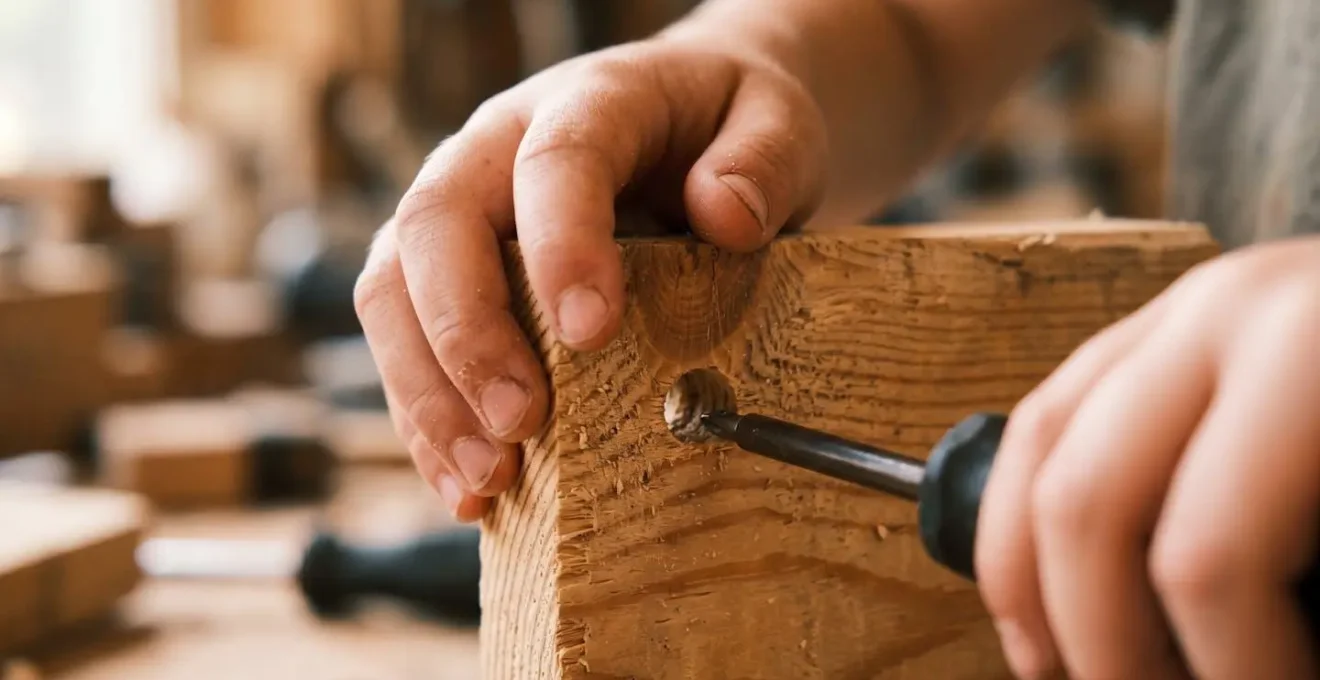
As the image beautifully captures, the learning is tactile. The feel of the wood grain, the focus required to align pieces, the satisfaction of driving a screw—these are foundational making skills. But the lesson extends far beyond the workshop. A study on urban environmental education found these projects have significant ripple effects, creating ongoing family engagement with wildlife. It’s not just a one-off activity; it’s a catalyst. The project’s success is measured not just by the finished feeder, but by the first time your child excitedly identifies a new bird, prompting a shared journey into learning about local fauna. Indeed, research shows that for 75% of children, such programs improved their bird knowledge, turning a simple craft into a powerful educational tool.
Chalkboard Table: Painting an Old Table for Drawing
Upcycling an old piece of furniture into a creative canvas is a powerful lesson in transformation and the value of process. A wobbly, scratched end table isn’t junk; it’s a “before” picture waiting for an “after.” This project teaches a crucial maker mindset: seeing potential where others see waste. The goal isn’t just to have a cool drawing surface, but to understand that with care and effort, you can give new life to forgotten things.
The magic is in the methodical steps. It’s not a race to the finish line. Each stage is an intentional teaching moment. You’re not just sanding; you’re “creating the perfect canvas.” You’re not just priming; you’re learning about the chemistry of adhesion that ensures a quality finish. This deliberate approach transforms a chore into a masterclass in preparation and attention to detail. The final step of “seasoning” the surface—rubbing chalk all over and erasing it—is a perfect metaphor for the entire project: a final, preparatory act that makes the creation ready for its new purpose. This teaches children that patience and proper procedure are the cornerstones of quality work.
Your Upcycling Audit Checklist
- Points of Contact: List every surface and part of the old furniture. Is it wood, veneer, or metal? Are there scratches, dents, or loose joints?
- Collect: Inventory the existing state. Take “before” photos from all angles to document the starting point and appreciate the final transformation.
- Coherence: Does the piece’s function match your goal? Confront its current state with your vision. Will it need structural repairs or just cosmetic work?
- Memorability & Emotion: Identify the unique features worth saving (e.g., a curved leg, original hardware) versus the generic parts that can be changed.
- Plan of Integration: Create a prioritized list of actions. What needs to be fixed first (structural), and what comes last (painting)? Fill the “gaps” in its condition.
By following a structured process, you demonstrate that a beautiful outcome is not an accident but the result of careful planning and execution. This builds an appreciation for craftsmanship that extends far beyond a single can of paint.
Sock Monsters: Teaching Sewing with Fun Creatures
Introducing a child to a needle and thread can feel daunting, but sock monsters transform the task from a technical chore into a delightful exercise in creativity, character design, and leadership. This isn’t just about learning to sew a straight line; it’s about bringing a creature from imagination to reality. The mismatched sock is not a flaw; it’s the seed of a unique personality. Does it have three eyes? A lopsided smile? Wings? The child decides.
As one sewing educator notes, the skill itself is universally valuable. In her guide “Teaching Kids to Sew,” a curriculum developer from Silo & Sage emphasizes:
Teaching kids to sew is such a valuable skill! All your kids – boys or girls – will benefit from learning.
– Sewing educator and curriculum developer, Silo & Sage: Teaching Kids to Sew Guide
This project excels by flipping the traditional parent-child dynamic. By empowering the child to take on a specific, high-level role, you create a powerful learning environment.
Case Study: The Child as Creative Director
A methodology developed by an educator at Sew a Softie reframes the sewing process for children. Instead of focusing on technical perfection, the child is appointed the “Creative Director.” They are responsible for the big-picture vision: designing the monster’s personality, sketching its features, and directing the “production.” The adult becomes the “Technical Assistant,” handling the needle or sewing machine under the child’s direction. This simple role reversal, detailed on their platform for teaching kids to sew, transforms the activity. It teaches leadership, clear communication, and collaborative project management, empowering the child and turning a simple craft into an exercise in bringing a creative vision to life.
By giving them ownership of the creative decisions, you’re teaching them that their ideas have value and that they are capable of directing a project from concept to completion. The sewing is just the medium for a much bigger lesson in self-expression and leadership.
Pizza Night: Making Dough from Scratch as a Team
Pizza night is a family classic, but making the dough from scratch elevates it from a simple meal to a lesson in teamwork and applied science. The kitchen becomes a natural laboratory where abstract concepts become tangible, edible realities. Measuring flour isn’t just counting; it’s an exercise in precision and fractions. Watching yeast bubble isn’t just waiting; it’s a live demonstration of fermentation and biology. Kneading dough isn’t just a messy task; it’s a physical lesson in gluten development, transforming a sticky blob into a smooth, elastic canvas.
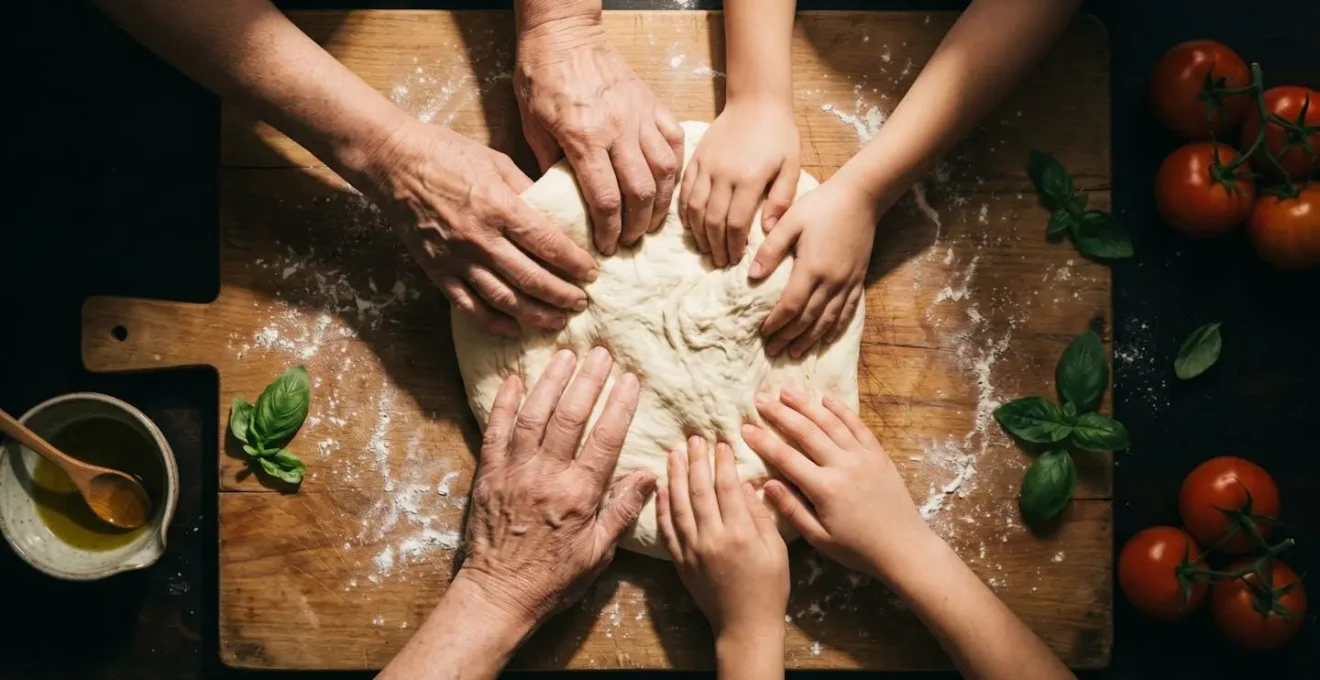
As the image suggests, this is a truly collaborative process. There are jobs for every skill level, from the youngest child who can help pour ingredients to the older one who can take on the kneading. Everyone contributes to a shared goal, and the result is a meal that everyone can take pride in. This hands-on involvement is crucial. A 2024 systematic review of children’s cooking programs found that hands-on lessons were most effective at improving cooking knowledge and self-efficacy. By working together, you’re not just making pizza; you’re building a team, solving small problems in real-time, and reinforcing the idea that many hands can create something wonderful together. The final product tastes better because everyone had a hand in making it.
Window Box: Planting Herbs and Flowers in Small Spaces
For families in urban environments or with limited space, a window box offers a compact but profound lesson in patience, responsibility, and the cycles of life. Gardening isn’t a craft with instant gratification; it’s a long-term commitment that teaches children that good things take time and consistent care. Planting a seed is an act of faith. Watering, waiting, and watching for the first sprout requires a level of patience that few other projects demand.
This project is also a direct and accessible way to engage with the natural world and scientific principles. A comprehensive review by KidsGardening.org found that students engaged in gardening consistently scored higher on science achievement tests. The window box becomes a living science experiment. Why does this plant need more sun? What happens if we forget to water? Why are worms good for the soil? The questions—and the answers—are right there at their fingertips. To make the experience even richer, focus on creating a sensory garden:
- Smell: Plant aromatic herbs like mint, rosemary, and basil that release fragrance when touched.
- Touch: Include plants with varied textures, like fuzzy lamb’s ear or smooth succulents.
- Taste: Dedicate space to edible herbs like parsley and chives, teaching the journey from garden to plate.
- Sight: Choose flowers and plants with different colors and growth patterns to teach observation.
The most important tool might be a “Care Journal.” Creating a log to track sprouting dates, growth, and watering schedules transforms the project into a long-term lesson in data collection and accountability. The child isn’t just a gardener; they are a scientist and a caretaker.
Bridge Challenge: Can You Build a Bridge for a Toy Car with Paper?
This project requires nothing more than paper, tape, and a small toy car, but it delivers one of the most important lessons a young maker can learn: resilience and the engineering mindset. The goal isn’t just to build a bridge; it’s to build a bridge that *works*. And the first one almost never does. This is where the true learning begins. The “Bridge Challenge” is a perfect, low-stakes introduction to the Engineering Design Process, a structured method for problem-solving that professionals use.
The key is to frame failure not as a mistake, but as valuable data. When the bridge collapses, don’t say “Oh no, it broke.” Instead, ask “Interesting! Where did it fail first? What does that tell us?” This reframes the entire experience from a pass/fail test to a scientific investigation. By guiding your child through this cycle, you are teaching them that iteration is the heart of innovation. Each failed prototype provides the information needed to make the next one stronger. This process demystifies engineering and builds incredible resilience.
Here is the a structured way to approach the challenge:
- Ask: Clearly define the problem. “We need to build a bridge that spans this gap (e.g., between two books) and can hold the weight of this toy car.”
- Imagine: Brainstorm and sketch different ideas. A flat bridge? A folded one? An arch? Encourage creative thinking without judgment.
- Plan: Choose the best idea and make a simple plan. What shapes are strongest? (Triangles!) How can we fold the paper to add rigidity?
- Create: Build the first prototype based on the plan.
- Test & Improve: This is the crucial loop. Test the bridge. Observe what happens. Does it sag? Twist? Collapse? Use that “data” to identify a single improvement, rebuild, and test again.
By celebrating the “improve” step as the most important part, you teach your child to embrace challenges and see setbacks as opportunities to learn—a skill that is far more valuable than any paper bridge.
Kids’ Patches: Giving Ownership of a Square Meter of Soil
Giving a child their very own “patch”—be it a square meter in the backyard, a large pot on the balcony, or a section of a community garden—is a profound act of trust. This project is a masterclass in ownership, self-understanding, and long-term investment. Unlike a shared garden where responsibility is diffused, this small plot of land is entirely theirs. They choose what to plant, they are responsible for watering and weeding, and they reap the rewards (or learn from the failures).
This sense of ownership fosters a deep connection and a unique set of life skills. Research has shown the powerful impact of these programs. A study published in HortTechnology revealed that students in a gardening program showed significant increases in life skills, particularly in “working with groups” and “self-understanding.” When a child is in charge of their own patch, they learn about their own patience, their own persistence, and their own ability to nurture something to life. It’s a space where they have agency and can see the direct results of their efforts.
Furthermore, a 2023 systematic review highlighted that hands-on gardening, especially when linked with family engagement, enhances well-being and builds self-efficacy. The patch becomes a conversation starter, a source of pride, and a living story that unfolds over a season. Whether they choose to grow towering sunflowers, sweet carrots, or a chaotic jumble of “mystery seeds,” the patch reflects the child’s personality and choices. It teaches them that responsibility is not a burden, but the foundation of creating something you can truly call your own.
Key Takeaways
- Process Over Product: The learning happens in the making—the planning, the mistakes, the problem-solving—not in the flawless final object.
- Every Project is a Lesson Plan: Approach each activity with an intentional teaching goal, whether it’s science, leadership, or resilience.
- Failure is Data: Reframe collapses, spills, and imperfections as valuable information that makes the next attempt better. This builds a resilient mindset.
Art Therapy at Home: Using Creativity to Process Emotions
While other projects teach external skills, this one focuses on the most critical internal skill: emotional intelligence and healthy expression. Sometimes, feelings are too big, too confusing, or too scary to be put into words, especially for a child. Creating art provides a safe, non-verbal outlet to explore and process these emotions. This isn’t about creating a masterpiece for the wall; it’s about giving abstract feelings a concrete form. The paper or clay becomes a safe container for anger, sadness, joy, or fear.
The parent’s role here is not to be an art critic or even an art teacher, but a supportive and non-judgmental facilitator. The key is to provide structured prompts that invite expression without demanding it. Instead of asking “Why are you so angry?”, you can suggest, “Let’s draw what your anger looks like.” This simple shift depersonalizes the emotion, making it an external thing that can be observed and understood rather than an overwhelming internal state. It empowers the child by giving them tools to manage their inner world.
Here are some structured prompts to facilitate emotional processing through art:
- Emotion Monsters: Ask your child to “draw what your sadness (or anger, or worry) looks like as a monster.” Give the feeling a name, shape, and color.
- Safe Place Painting: Invite them to paint or draw a “picture of a safe and happy place.” This creates a visual anchor they can mentally return to when feeling stressed.
- Weather Report Check-in: Begin an art session by asking if they feel “sunny,” “cloudy,” “stormy,” or “foggy” inside, and then choose colors that represent that internal weather.
- Worry Sculpture: Using clay, have them “sculpt your worry.” Once it’s made, they can decide what to do with it: transform it into something new, squash it, or simply set it aside.
- Impermanent Art: Create something beautiful with chalk or sand, then agree to wash it away. This teaches that the value is in the act of creation and release, not in the permanence of the product.
Through these activities, you teach your child that all emotions are valid and that they possess the creative power to understand and navigate their own feelings—a foundational skill for a lifetime of mental well-being.
Now that you’re equipped with a new way of looking at weekend projects, the next step isn’t to plan the perfect, most elaborate activity. The real step is to choose one, embrace the potential for mess and mistakes, and begin the shared journey of making and learning. Evaluate the skills you want to foster, gather your materials, and start building more than just a project—start building a more capable, confident, and connected family.