
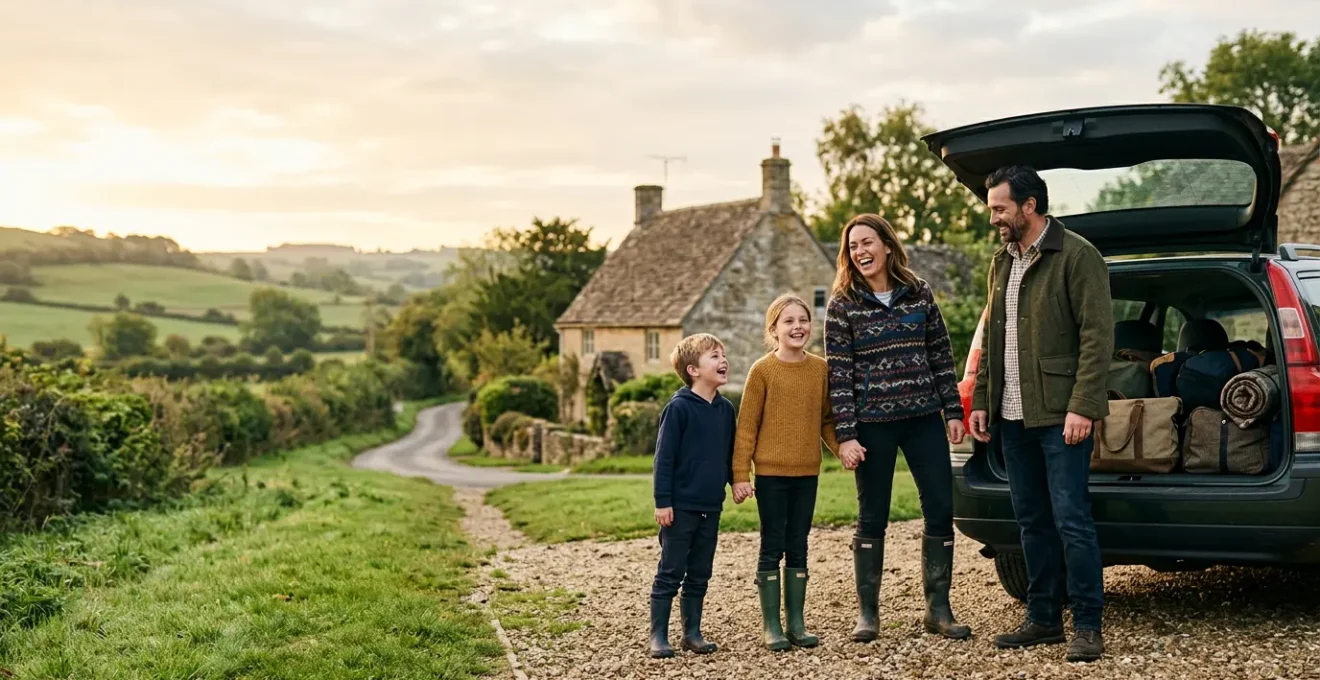
The conventional wisdom for family travel is to plan more, pack more, and see more. This article argues for the opposite. The true secret to a stress-free and memorable UK family getaway isn’t a perfectly packed itinerary; it’s the art of intentional minimalism. By focusing on connection over consumption, doing less, and turning logistics into part of the adventure, you can create deeper family bonds and finally have a holiday that feels like one.
The promise of a family weekend getaway is enchanting: exploring new corners of the UK, creating lasting memories, and escaping the daily grind. Yet, for many parents, the reality is a whirlwind of stress. The pressure to plan the ‘perfect’ trip, pack for every conceivable scenario, and fill every moment with ‘fun’ often leads to exhaustion, arguments, and a desperate need for a holiday from the holiday. We’re told to book kid-friendly attractions, find the best restaurants, and schedule every hour to maximise the experience.
But what if this ‘more is more’ approach is the very source of our stress? What if the key to a truly relaxing and connecting family trip wasn’t about adding more, but about strategically taking things away? The real magic of travel doesn’t happen in the queues for a theme park or during a rushed museum visit. It happens in the quiet, unplanned moments: the shared laughter over a silly car game, the collaborative discovery of a snail in a park, the cosy feeling of being together in a new place.
This guide is built on a simple, counter-intuitive principle: do less to enjoy more. We will explore how to apply this philosophy to every stage of your trip, from packing your suitcase to surviving the car journey and choosing your activities. It’s about shifting your mindset from a trip coordinator to a co-adventurer with your children, turning logistical hurdles into opportunities for connection.
To help you navigate this new approach, this article breaks down the journey into practical, manageable steps. Below is a summary of the key areas we will explore to help you build your own blueprint for genuinely stress-free family adventures.
Summary: A roadmap to stress-free family adventures
- Capsule Packing: How to Pack for a Family of 4 in One Suitcase?
- Car Games: Screen-Free Ways to Survive “Are We There Yet?”
- Hotel vs Airbnb: Which Is Better for Family Logistics?
- The One-Activity Rule: Avoiding Overtired Kids on Holiday
- Travel Journals: Encouraging Kids to Draw and Write About the Trip
- Digital Calendars: Using Apps to Sync School Dates and Work Trips
- Park Bingo: Spotting Dogs, Squirrels, and Benches
- Park Excursions: Turning a Trip to the Swings into an Adventure
Capsule Packing: How to Pack for a Family of 4 in One Suitcase?
The stress of a trip often begins before you’ve even left the house, with the monumental task of packing. The temptation to pack for every eventuality is strong, but it’s a major source of anxiety and physical labour. The truth is, most of us vastly overpack. In fact, a UK survey revealed that only 1 in every 14 British families use 100% of the items they squeeze into their luggage. This is where the concept of logistical minimalism comes in.
Adopting a capsule packing strategy isn’t just about saving space; it’s about saving your sanity. The goal is to pack a small collection of versatile items that can be mixed and matched. Think neutral basics (t-shirts, trousers) paired with a few colourful accessories. Choose a colour palette for the whole family so items can be easily coordinated and washed together if needed. This simplifies decision-making both before you leave and while you’re away, reducing the daily “what should I wear?” debate to a minimum.
By limiting yourself to one suitcase, you’re not just making transport easier; you’re making a conscious choice to travel lighter in every sense of the word. It forces you to focus on essentials, frees up mental energy for the actual holiday, and sets a tone of simplicity for the entire trip. The first step to a stress-free holiday is leaving the stress (and the extra three jumpers) at home. The following checklist provides a structured method to achieve this.
Your action plan: The 5-Step Capsule Packing Method
- Use packing cubes: Assign one cube per person. This provides a clear, visual limit and stops the temptation to overpack by filling empty spaces.
- Roll your clothes: Rolling instead of folding minimises gaps and compresses air, dramatically maximising the space within each packing cube and the suitcase.
- Utilise dead space: Stuff shoes with small, soft items like socks, or even chargers and headphones, to ensure every single inch of your luggage is used efficiently.
- Wear your layers: Wear your bulkiest items, like coats and boots, onto the plane or in the car. Aeroplanes are often chilly, so this doubles as a way to sneak extra outfits without weight penalties.
- Embrace vacuum bags: For particularly bulky items that are non-negotiable, like a favourite blanket or puffer jackets for a winter trip, vacuum bags can shrink them down by more than half.
Car Games: Screen-Free Ways to Survive “Are We There Yet?”
The car journey is often the most dreaded part of a family getaway. The confined space, the boredom, and the relentless chorus of “Are we there yet?” can test the patience of any parent. The default solution in our digital age is to hand over a tablet, but this creates a silent, disconnected car where everyone is in their own bubble. Embracing a screen-free approach isn’t about being a luddite; it’s about reclaiming that travel time as a chance for genuine family connection.
The trick is to reframe the journey from a tedious necessity into a “micro-expedition” of its own. This is where the gamification of the mundane works wonders. Simple, no-prop games transform the passing scenery into a shared activity. “I Spy” is a classic for a reason, but you can expand the repertoire with “Car Bingo” (spotting a red lorry, a fluffy dog, a church spire) or the “Alphabet Game” (finding letters of the alphabet in order on road signs).
One of the most powerful tools for connection is collaborative storytelling. One person starts a story with a single sentence, and each family member adds the next sentence in turn. The results are usually hilarious, wonderfully weird, and create a unique memory that belongs only to your family. These games don’t require batteries, downloads, or chargers. They just require a little imagination and a willingness to be silly together, turning a stressful drive into the first chapter of your holiday adventure.
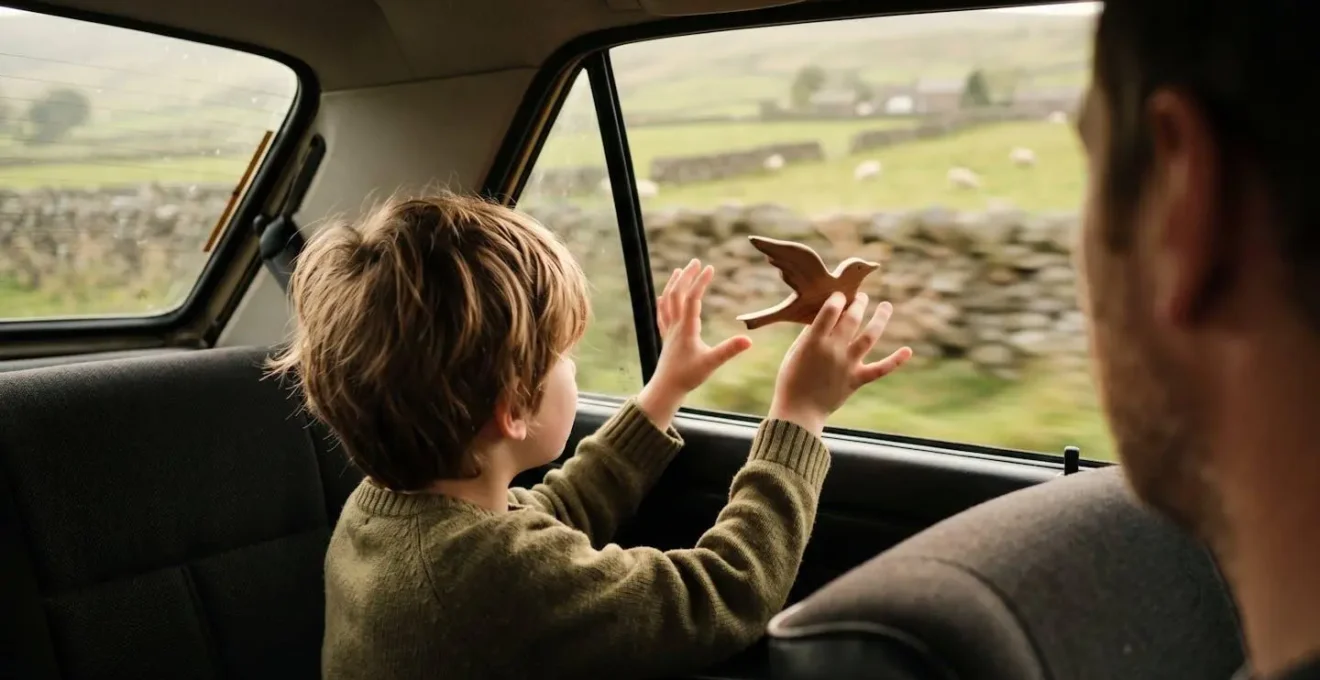
As this image suggests, the focus shifts from the destination to the shared experience. The blur of the world outside the window becomes the backdrop to the rich, imaginative world you’re building together inside the car. This is where the real memories are forged, long before you’ve even checked into your hotel.
Hotel vs Airbnb: Which Is Better for Family Logistics?
Choosing your “basecamp” is one of the biggest decisions in trip planning, and it fundamentally shapes the logistics of your getaway. For families, the debate often boils down to the convenience of a hotel versus the space of an Airbnb. There’s no single right answer, but understanding the trade-offs in the context of your family’s needs and your trip’s philosophy is key. Price is often a driving factor, and it’s true that self-catering can offer significant savings. For example, a recent UK accommodation pricing study found the average hotel room in England was over £30 more expensive per night than the average Airbnb.
However, the decision goes far beyond the nightly rate. A hotel offers unparalleled convenience: daily housekeeping means no time spent cleaning, a front desk can help with queries, and on-site restaurants remove the need to plan every meal. This is ideal for short, action-packed city breaks where you plan to be out exploring most of the time. The downside is often cramped space; a family of four might need two separate rooms, which can split the family and double the cost.
An Airbnb, on the other hand, offers a “home away from home.” The extra space, with separate living areas and bedrooms, allows for essential intentional downtime without everyone being on top of each other. A kitchen is a game-changer for budget and stress levels, allowing for relaxed breakfasts, the preparation of packed lunches, and the ability to cater to picky eaters. While it requires more self-sufficiency (you’re the chef and the cleaner), the communal space fosters a different kind of togetherness, turning meal times and quiet evenings into core parts of the holiday experience itself.
The following analysis, based on a detailed comparison of family travel logistics, breaks down the key factors to help you decide which option best aligns with your vision for a stress-free trip.
| Factor | Hotel | Airbnb |
|---|---|---|
| Best for Trip Length | Short stays (1-3 nights) | Longer stays (4+ nights) |
| Space | Limited; may need 2 rooms for family of 4 | Whole property with living space & kitchen |
| Convenience | Front desk, concierge, daily housekeeping | Self-sufficient; requires setup & cleanup |
| Food Costs | Higher (eating out for all meals) | Lower (can cook at ‘home’) |
| Family Connection | Limited shared space outside bedrooms | Communal dining & living areas foster togetherness |
| Best for Family Size | Solo travellers or couples | Large families (cost splits across group) |
The One-Activity Rule: Avoiding Overtired Kids on Holiday
One of the biggest paradoxes of family holidays is the parental urge to cram as much ‘fun’ as possible into a short space of time. We research the top 10 attractions, book back-to-back tours, and schedule every moment, believing we’re creating the ultimate experience for our children. In reality, we’re often just creating overtired, overstimulated, and overwhelmed kids. This pressure to ‘do it all’ is a primary cause of holiday meltdowns (for children and adults alike). The solution is radical in its simplicity: The One-Activity Rule.
This rule dictates that you plan only one significant, energy-intensive activity per day. This could be a museum visit, a long hike, a trip to the beach, or a theme park. The rest of the day is left deliberately unplanned for rest, spontaneous discoveries, and low-key fun. This isn’t about being lazy; it’s about being strategic. It acknowledges the limited energy reserves of children and prioritises quality of experience over quantity. This approach is backed by science; recent mental health research confirms that overscheduling, even with enjoyable activities, is linked to increased anxiety and depression in children.
By building in this “intentional downtime,” you create space for the magic to happen. It might mean an impromptu hour splashing in a stream you discovered, a long, leisurely afternoon in a local cafe, or simply chilling out at your Airbnb. These are the moments that don’t make it onto the Instagram-perfect itinerary but are often the most cherished memories. Adopting the One-Activity Rule transforms your holiday from a frantic checklist into a relaxed and responsive adventure, where you follow the family’s energy levels, not a rigid schedule.
The Research: When ‘Enrichment’ Becomes a Burden
To understand the danger of overscheduling, consider a study by economists at the University of Georgia. They analysed the time diaries of over 4,300 children and found a critical tipping point. While extracurriculars can boost academic skills, the ‘last hour’ of scheduled activity often provided no further academic benefit and actively began to harm the child’s mental well-being. The psychological downsides, including anxiety, kicked in before the cognitive benefits were even maximised. This creates a powerful argument for parents to prioritise unstructured downtime, as the perceived benefits of packing in ‘one more thing’ are often an illusion with real psychological costs.
Travel Journals: Encouraging Kids to Draw and Write About the Trip
In our quest for connection over consumption, how we capture memories is as important as how we make them. While phone cameras are convenient, the endless stream of photos can sometimes distance us from the actual experience. A wonderful, tactile alternative is to introduce the humble travel journal. Providing each child with a simple notebook and a pen or a small set of coloured pencils is an invitation to engage with their surroundings on a deeper, more personal level.
A travel journal isn’t about writing detailed essays. For younger children, it can be a place to scribble, draw the funny-shaped leaf they found, or do a crayon rubbing of a coin from a local shop. For older kids, it can be a space to jot down a few words about their favourite part of the day, stick in a ticket stub, or write down a funny quote they overheard. The goal is not to create a masterpiece, but to encourage active observation and personal reflection.
The act of drawing or writing about an experience forces a child to slow down and pay attention to details. What colour was that butterfly? What did the castle wall feel like? What was the best flavour of ice cream? These journals become more than just a holiday craft project; they become deeply personal souvenirs. Looking back, a slightly wonky drawing of a seagull stealing a chip will evoke a far stronger and more specific memory than a perfectly posed, generic photo. It’s a low-cost, low-stress activity that fosters creativity and helps children process and solidify their travel memories in their own unique way.
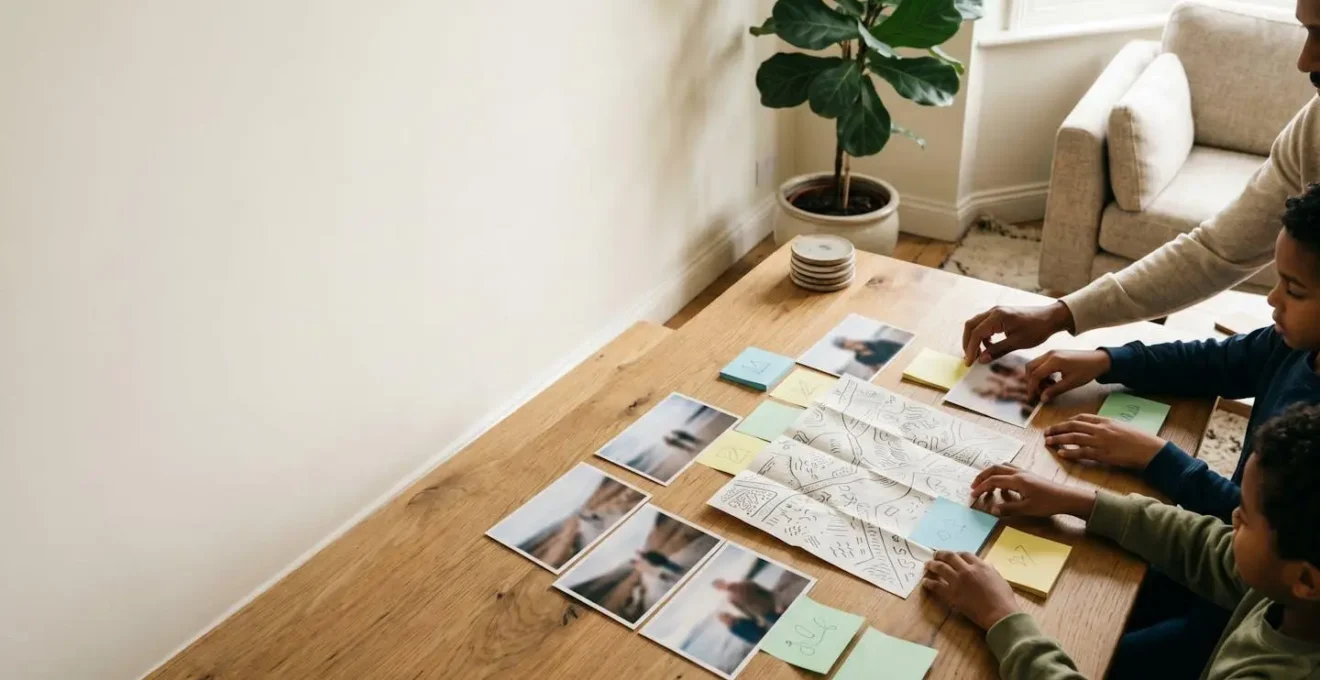
Just as planning the trip together builds anticipation, documenting it together builds lasting memories. The journal becomes a collaborative project, a tangible record of your shared adventure, created through individual perspectives. It’s the perfect activity for that intentional downtime after your ‘one big thing’ for the day.
Digital Calendars: Using Apps to Sync School Dates and Work Trips
The dream of a weekend getaway can often feel impossible to realise amidst the chaos of modern family life. Juggling school term dates, inset days, work commitments, and children’s clubs can feel like a game of high-stakes Tetris. Finding a free weekend where everyone is available can be the biggest hurdle of all. This is where technology, used wisely, can be your greatest ally in reducing planning stress.
Using a shared digital calendar (like Google Calendar, Cozi, or TimeTree) is a non-negotiable for the modern family. The key is to treat it as the single source of truth for all family scheduling. At the start of the school year, input all the term dates, half-terms, and known inset days immediately. Layer on work travel, big project deadlines, and recurring clubs or appointments. This creates a visual map of your family’s time.
Once you have this overview, you can proactively identify potential “getaway windows.” You’ll see that three-day weekend in May or that quiet patch in October well in advance, transforming trip planning from a reactive scramble into a proactive, deliberate act. You can even create a separate “Travel Ideas” calendar to block out potential dates, allowing you to start dreaming and researching without fully committing.
This level of organisation does more than just help you find time; it reduces the mental load of trying to hold all those dates in your head. When an idea for a trip to the Peak District or the Cornish coast sparks, you can check the shared calendar in seconds and know instantly if it’s feasible. It’s the digital infrastructure that makes the dream of spontaneous-feeling adventures possible through smart, minimal planning.
Park Bingo: Spotting Dogs, Squirrels, and Benches
Not every adventure needs a ticket or a long car journey. The principles of stress-free travel—connection, observation, and gamification—can be applied to something as simple as a trip to the local park. The “Micro-Expedition” mindset is about finding the epic in the everyday, and a game like “Park Bingo” is the perfect tool to unlock it.
The concept is simple: before you go, create a simple bingo card (or just a list) of things to spot in the park. But instead of just “tree” or “flower,” get specific and sensory. This encourages kids to look closer and engage their environment more deeply. It trains them to be little explorers in their own neighbourhood. Your bingo card might include:
- Something smooth (a polished stone)
- Something rough (tree bark)
- A dog with a wagging tail
- A bird singing a song
- Someone having a picnic
- A “stick that looks like a sword”
- A cloud shaped like an animal
- Three different types of leaves
This simple game transforms a passive walk into an active treasure hunt. It costs nothing, requires zero planning, and can turn a potentially whiny “I’m bored” situation into an hour of focused fun. It teaches children the skill of finding wonder in the mundane, a skill that is arguably one of the greatest gifts you can give them. A child who can find joy in spotting a squirrel or a unique leaf is a child who will never be truly bored.
Park Bingo is the perfect embodiment of the “less is more” philosophy. It’s an activity completely devoid of consumerism, scheduling, or stress, yet it’s rich in connection, learning, and genuine, unscripted fun. It’s a powerful reminder that the best adventures are often the ones we create ourselves, right on our doorstep.
Key takeaways
- The stress of family travel often comes from a ‘more is more’ mindset; planning, packing, and doing less leads to more enjoyment.
- Shifting focus from consuming attractions to fostering family connection through shared activities is the goal.
- Embracing ‘micro-expeditions’ and ‘intentional downtime’ can transform mundane moments into memorable adventures.
Park Excursions: Turning a Trip to the Swings into an Adventure
We’ve explored packing, travel, and scheduling, but the heart of our philosophy comes together in the simplest of outings: a trip to the local park. Too often, we see it as a last resort to burn off energy. But by applying the ‘micro-expedition’ mindset, a simple park visit can become the most memorable part of your weekend, embodying all the principles of a stress-free adventure. It’s about seeing the familiar with fresh, adventurous eyes.
Instead of just heading for the swings, declare a mission. Today’s mission is to “Map the Unknown Jungle” (the wooded bit at the back of the park) or to “Document the Local Wildlife” (squirrels, pigeons, and all). Give your children ‘roles’: one is the Lead Navigator, another is the Chief Scientist (collecting interesting leaves and stones), and you are the Expedition Chronicler. This simple act of framing turns a walk into a narrative.
Focus on sensory details, just as you would on an exotic holiday. What does the moss on the north side of the tree feel like? Can you identify three different bird calls? This is where the magic lies. It’s not about the grandeur of the location but the depth of your engagement with it. This is the essence of connection over consumption. You are not consuming an experience designed by someone else; you are actively creating your own, together.

This approach costs nothing and requires no advance booking. It’s a sustainable, repeatable model for family fun that builds creativity, resilience, and a deep appreciation for the world right outside your door. It proves that you don’t need to spend a fortune or travel for hours to have a genuine adventure. The best trips aren’t defined by their distance or cost, but by the quality of the connection you forge along the way.
By embracing this ‘less is more’ philosophy, you’re not just planning a trip; you’re building a family culture of curiosity, connection, and low-stress adventuring. Start small: apply one or two of these ideas to your next outing and see how it transforms the experience for everyone involved.