
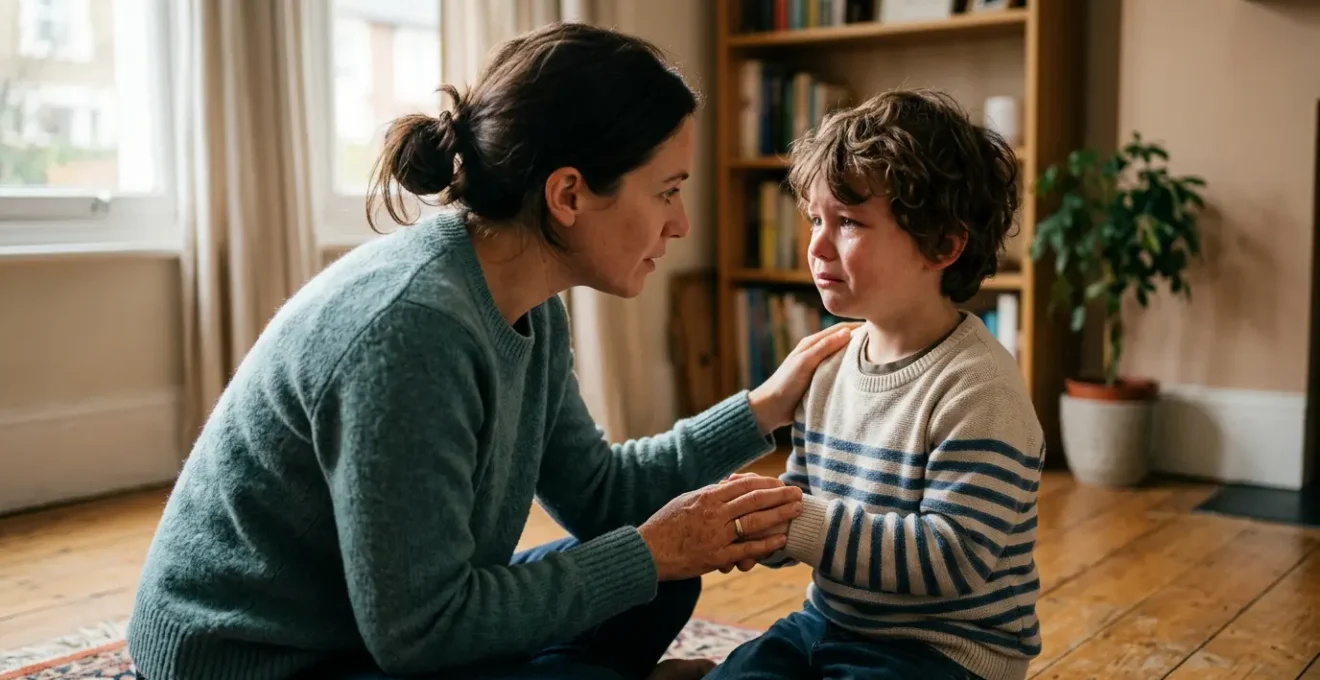
When a child is overwhelmed by big feelings, leading to aggression or shutdown, it’s easy for parents to feel lost. This guide reframes your role from a disciplinarian to an “emotion coach.” Instead of just listing coping tricks, we’ll explore how to become a source of calm for your child (co-regulation), understand the science behind why these tools work, and build a foundation of emotional safety that helps your child navigate their inner storms long-term.
The scream that pierces the quiet of the grocery store. The sudden, stony silence after a simple request. The slammed door that feels like a physical blow. When a child’s emotions erupt into what feels like a tidal wave of anger or a complete shutdown, a parent’s first instinct is often to stop the behavior. We try reasoning, offering rewards, or resorting to ultimatums. We’ve all been told to “name the feeling” or “validate their emotions,” but these scripts can feel hollow when you’re in the middle of a storm.
But what if the goal wasn’t to *stop* the feeling, but to help your child move *through* it? What if the most powerful tool you have isn’t a technique, but your own presence? This is the core of becoming an emotion coach for your child. It’s a shift from managing behavior to building connection and fostering genuine self-regulation skills. This approach requires understanding that a child’s brain is still under construction; they don’t have the “brakes” an adult does to stop an emotional spiral.
The true key lies in a concept called co-regulation. It’s the idea that you can “lend” your calm nervous system to your child, helping them find their way back from the brink. It’s about creating an environment of emotional safety where big feelings are allowed, but not allowed to cause harm. This guide will provide you with tangible, embodied tools and environmental strategies, but it will root them all in this foundational principle. You will learn not just what to do, but why it works, empowering you to navigate these moments with more confidence and less conflict.
This article will walk you through a series of practical, science-backed tools and mindset shifts. From simple sensory aids to the profound impact of your own emotional state, you’ll gain a complete toolkit for helping your child—and yourself—manage these big feelings together.
Summary: A Practical Guide to Co-Regulating Big Emotions
- Calm Down Jars: Making and Using Glitter Jars for Focus
- 5-Finger Breathing: A Portable Tool for Anxiety
- Stomping it Out: Using Movement to Process Anger
- The Safe Place: Designing a Nook for Retreat, Not Punishment
- Lending Your Calm: Why Your State Matters More Than Your Words?
- The Calm Down Corner: Creating a Safe Space for Big Feelings
- BRAIN Acronym: How to Make Decisions When Things Change Fast?
- Active Listening for Parents: How to Make Your Child Feel Heard
Calm Down Jars: Making and Using Glitter Jars for Focus
A calm down jar, often filled with glitter and water, is more than just a mesmerizing toy. It’s a concrete, visual tool that helps externalize the chaos a child feels inside. When emotions are swirling like a storm, the jar gives them something tangible to watch. As they shake it and then observe the glitter slowly settle, it provides a non-verbal prompt for their own body and mind to do the same. This process is a simple introduction to mindfulness, a practice proven to be highly effective.
The magic of the glitter jar lies in its ability to engage the parasympathetic nervous system, the body’s natural “rest-and-digest” mode. The act of visual tracking—following the slow descent of the sparkles—requires focus, which gently pulls the brain away from the fight-or-flight response driven by the amygdala. Research demonstrates that mindfulness practices can lead to a 23% decrease in anxiety levels in children, and tools like these make the concept accessible.

By using the jar, you’re not just distracting your child; you’re teaching them a foundational regulation skill: how to pause and observe. You can model this by saying, “Let’s watch the glitter together until it all rests on the bottom.” This shared, quiet moment is an act of co-regulation in itself, creating a small island of calm in the middle of an emotional storm.
Case Study: The CalmSpace Program
A mindfulness-based program integrated into a school curriculum used glitter bottles as primary visual aids. The goal was to help young children focus and slow their breathing by watching the glitter settle. A study on the program found it effectively improved executive functioning and behavior in the children. By engaging the parasympathetic nervous system, the simple act of watching the glitter helped soothe the amygdala’s fight-or-flight response, proving that simple visual tools can have a measurable neurological impact.
5-Finger Breathing: A Portable Tool for Anxiety
When anxiety spikes, breath becomes shallow and rapid, signaling danger to the brain. 5-finger breathing is a brilliant, portable technique that uses the senses of sight and touch to guide a child back to slow, deep breaths. Because it requires a hand, it’s always available—in the car, at the dentist, or in the middle of a crowded store. It grounds the child in their own body and gives their active mind a simple, repetitive task to focus on.
This technique directly counteracts the physiological symptoms of anxiety. By deliberately slowing the breath, it sends a message to the brain that the danger has passed, activating the calming parasympathetic nervous system. It’s a simple form of biofeedback. The physical act of tracing the fingers anchors the child in the present moment, preventing their thoughts from spiraling. The effectiveness of such techniques is well-documented; in a study of 122 fifth-grade students, simple breathing exercises were shown to significantly reduce anxiety and improve test performance.
Teaching this when your child is calm is key. Practice it together as a game or a bedtime ritual. Frame it as their “superpower” for feeling calm. This way, when a big feeling hits, the tool is already familiar and accessible. It gives them a sense of agency and control over their own body’s response, which is incredibly empowering.
- Step 1: Spread your hand and stretch your fingers out like a star. You can choose your left or right hand.
- Step 2: Use the pointer finger of your other hand to trace around the outline of your spread-out hand.
- Step 3: As you slide your pointer finger up your thumb, breathe in slowly through your nose. As you slide down the other side, breathe out slowly through your mouth.
- Step 4: Continue this pattern for each finger, sliding up as you inhale and sliding down as you exhale, until you’ve traced all five fingers.
- Step 5: After five slow breaths, gently ask, “How does your body feel now? Do you feel a little calmer?”
Stomping it Out: Using Movement to Process Anger
Anger is a powerful, activating emotion. It floods the body with energy, creating an intense urge to *do something*. A common, yet misguided, piece of advice is to “let it out” by punching a pillow or screaming. However, research increasingly shows that these “venting” activities can actually heighten aggression rather than relieve it. The key is not to amplify the angry energy, but to discharge it in a safe and grounding way.
This is where purposeful movement comes in. Activities like stomping feet, pushing against a wall, or ripping up paper allow the body to complete the stress response cycle without causing harm. It provides a physical release for the tension that anger creates. This isn’t about “getting anger out” but about helping the body process the intense physiological arousal. A recent 2025 meta-analysis of 18 studies found that physical exercise led to a significant overall reduction in aggressive behavior in children and adolescents.
Think of it as giving the anger a job to do. Instead of saying “Stop being angry,” you can say, “You have so much angry energy in your body right now. Let’s go outside and stomp as hard as we can.” This validates the feeling while redirecting the expression to a non-destructive path. It teaches a crucial lesson: the feeling of anger is okay, but how we act on it matters.
Arousal-decreasing activities decreased anger and aggression, and the results were robust. In contrast, arousal-increasing activities were ineffective overall. These findings do not support the ideas that venting anger or going for a run are effective anger management activities.
– Clinical Psychology Review Meta-Analytic Study, Meta-analysis of 154 studies
The Safe Place: Designing a Nook for Retreat, Not Punishment
The concept of a “calm-down corner” has become popular, but its success hinges on one critical factor: its purpose. Is it a place for retreat or a place for punishment? A traditional “time-out” corner is often seen by a child as a place of isolation and shame, where they are sent for being “bad.” A true safe place, or cozy nook, is framed as a gift—a supportive space they can choose to go to when their feelings feel too big to handle.
The difference is not just semantics; it’s neurological. A time-out can escalate a child’s distress by triggering feelings of abandonment and rejection, keeping their nervous system in a state of high alert. A safe place, on the other hand, is designed to reduce sensory input and promote emotional safety. It communicates the message: “Your feelings are welcome here, and here are some tools to help you.” This is especially important when you consider that, according to recent data, about 1 in 5 children has a mental health challenge, making proactive emotional support essential.
Involve your child in creating this space. Let them choose the soft pillows, the favorite stuffed animals, or the calming sensory toys. This ownership transforms it from a place they are *sent* to a resource they can *use*. When you see them becoming overwhelmed, you can gently suggest, “It looks like your body needs a break. Would your cozy corner help right now?” This empowers them to recognize their own internal cues and take positive action—the first step toward self-regulation.
Case Study: The Classroom Calm Down Corner
A study in a second-grade classroom tracked the use of a calm down corner over several weeks. The corner was presented as a voluntary resource. Data showed that of 50 visits, 52% were by students feeling sad, 36% angry, and 12% worried, demonstrating its use for a range of emotions. Following the implementation of the corner and daily lessons on coping strategies, teachers observed a marked decrease in negative student behaviors, highlighting its effectiveness as a tool for retreat and self-regulation rather than punishment.
Lending Your Calm: Why Your State Matters More Than Your Words?
As a parent, you can have every tool and script memorized, but if your own nervous system is in a state of panic or rage, none of it will work. Children, especially young ones, are exquisitely tuned in to their caregiver’s emotional state through a process called neuroception. They sense your racing heart, your tense shoulders, and your sharp tone of voice. This is the essence of co-regulation: your calm is contagious, but so is your chaos.
When your child is dysregulated, they are neurologically incapable of accessing their logical brain. They are operating from their emotional, survival-oriented brain. Shouting “Calm down!” at them is like shouting at a fire to put itself out. What they need is an external source of calm to borrow from. Your steady presence, slow breathing, and soft voice act as an anchor, signaling to their nervous system that they are safe and that the threat has passed. You are, in effect, a human charging station for their overwhelmed emotional battery.
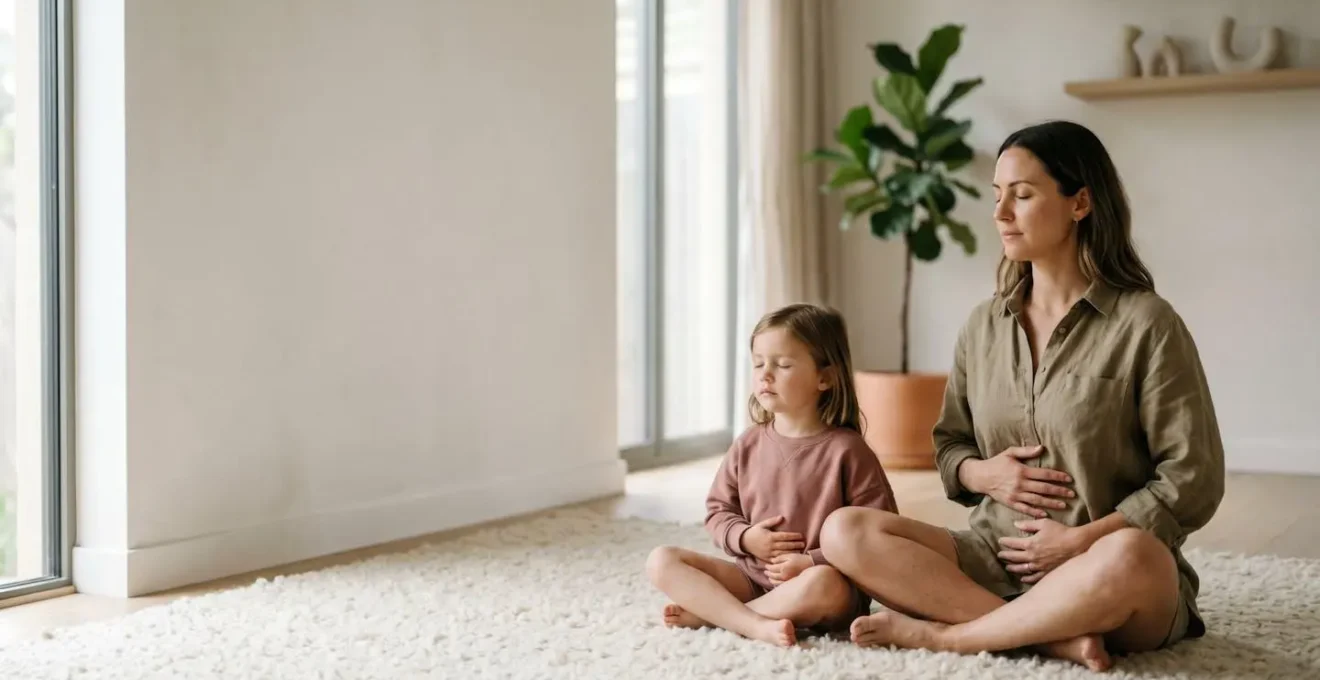
This is often the hardest work of parenting because it requires us to regulate ourselves first, in the heat of the moment. It means taking a deep breath *before* you respond. It means unclenching your jaw and lowering your voice even when you feel like screaming. It’s not about being a perfect, emotionless robot. It’s about modeling that feelings can be felt without letting them take over completely.
Learning how to regulate your own emotions — using skills like deep breathing and pausing to reflect before taking action — can stop reactionary decision making and improve communication with others. And doing so doesn’t just help you. For parents, being intentional about how they telegraph their feelings can influence children’s thoughts, behaviors, and emotions.
– BrainFacts Scientific Review, Leading By Example
The Calm Down Corner: Creating a Safe Space for Big Feelings
Calming spaces typically include elements of mindfulness, choice, and self-direction, all of which support student engagement and connection, which in turn have positive impacts on student behavior, learning, and feelings of well-being.
– California Center for School Climate at WestEd, Calming Spaces Research Brief
Once you’ve embraced the philosophy of a safe place being a retreat, the next step is the practical creation of that space. The goal is to create a sensory-friendly nook that appeals to your child and provides tools that genuinely help them regulate. It doesn’t need to be large or expensive; a corner of their bedroom or the living room with a few carefully chosen items is all that’s required. The key is that it is a ‘yes’ space, filled with things they *are* allowed to touch and use to feel better.
The best calm down corners appeal to multiple senses and offer choice. A soft place to sit addresses the need for physical comfort. Sensory objects provide a safe outlet for fidgety hands. Visual aids can remind them of strategies they can use independently, which builds their sense of competence. Remember, this space is a living thing; you can rotate items based on your child’s needs and what you observe works best for them.
The most important part of the corner is how it’s introduced and maintained. It should be presented when everyone is calm, as a special spot just for them. Spend time in the corner together, reading or talking quietly, so it’s associated with positive connection, not just crisis moments. This ensures it remains a haven they willingly seek out when their inner world becomes too stormy.
Your Action Plan: Assembling the Ideal Calm Down Corner
- Soft Seating: Start with a foundation of comfort. This could be a bean bag, a large, soft chair, or a stack of floor pillows. The material should be easy to clean.
- Comforting Objects: Include items that provide tactile comfort. This might be a few favorite stuffed animals, a weighted lap pad, a soft blanket, or various sensory play objects like squishy balls or smooth stones.
- Calming Tools: Equip the space with items that actively promote regulation. This includes tools for mindfulness like a glitter jar, items for breathing exercises like a pinwheel, or simple puzzles for focus.
- Visual Aids: Create simple, picture-based instruction cards or charts. These can remind a child how to do 5-finger breathing or show a “feelings wheel” so they can identify their emotion without words. This promotes independent use.
- Sensory Supports: Consider other senses. For some children, calming music with headphones can be very effective. For others, looking at peaceful artwork, like nature scenes or photos of family, can be soothing.
BRAIN Acronym: How to Make Decisions When Things Change Fast?
In the peak of a child’s meltdown, a parent’s own brain can feel hijacked. It’s difficult to think clearly, access your best parenting strategies, or even remember to be calm. In these high-stress moments, having a simple, memorable mental framework can be a lifesaver. The BRAIN acronym is a powerful tool for parents to use *on themselves* first, allowing them to pause, assess, and respond thoughtfully instead of reacting impulsively.
This framework is desperately needed. In our post-pandemic world, research shows anxiety in children and adolescents doubled to nearly 20%, putting more pressure on families than ever before. BRAIN gives you a structured path to follow when your own fight-or-flight response is kicking in. It guides you from self-regulation (Breathe) to observation (Recognize), to connection (Acknowledge), to problem-solving (Invite), and finally to prioritization (Now or Later). It is a direct application of the “lend your calm” principle.
Walking through these steps, even imperfectly, shifts you from being an adversary in a power struggle to being a compassionate problem-solver alongside your child. It ensures you address the root need behind the behavior, not just the surface-level action. It’s a practice of putting on your own oxygen mask first so you can effectively help your child with theirs.
- B – Breathe: Before you say or do anything, take one slow, deep breath yourself. This is your personal pause button. It stops a knee-jerk reaction and begins to calm your own nervous system.
- R – Recognize: Ask yourself: what is the unmet need driving this behavior? Are they hungry, tired, overstimulated, scared, or craving connection? Look past the behavior to the root cause.
- A – Acknowledge: Validate the emotion without condoning the behavior. Use simple, clear language: “You are so angry that your tower fell over. I get it. It’s frustrating. And, we don’t throw blocks.”
- I – Invite: Once the emotional storm has passed a little, invite collaboration. “What would help your body feel calm right now?” or “When you’re ready, let’s think of a solution together.”
- N – Now or Later: Decide what needs to be addressed immediately (safety) versus what can be a learning conversation for later. A lecture on behavior is useless when a child is dysregulated; save it for a time when their thinking brain is back online.
Key takeaways
- Your calm is the anchor: The most effective tool is your own regulated nervous system, which you “lend” to your child through co-regulation.
- Go beyond distraction: Effective tools (glitter jars, breathing, movement) work by engaging the body’s nervous system to process emotion, not just ignore it.
- A safe space is a retreat, not a punishment: A calm-down corner must be framed as a supportive choice to build emotional safety and self-regulation skills.
Active Listening for Parents: How to Make Your Child Feel Heard
Parents play an important role in teaching children how to process and manage their anger productively. But some parents may need guidance themselves on the best strategies to do this.
– University of Michigan C.S. Mott Children’s Hospital, National Poll on Children’s Health
At the foundation of all emotional co-regulation is a single, profound skill: active listening. It is the practice of listening not to fix, advise, or correct, but to simply understand. For a child drowning in a big feeling, the experience of being truly heard by a trusted adult is the most powerful calming force there is. It sends the message: “You are not alone in this feeling. I am here with you. You make sense to me.”
Active listening is more than just being quiet while your child talks. It involves your whole body. It’s getting down on their level, putting away your phone, and offering your full, undivided attention. It’s reflecting back what you hear—not just their words, but the feeling behind them. For example, if a child says “I hate my sister!” an active listening response isn’t “Don’t say that.” It’s “It sounds like you are feeling incredibly angry with your sister right now.” This validation doesn’t mean you agree with the sentiment; it means you accept the feeling.
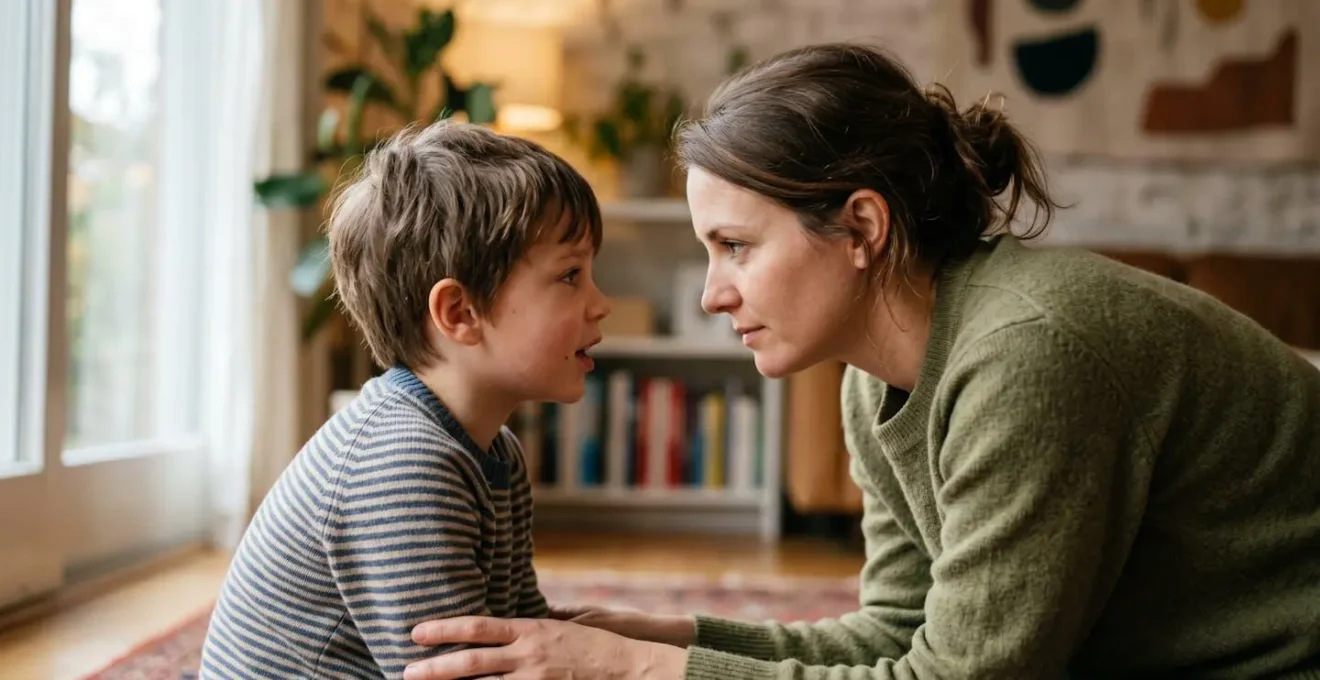
This kind of deep listening builds immense emotional safety and trust. When children feel consistently heard, they are more likely to come to you with their problems instead of acting them out. It short-circuits the need for behavior to escalate to get attention. It is the ultimate preventative medicine for emotional storms. By making your child feel seen and understood, you give them the secure base from which they can learn to navigate their own complex inner world.
By shifting your perspective from a behavior manager to an emotion coach, you can transform these challenging moments into opportunities for deep connection and skill-building. The next step is to start practicing these techniques during calm moments, making them a familiar part of your family’s emotional language.