
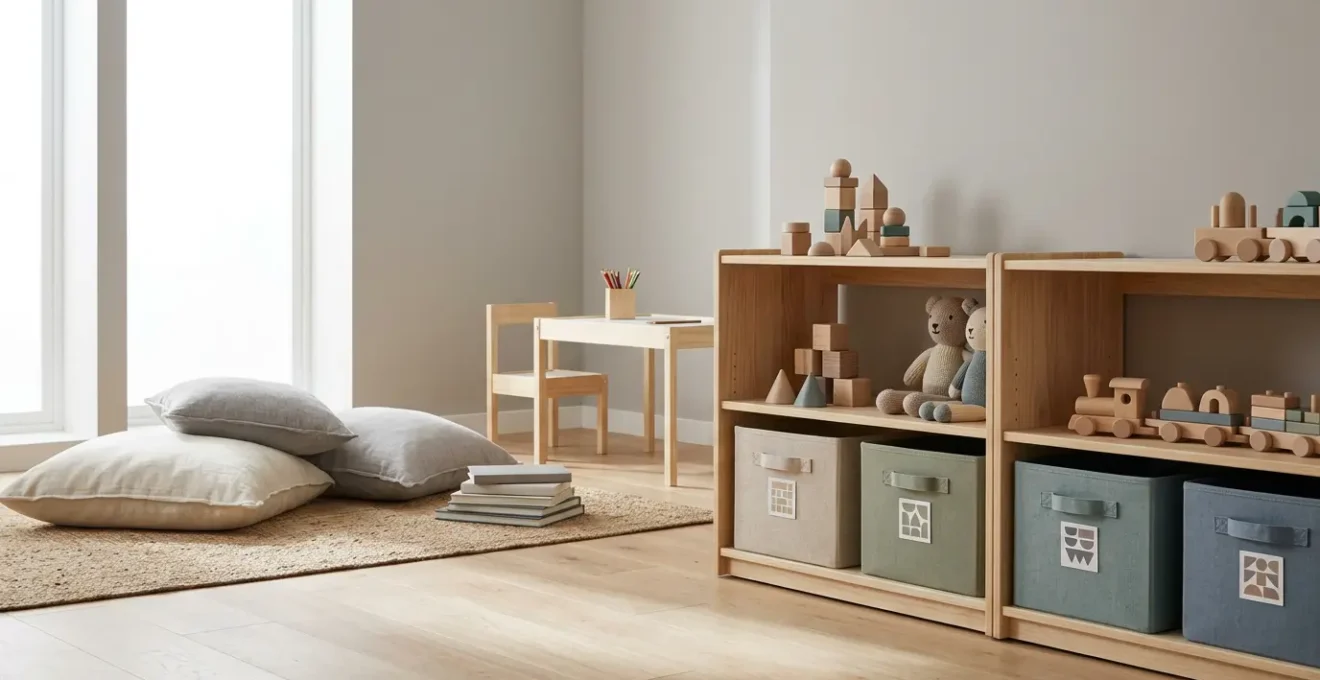
The secret to a functional playroom isn’t more storage bins; it’s designing a developmentally-supportive ‘prepared environment’ that makes play, and cleanup, intuitive for your child.
- Reducing the number of available toys through rotation dramatically increases a child’s focus and creativity.
- Visual systems like picture labels and open shelving empower children to become independent in their own space.
Recommendation: Start not by buying more storage, but by thoughtfully removing 80% of the toys from the main play area and observing the immediate impact on your child’s engagement.
If you’ve ever stepped on a LEGO brick in the dark or felt a sense of dread opening a toy chest, you understand the unique chaos of a child’s playroom. It’s a colorful, chaotic landscape where well-intentioned gifts become a tidal wave of plastic and fluff. The common advice is predictable: buy more bins, label everything, and declutter. But for many parents, these solutions feel like a temporary dam against a relentless flood. The mess always returns, and the frustration mounts.
But what if the goal wasn’t just to “tidy up”? What if we reframed the problem entirely? The real challenge isn’t just managing stuff; it’s about understanding the psychology of play. A room overflowing with choices can be as overwhelming for a child’s developing brain as it is for a parent’s sanity. The constant disarray isn’t a sign of a “messy kid,” but often a symptom of a poorly designed environment that hinders focus and independence.
The true key to creating order from chaos lies in a shift of perspective: from reactive tidying to proactive design. This guide moves beyond generic tips to offer a strategic framework based on principles of child development. We will explore how to transform your playroom from a simple storage area into a “prepared environment”—a space intentionally designed to foster deep play, encourage autonomy, and make organization a natural part of the daily rhythm, not a dreaded chore. We will delve into the power of toy rotation, the magic of visual cues, and the art of letting go, providing you with a complete toolkit to curate play, not just contain it.
This article provides a comprehensive roadmap, broken down into actionable strategies, to help you reclaim your space and, more importantly, enrich your child’s world. Explore the sections below to build a playroom that works for everyone.
Summary: A Parent’s Guide to Creating Order from Toy Chaos
- Toy Rotation: How to Store 80% of Toys to Increase Engagement
- Picture Labels: Enabling Toddlers to Tidy Up Independently
- Zoning: Creating Distinct Areas for Reading, Building, and Art
- Art Galleries: Displaying Kids’ Art Without Cluttering the Fridge
- Open Shelving vs Toy Chests: Why Dumping Toys Hides Them from Play?
- Toy Rotation: How Fewer Toys Lead to Deeper Play?
- The “Yes” Space: An Area Where Everything Is Safe to Touch
- Decluttering with Kids: How to Teach Letting Go of Stuff
Toy Rotation: How to Store 80% of Toys to Increase Engagement
The concept of toy rotation is perhaps the single most impactful strategy for transforming a cluttered playroom. It’s a counter-intuitive idea: to get your child to play more, you must first give them less. A room filled with hundreds of toys doesn’t inspire creativity; it creates a high cognitive load, leading to decision fatigue. A child faced with too many options will often flit from one thing to another, never truly engaging deeply with anything. By reducing the number of available toys to a manageable few, you create an environment that invites focus and imagination.
The principle is simple: keep a small, curated selection of toys accessible and store the rest. This isn’t about deprivation; it’s about novelty and appreciation. When a “new” bin of toys emerges from storage after a few weeks, it’s met with the same excitement as a birthday present. This system respects the child’s developmental need for order and predictability while keeping their play landscape fresh and engaging. The goal is to have about 10-20% of toys available at any given time.
The evidence supports this approach. Instead of a jumbled mess, a few well-chosen toys on a shelf become a powerful “play invitation.” Research confirms that a minimalist environment is beneficial. For instance, research from the University of Toledo found that toddlers with 4 toys engaged more meaningfully with each, playing in a deeper, more imaginative way than toddlers who had 16 toys available. This demonstrates that curation is key to unlocking richer play experiences.
Picture Labels: Enabling Toddlers to Tidy Up Independently
One of the biggest frustrations for parents is the endless cycle of tidying up. But asking a pre-reading toddler to “put the blocks in the block bin” is an abstract task if they can’t identify it. This is where picture labels become a game-changer, transforming cleanup from a parent-led chore into a child-led activity. By placing a simple, clear picture of the contents on the outside of a bin or basket, you provide a visual cue that your child can understand instantly. This isn’t just about organization; it’s about empowering your child and fostering visual literacy.
This system gives everything a designated home that your child can see and recognize without assistance. It turns tidying into a matching game: “Does this toy match the picture on this box?” This simple process builds confidence, promotes responsibility, and lays the groundwork for future organizational skills. When a child can successfully manage their own environment, it contributes to a powerful sense of competence and autonomy. It makes them a partner in maintaining the order of the prepared environment you’ve created.
This isn’t just a home-based hack; it’s a proven educational strategy. As noted in a case study on visual systems in classrooms, educators found that picture labels help children become more secure as they make choices and manage their world. This system builds success into their activities, promoting independence without the need for constant adult intervention for toy retrieval and cleanup.
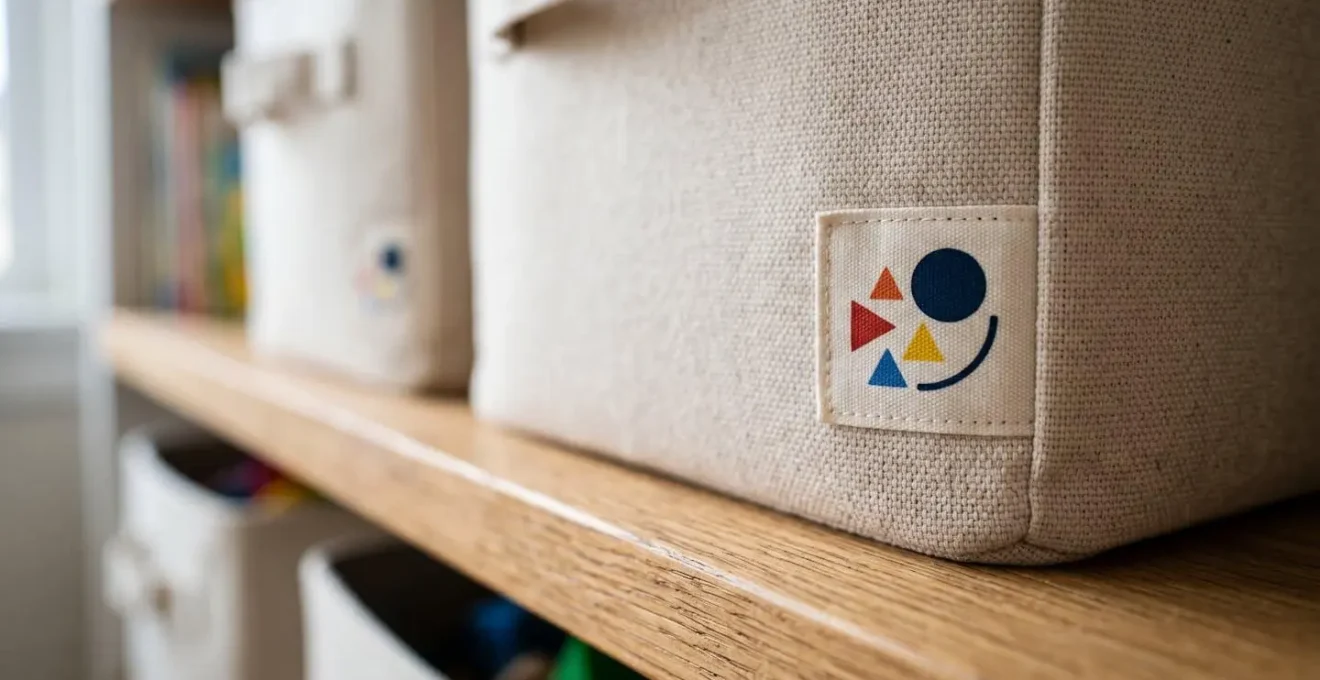
As you can see, the visual clarity of this system removes ambiguity. There’s no question where the dinosaurs or the building blocks belong. This simple act of visual communication makes your child an active participant in the organization of their space, which is a fundamental step toward genuine independence.
Zoning: Creating Distinct Areas for Reading, Building, and Art
A successful playroom design often mirrors the layout of an early childhood classroom, which is intentionally organized into distinct “zones” or “stations.” Instead of one large, undefined space where all activities blend together, creating specific areas for different types of play helps a child’s brain switch gears and focus on the task at hand. Zoning brings a sense of order and purpose to the room, clearly communicating what happens where. This structure helps contain the mess and supports a more focused and less chaotic play experience.
Common zones might include a cozy reading nook with a soft rug and accessible bookshelves, a building area with blocks and construction toys on a durable mat, and an art station with a small table and easily accessible supplies. You don’t need a massive room to achieve this; a well-placed rug, a piece of furniture, or even a specific type of storage can define a zone. The key is creating visual and physical boundaries that signal a shift in activity. This approach helps children understand the room’s flow and develop the crucial skill of transitioning between different modes of play.
As the experts on organization suggest, borrowing from professionals is a smart move. In their advice, the team from The Home Edit reinforces this idea:
Take clues from your child’s classroom and create stations for each type of activity. Some heavy hitters include a reading nook, an area for arts and crafts, and stations for special interests (building, dress-up, etc.)
– The Home Edit, Top 10 Playroom Organization Tips
To make these zones effective, consider containment strategies. Use a “LEGO Rug” with raised edges that defines the building area and allows for quick cleanup. For art, a waterproof “Art Mat” can protect floors and be rolled away. And for flexibility, mobile storage like rolling carts allows zones to be adapted as your child’s interests evolve. This makes the space dynamic and responsive to your child’s growth.
Art Galleries: Displaying Kids’ Art Without Cluttering the Fridge
A child’s artistic output can be prolific, quickly overwhelming the traditional display space: the refrigerator door. While every piece feels precious, the sheer volume can create visual clutter. The challenge is to honor your child’s creativity without drowning in paper. A dedicated, rotating art gallery is the perfect solution. It validates their work by giving it a place of honor while teaching the subtle life lesson that not everything can be kept forever, but everything can be celebrated in its moment.
There are many creative ways to establish a home gallery. One simple and effective method is the pants hanger system. By using pants hangers with clips, you can easily hang and rotate artwork on a wall. This system empowers children to become curators of their own gallery, deciding which pieces are “on exhibit” this week. This adds color to the playroom and looks far more intentional than a cluttered fridge. It creates a sense of pride and ownership for the child.
For parents struggling with the sentimental attachment to every drawing, a digital archive offers a path to freedom. The strategy is simple but powerful:
- Photograph: Take a picture of each new masterpiece with your phone.
- Save: Store the digital files in a dedicated cloud folder, organized by year (e.g., ‘Art 2024’).
- Curate: At the end of the year, select the best 20-30 images.
- Create: Use an online service to create a beautiful, printed photo book or “annual yearbook” of their art.
This digital strategy gives you permission to respectfully let go of the physical paper while preserving the memory and creating a cherished collection of keepsakes that can be enjoyed for years to come. The annual photo book becomes a tangible celebration of their creative journey, far more meaningful than a dusty box in the attic.
Open Shelving vs Toy Chests: Why Dumping Toys Hides Them from Play?
The classic toy chest, with its deep, cavernous interior, seems like the perfect solution for quick cleanups. You can just dump everything inside and close the lid. However, from a child development perspective, the toy chest is an “out of sight, out of mind” black hole. Toys get buried, broken, and forgotten. It teaches a child that “cleaning up” means hiding the mess rather than restoring order. A child can’t play with what they can’t see, making the toy chest a barrier to engagement.
The superior alternative is low, open shelving. This Montessori-inspired approach is fundamental to creating a “prepared environment.” By displaying a limited selection of toys in an organized and accessible way, you are creating a “play invitation.” Each toy has a visible, designated spot, which communicates value and respect for the materials. This layout allows a child to visually scan their options, make a deliberate choice, and then, crucially, know exactly where to return the item when they are finished. This promotes a natural cycle of play, cleanup, and renewed play.
This philosophy of visibility is key to encouraging independent engagement. As Montessori designers note, order promotes focus.
When there are too many toys or things are messy, children tend to jump from one activity to another without settling. A well-organized open shelf with a few carefully chosen materials promotes concentration.
– YokoTower Montessori Design, Why Choose an Open Shelf in a Montessori Bedroom
This principle extends to books as well. Traditional bookshelves that show only the spines are designed for adults. For children, front-facing book displays are far more engaging. By showing the vibrant covers, you draw them in. In fact, research demonstrates the power of this simple switch. For example, a study cited by the American Montessori Society found a 45% increase in children’s engagement with books when they were displayed in an accessible, front-facing manner. This small change transforms a bookshelf from simple storage into a powerful invitation to read.
Toy Rotation: How Fewer Toys Lead to Deeper Play?
The paradox of modern play is that while children have more toys than ever, they may be playing less. The sheer volume of options can be paralyzing. When a child is surrounded by a mountain of toys, they are more likely to engage in superficial play—dumping bins, moving from one item to the next, and creating a wide swath of chaos without ever becoming truly absorbed. This isn’t a flaw in the child; it’s a natural response to being overstimulated. The brain simply can’t decide where to focus its precious attention.
The solution is to curate the play environment by dramatically reducing the number of toys available. When a child has only a handful of well-chosen items to play with, something magical happens: deep play emerges. They explore each toy’s potential more fully, invent more complex scenarios, and sustain their focus for longer periods. A set of simple wooden blocks can become a castle, a car, a phone, or a bridge. This imaginative, problem-solving work is the bedrock of cognitive development. Fewer toys don’t limit play; they unleash it.
The statistics on toy ownership are staggering and highlight the disconnect between what children have and what they use. For instance, recent figures suggest that the typical UK child owns around 240 toys but parents estimate they play with only about 12 favorites (a mere 5%) on a daily basis. This shows that the vast majority of toys are not adding value; they are simply creating clutter and distraction.
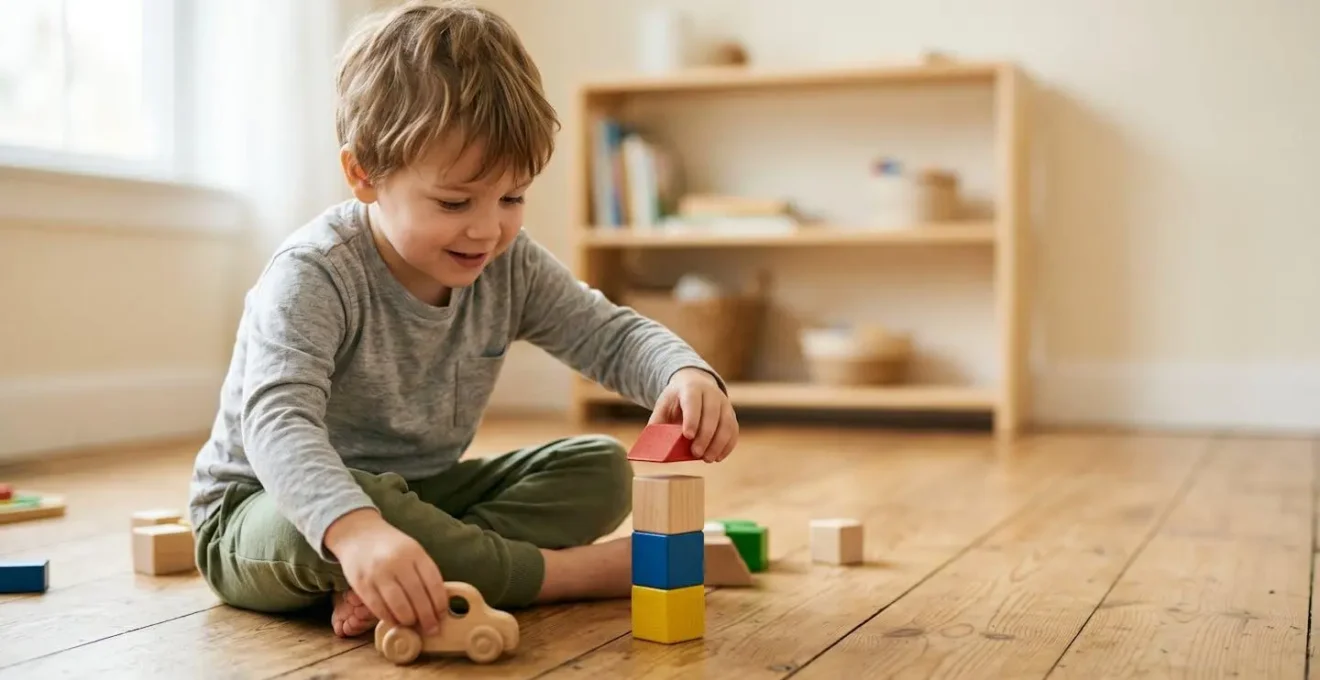
This image perfectly captures the essence of deep play. With a minimal selection of toys, this child is not distracted but is fully absorbed, their imagination firing on all cylinders. This level of concentration is what builds neural pathways and fosters creativity. It is the ultimate goal of a well-curated playroom, proving that the quality of play is inversely proportional to the quantity of toys.
The “Yes” Space: An Area Where Everything Is Safe to Touch
A “Yes” Space is a designated area—it could be the entire playroom or just a corner—where everything within the child’s reach is safe for them to touch, explore, and play with. This concept is revolutionary for both parent and child. For the child, it offers a world of unrestricted exploration, fostering curiosity and confidence. For the parent, it eliminates the need for constant supervision and the exhausting repetition of “No, don’t touch that!” It transforms the dynamic from one of restriction to one of freedom.
Creating a “Yes” Space is about proactive childproofing and thoughtful curation. It means removing all potential hazards: covering electrical outlets, securing furniture to walls, and ensuring all toys are age-appropriate and free of small parts. It’s about designing a fail-safe environment where you can genuinely relax, knowing your child is safe. This freedom from constant worry allows for more positive and connected interactions. When you aren’t spending your energy policing their every move, you can more fully enjoy observing and participating in their play.
This space is the physical embodiment of the “prepared environment” philosophy. It respects the child’s innate drive to explore their world through their senses. By thoughtfully removing the “no’s,” you create a space that is filled with “yes’s,” encouraging independent exploration and building a foundation of trust. To ensure your space is truly safe, a systematic audit is essential.
Your Yes Space Safety Audit Checklist
- Anchor Furniture: Secure all heavy furniture like shelves and dressers to the wall to prevent dangerous tip-over accidents.
- Choking Hazard Check: Inspect all toys and remove any with small parts that could fit through a toilet paper tube.
- Plant Safety: Ensure all houseplants within reach are non-toxic, or remove them from the space entirely.
- Cord Management: Use cord shorteners or install cordless blinds to eliminate strangulation hazards from window coverings.
- Air Quality: Choose furniture and materials with low or no VOCs (volatile organic compounds) for a healthier indoor environment.
By diligently working through this checklist, you can create a sanctuary of safe exploration that benefits the entire family. It’s a space where your child’s autonomy is respected and your peace of mind is preserved.
Key Takeaways
- Less is More: Reducing the number of toys through a rotation system is the most effective way to decrease overwhelm and increase the depth and quality of play.
- Empower Through Systems: Visual cues like picture labels and intentional zones empower children to be independent, turning cleanup into a skill they can master, not a chore they resist.
- Curate, Don’t Just Collect: Your role is to be the thoughtful curator of your child’s play environment. Every item should earn its place by serving a developmental purpose or sparking joy.
Decluttering with Kids: How to Teach Letting Go of Stuff
Perhaps the most challenging part of playroom organization is the decluttering process, especially when it involves a child’s precious belongings. The goal is not to sneak toys out in the middle of the night, which can breed mistrust. Instead, the goal is to use this process as a valuable teaching moment. It’s an opportunity to teach empathy, decision-making, and the powerful idea that letting go can be an act of generosity, not just loss. This transforms decluttering from a battle of wills into a collaborative family project.
The key is to reframe the conversation. Instead of asking “What do you want to get rid of?”, which sounds negative and focuses on loss, use empathetic scripts that focus on growth and giving. Try phrases like: “Which toys are for the baby you were, and which are for the big kid you are now?” or “Which of your amazing toys are ready to go on an adventure and make another child happy?” This language respects their past self while celebrating their current growth. It shifts the focus from what they are losing to who they are becoming and how they can help others.
Connecting the act of donating to the needs of others is a powerful motivator. As one parent-blogger notes, empathy is a natural gateway to generosity.
Kids are naturally very empathetic. Talking to my kids openly about how different life is for different people makes them more appreciative of what they have and provides them the opportunity to show they care by donating toys they’ve outgrown.
– Hey There Home, How to Teach Your Kids to Declutter
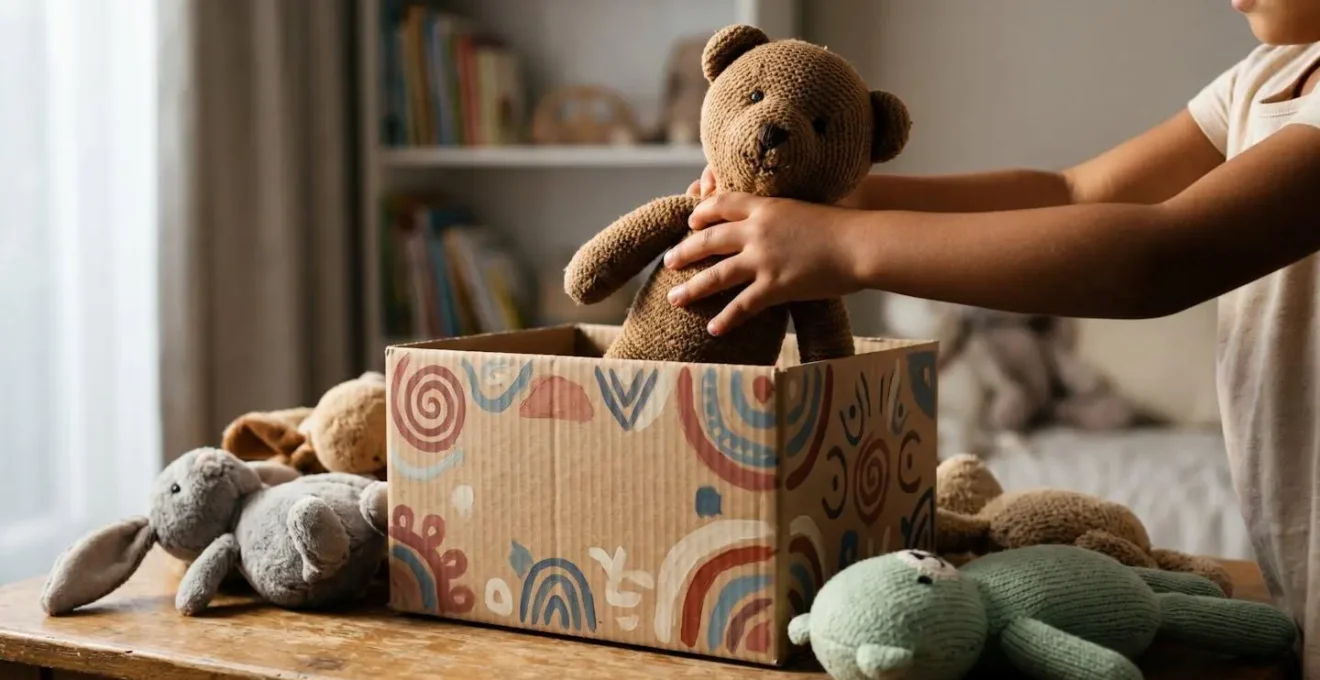
Involving children in decorating a “giving box” can also make the process more concrete and positive. It becomes a special container for toys that are going on to their next chapter. By teaching them to let go with respect and purpose, you give them a priceless life skill that extends far beyond the playroom walls. You teach them that our belongings don’t define us and that true joy can be found in giving.
Now that you are armed with these strategies, the final step is to put them into practice. Start small, be consistent, and remember that the goal is progress, not perfection. A well-organized playroom is a gift to your child and to yourself.