
True school readiness is less about knowing the alphabet and more about fostering the practical, everyday independence that builds a child’s confidence and frees them up to learn.
- Key self-care skills like dressing and toilet independence reduce anxiety and allow children to participate fully in classroom activities.
- Social-emotional skills, learned through play and structured goodbyes, are the foundation for making friends and engaging in group learning.
- Your most powerful tool is a proactive partnership with your child’s teacher, built on open communication from day one.
Recommendation: Focus on mastering one or two of these simple, confidence-boosting routines at a time, celebrating effort over perfection.
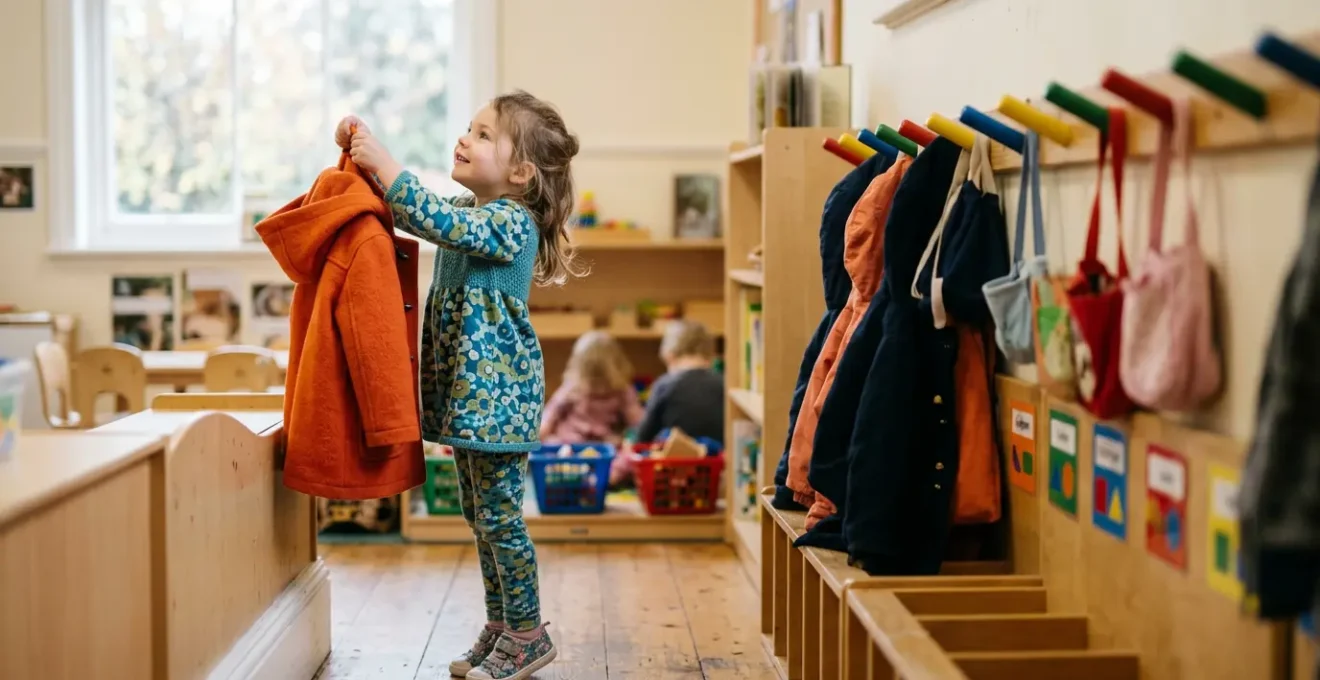
That first day of school is a huge milestone in any family’s life. As a parent, you’re likely feeling a mix of pride, excitement, and a little bit of natural worry. You want to give your child the best possible start, and you’ve probably been told to practice letters and numbers, read stories, and count everything in sight. While all of that is wonderful, as a Reception teacher, I want to share a secret from inside the classroom: the most ‘ready’ children aren’t always the ones who can write their name perfectly. They are the ones who can manage their own coat after playtime, navigate the toilets without fear, and join in a game with a new friend.
This is what we call practical independence. It’s the bedrock of confidence that allows a child to feel capable and secure in a bustling new environment with 30 other children. When a child isn’t worried about the basics, they have the mental and emotional space to do the important work of learning, exploring, and building friendships. It’s not about being a perfect student; it’s about having the tools to be a happy, engaged member of the class community. Overthinking academic milestones can create unnecessary stress for both you and your child.
Instead, we’re going to focus on the skills that truly make a difference in those first few months. This guide is built from years of experience helping little ones settle into school. We’ll walk through the key areas of independence, from getting dressed to saying goodbye. We will explore not just what to practice, but *why* these skills are so crucial in a busy classroom and, most importantly, the simple, playful ways you can support your child in mastering them. This is your practical path to building a truly school-ready child.
This article will guide you through the essential skills that foster true school readiness. Below is a summary of the practical areas we will cover to help you prepare your child for a confident start.
Summary: A Teacher’s Checklist for School Readiness
- Coat and Shoes: Why Putting on Their Own Shoes Is Key for School?
- Toilet Independence: Ensuring Your Child Can Wipe and Flush Solo
- Turn Taking: Playing Board Games to Learn Patience
- Name Recognition: Finding Their Coat Peg and Drawer
- The Goodbye: Preparing for Drop-Off Without Tears
- Scissor Skills: How to Teach Cutting Safely from Snips to Shapes?
- Routine Cards: Visual Guides for Kids Who Forget to Brush Teeth
- When to Hire a Tutor? Signs Your Child Needs Extra Academic Support
Coat and Shoes: Why Putting on Their Own Shoes Is Key for School?
Imagine the scene: it’s the end of a joyful, muddy playtime, and 30 four-year-olds need to get their coats and shoes on to come inside. The child who can independently pull on their wellies and zip up their jacket feels a surge of pride and competence. The child who can’t is left waiting, feeling dependent and potentially missing the start of the next exciting activity. This is why mastering dressing skills isn’t just a chore; it’s a cornerstone of classroom confidence and participation.
As a teacher, my goal is to empower every child, but the reality of a busy classroom means I can’t be everywhere at once. A child who can manage their own fastenings is free to move at their own pace, helping themselves and even their friends. This fosters a sense of agency and reduces frustration. For this reason, simple, child-friendly clothing is a huge help. As one parent noted in a study on children’s footwear, “Velcro is a priority so he can do his own shoes.” Choosing slip-on or Velcro shoes and elasticated trousers gives your child a built-in advantage for success.
Don’t expect mastery overnight. The journey from pulling off a sock to zipping a coat is a long one, with different skills emerging at different ages. A 3-year-old might manage their own shoes, while a 4-year-old is still refining the coordination for a zip. The key is to provide low-pressure opportunities to practice. Building an extra ten minutes into your morning routine allows for this trial-and-error without the stress of being late. Celebrate the small victories—getting one arm in the sleeve, pulling a sock on—and model a patient, problem-solving attitude. This small investment in time now pays huge dividends in confidence later.
Toilet Independence: Ensuring Your Child Can Wipe and Flush Solo
Of all the practical skills, toilet independence is perhaps the most crucial for a child’s dignity and well-being at school. Being able to manage the entire process—from knowing when they need to go, to wiping themselves properly, washing their hands, and rejoining the group—is a massive confidence booster. It means they don’t have to ask an adult for help with something so personal, and they won’t miss out on important learning or playtime because of an accident or fear of the bathroom.
The goal is not just to be “potty trained” but to be “toilet independent.” This means your child can handle the whole routine solo in an unfamiliar environment. School bathrooms can be noisy, with loud hand dryers and echoing flushes that can be intimidating. Practice using public toilets when you’re out and about to help demystify the experience. Talk about what’s the same and what’s different from your toilet at home. It’s a key developmental step; in fact, independence in toileting is a developmental milestone that is a strong indicator of overall school readiness.
Your role is to be a supportive coach. Create a nurturing environment at home where there’s no pressure or shame. Accidents are a normal part of learning, so respond with calm reassurance. Focus on the routine: pull down trousers, sit on the toilet, use the right amount of paper, wipe from front to back, flush, and then wash hands thoroughly with soap. A simple picture sequence taped to the bathroom wall can be a great visual reminder. By framing it as a ‘big kid’ skill they are mastering for school, you empower them to take ownership of their own bodies and needs, which is a powerful feeling for any four-year-old.
Turn Taking: Playing Board Games to Learn Patience
Learning in a Reception classroom is a deeply social activity. Whether it’s sharing crayons at the art table, building a tower with a friend, or waiting to answer a question, nearly every part of the day involves navigating the needs and actions of others. This is why learning to take turns is not a ‘soft skill’—it is a fundamental academic skill. It teaches patience, impulse control, and the understanding that others have ideas and desires too.
Simple board games are one of the most effective and enjoyable ways to practice this. Games with a spinner or a single die are perfect. The rules are clear: you take your turn, then I take mine. This simple structure provides a safe space to experience the feeling of waiting and to celebrate another person’s move. The waiting is the hard part, and it’s where the most important learning happens. You are teaching your child that they can survive the brief moment of not being the centre of attention, and that their turn will come around again. It’s a micro-dose of delayed gratification.
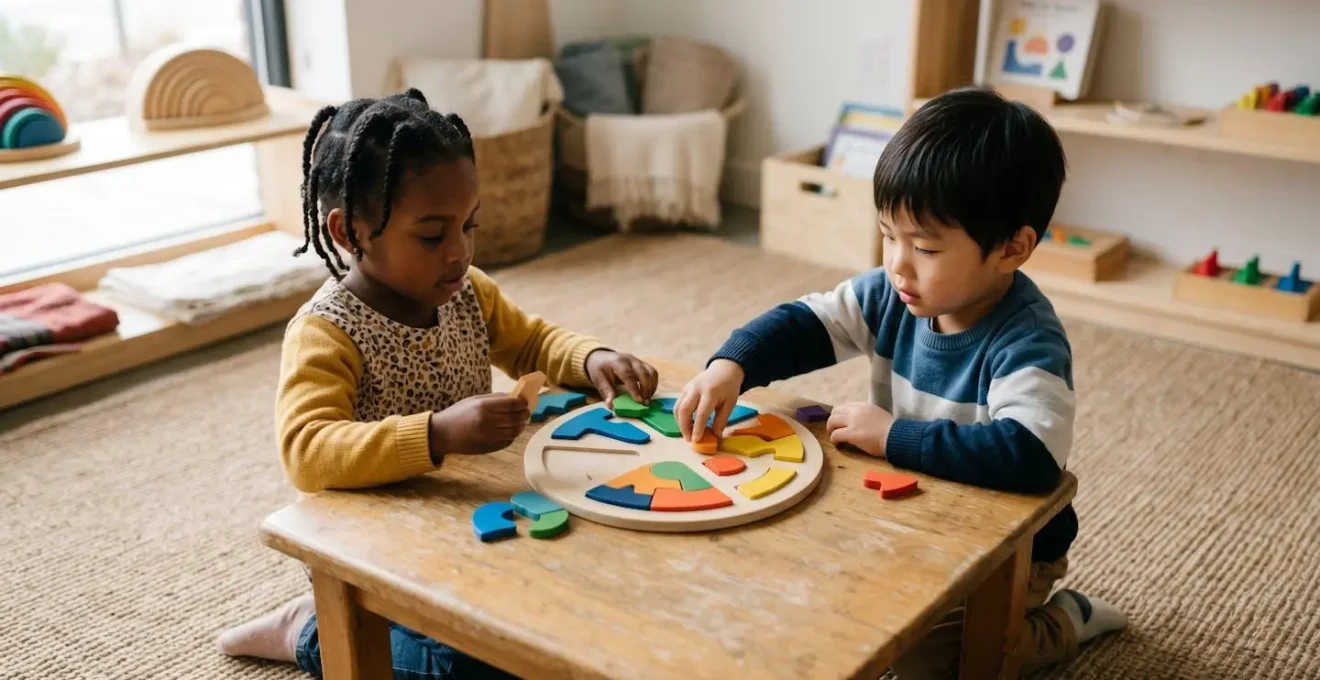
For some children, especially those who feel anxious about competition, the idea of a ‘winner’ and ‘loser’ can make turn-taking incredibly stressful. If this sounds like your child, cooperative games can be a game-changer. They reframe the entire experience from “me vs. you” to “us vs. the game.”
Case Study: The Power of Cooperative Play
A family with an extensive board game collection found that traditional competitive games often led to meltdowns. They discovered that in cooperative games, where players team up to achieve a common goal, the dynamic completely changed. Because everyone was working together, turns became opportunities for discussion and shared strategy rather than moments of anxiety. This approach was especially beneficial for their autistic child, as it eliminated the fear of losing and transformed turn-taking from a source of conflict into an exercise in collaborative problem-solving.
Name Recognition: Finding Their Coat Peg and Drawer
Walking into a classroom for the first time can be overwhelming. Everything is new and belongs to everyone. But then, a child spots it: their own name, on their own peg, above their own drawer. Suddenly, they have an anchor. They have a space that is theirs. This moment of recognition is incredibly powerful. It’s the first step in feeling a sense of ownership and belonging within the classroom community. It says, “I am here, and this is my place.”
From a teacher’s perspective, this is also a vital practical skill. “Find your peg” or “Put this in your drawer” are common instructions throughout the day. A child who can quickly identify their name can follow these directions independently, contributing to the smooth flow of the classroom. But the benefits go much deeper than just logistics. That personal connection to the letters in their name is a huge motivator for early literacy. As the Collaborative for Children notes, “When a child sees their name on a cubby, a worksheet, or a classroom label, they feel ownership. That emotional connection boosts memory, attention, and motivation.”
You can easily support this at home. Write their name on their artwork and display it. Have name labels on their cup or placemat. Point out the first letter of their name on signs or in books. You’re not drilling them on phonics; you’re making their name a special, exciting part of their world. This isn’t just about letter recognition; research shows that children who start with their name learn letters faster and retain them longer. The emotional connection turns an abstract symbol into something meaningful and personal. When they arrive at school and see those familiar shapes, it will feel less like a test and more like a welcome from an old friend.
The Goodbye: Preparing for Drop-Off Without Tears
The morning drop-off can be one of the most emotionally charged moments of the school day for both children and parents. A smooth, calm goodbye sets a positive tone for the entire day, allowing your child to transition into the classroom feeling secure and ready to learn. A tearful, prolonged separation, on the other hand, can leave a child feeling unsettled for hours. The secret to a good goodbye is preparation, consistency, and your own emotional regulation.
Children are experts at reading our emotional cues. If you are anxious, they will be anxious. Your calm is their calm. Even if you’re feeling a pang of sadness yourself, project confidence and positivity. A quick, loving hug and a clear, cheerful “Have a wonderful day, I’ll be back to pick you up after story time!” is far more reassuring than a long, hesitant goodbye. Create a simple, predictable routine: one hug, one kiss, a special handshake, and then you go. This ritual becomes a signal of safety and predictability. You are teaching your child that separation is temporary and that you always come back.
If your child hasn’t spent much time away from you, practice is key. Start with short periods of separation with other trusted adults, like grandparents or friends. Talk positively about school and all the exciting things they will do and the friends they will make. Explicitly tell them what you will be doing while they are at school (“I’m going to work, and then I’ll come right back to get you”). This turns the separation from an empty void into a defined period with a clear reunion point. And remember, we teachers are your partners. We have seen it all before and have many strategies to help a child who is feeling wobbly. A quick, warm welcome from a teacher can work wonders as soon as you’ve left.
Scissor Skills: How to Teach Cutting Safely from Snips to Shapes?
Holding and using scissors for the first time is a major milestone in developing fine motor skills. It might seem like a simple craft activity, but the act of cutting is a complex workout for a child’s brain and hands. It requires them to use both hands for different tasks (one to hold the paper, one to cut), a skill known as bilateral coordination. It also strengthens the small muscles in the hand that are essential for developing a proper pencil grip for writing later on.
Safety is, of course, the first priority. Always start with child-safe scissors with a blunt tip and always supervise. Teach the basic rules from the very beginning: “We only cut paper,” and “We carry scissors with the pointy end down.” Start with activities that don’t even involve cutting. Simply opening and closing the scissors in the air, like a puppet’s mouth, helps build the necessary hand strength. Then, move on to snipping play-doh or straws, which are easier to cut than paper and provide satisfying sensory feedback.
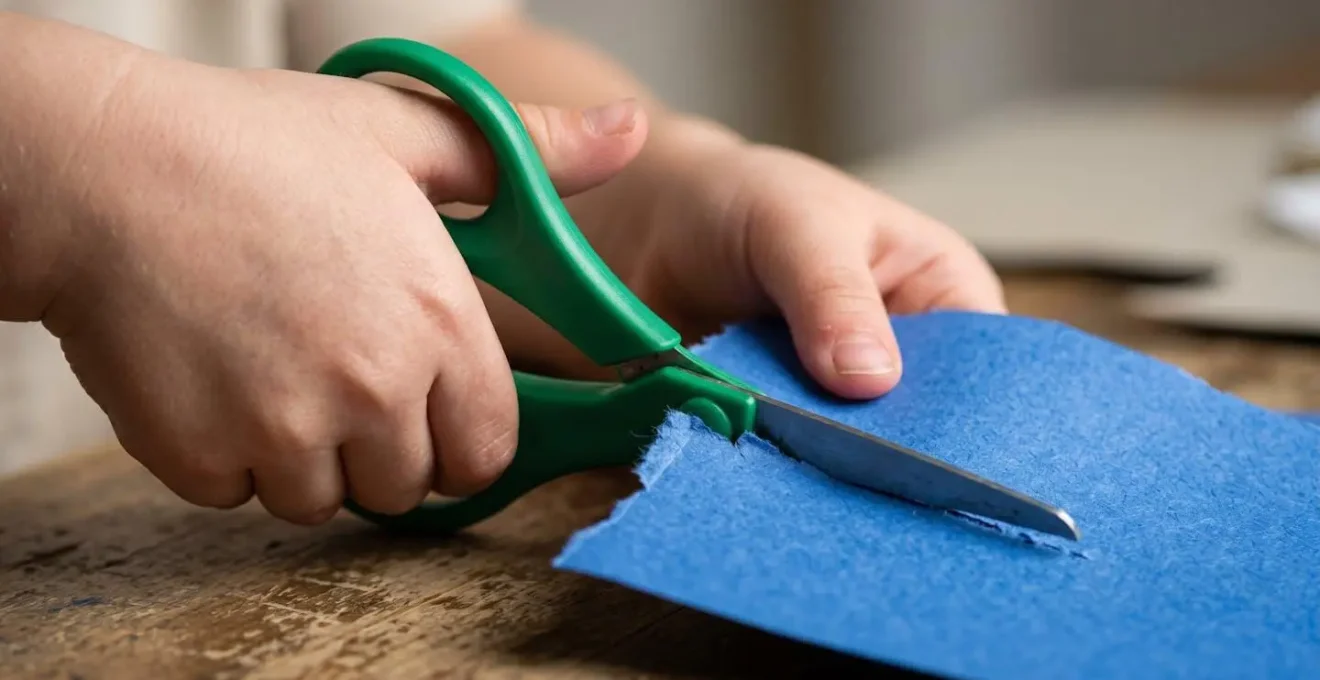
Once they’re ready for paper, start with single snips along the edge of a piece of card. Then, draw thick, straight lines for them to follow. The journey progresses from straight lines to zig-zags, to curved lines, and finally to simple shapes like squares and circles. This isn’t just about making crafts; it’s about neurological development. According to occupational therapy research, using scissors strengthens neural pathways by requiring hand-eye coordination, bilateral coordination, and even crossing the body’s midline, which is vital for higher-level learning. Every snip is building a more connected brain.
Routine Cards: Visual Guides for Kids Who Forget to Brush Teeth
“Have you brushed your teeth?” “Did you put your shoes on?” “Don’t forget your coat!” If you feel like a broken record during your morning and evening routines, you are not alone. A young child’s brain is still developing the executive functions needed for planning, sequencing, and remembering multi-step tasks. Nagging doesn’t help them learn; it just creates frustration for everyone. This is where visual routine cards become a parent’s best friend.
A routine chart is a sequence of pictures or simple drawings that illustrates the steps of a task, like getting ready for school (get dressed, eat breakfast, brush teeth, put on shoes). By placing this chart where your child can see it, you empower them to manage their own routine. It’s a powerful shift in dynamic. The chart becomes the ‘boss,’ not you. Instead of saying, “Go brush your teeth,” you can ask, “What’s next on your chart?” This turns you from a taskmaster into a supportive teammate.
The magic of these cards is that they externalize the mental work. As early childhood development specialists explain, “Routine cards act as a tangible substitute for a child’s still-developing prefrontal cortex, reducing cognitive load.” When a child doesn’t have to hold all the steps in their head, they are less likely to get overwhelmed and more likely to succeed. For the most buy-in, co-create the chart with your child. Let them draw the pictures or put the cards in order. This sense of ownership makes them far more invested in following the plan they helped create. You’re not just getting out the door on time; you’re teaching them a foundational life skill in planning and independence.
Key takeaways
- Practical independence in self-care (dressing, toileting) is the true foundation of school readiness, building confidence that academics alone cannot.
- Social-emotional skills like patience and turn-taking, learned through simple games, are essential for thriving in a collaborative classroom environment.
- Your most valuable and effective resource is a strong, communicative partnership with your child’s teacher, established from the very beginning.
When to Hire a Tutor? Signs Your Child Needs Extra Academic Support
It’s natural to worry about your child keeping up academically, even in Reception. The question of “when to hire a tutor” often comes from a place of love and a desire to provide the best support. However, for a four or five-year-old just starting their educational journey, a private tutor is very rarely the first or best answer. Before you even consider that path, your first and most powerful partner is already in place: your child’s teacher.
We, as teachers, are trained to support children across a wide spectrum of developmental stages and learning styles. The Reception year is all about learning through play, observation, and gentle guidance. We have a wealth of experience and strategies for helping children who might need a little extra support in certain areas. A child struggling with number recognition, for example, might benefit from a specific type of counting game, not from sitting down with a tutor for formal lessons. We can implement these strategies within the classroom in a way that feels like play, not pressure.
The key to unlocking this support is to build a strong, open partnership with the teacher from day one. Don’t wait for a problem to arise. At the beginning of the year, share your insights about your child: what they love, what makes them anxious, how they learn best. This preemptive communication is invaluable. Your child’s teacher is your greatest ally and a source of professional expertise. By working together, you can ensure your child gets the right support, at the right time, in the right way—usually long before the word “tutor” ever needs to be mentioned.
Your Action Plan: Building a Strong Teacher Partnership
- Communicate Preemptively: Don’t wait for parent-teacher conferences. From day one, share a few key observations about your child’s personality, strengths, and any specific concerns you have. A short, positive email can set a collaborative tone for the whole year.
- Share Learning Insights: You are the expert on your child. Observe how they learn best. Do they need to move their body? Do they love stories? Do they learn by building? Share these insights with the teacher. For example: “I’ve noticed he learns letters best when we write them in sand.”
- Trust the School’s Expertise: Remember that schools are highly experienced in supporting a diverse range of needs. Trust that they have systems and strategies in place. Ask, “What support can we put in place together?” rather than immediately seeking outside help.
- Establish a Rhythm for Check-ins: Ask the teacher what their preferred method of communication is (email, a communication book) and agree on a reasonable frequency for updates. A brief weekly or bi-weekly check-in can keep you both aligned and prevent small issues from becoming big ones.
- Celebrate Wins Together: When the teacher shares a positive observation or your child masters a new skill at school, celebrate it! Reinforce the connection between home and school by sharing in the successes, no matter how small. This builds a positive feedback loop for everyone.
Starting this partnership now, with a spirit of collaboration and trust, is the single most effective action you can take to support your child’s entire school journey. Begin by drafting a short, positive introductory email to your child’s new teacher today.