
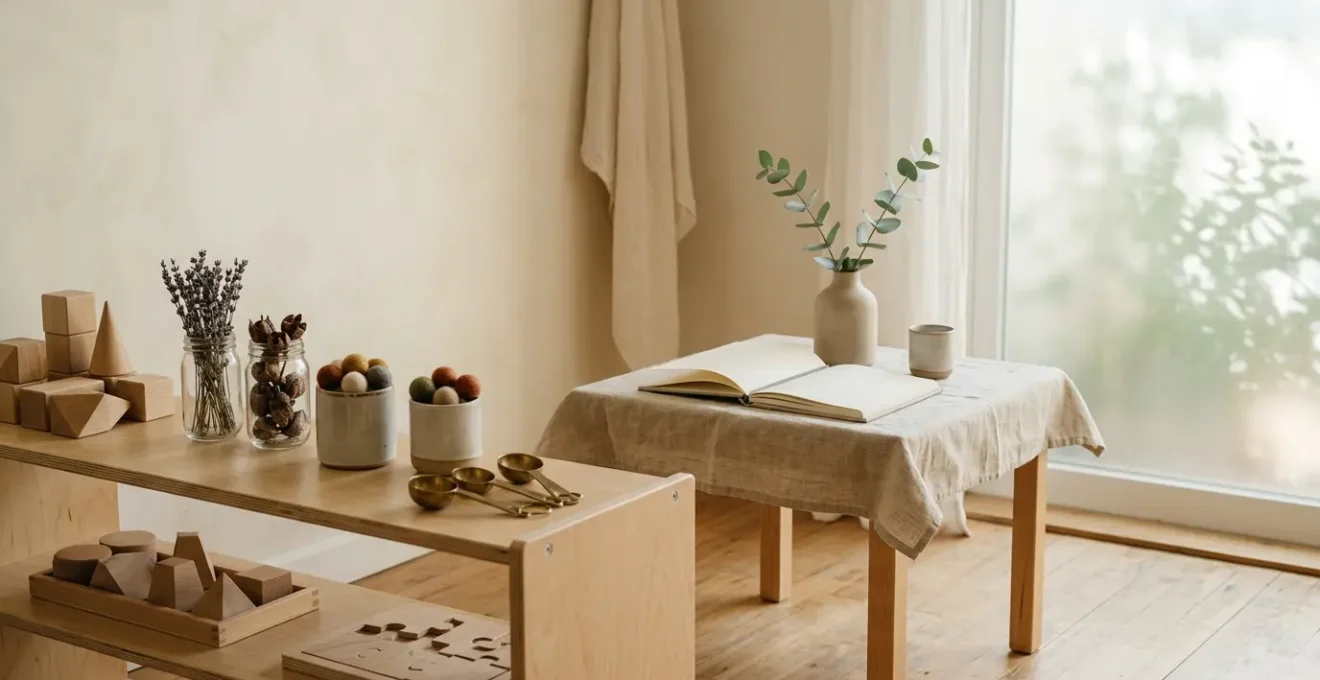
The critical choice isn’t picking the ‘best’ educational label, but becoming the architect of your child’s learning environment.
- The most effective approach borrows key principles—like Montessori’s independence, Waldorf’s connection to nature, and Reggio Emilia’s collaborative spirit—to create a bespoke ecosystem at home.
- Focusing on the design of your space and the quality of materials can have a greater impact on development than rigid adherence to a single philosophy.
Recommendation: Start not by choosing a school, but by auditing one small space in your home to see how it can better support your child’s natural curiosity and independence.
As a parent navigating the world of early childhood education, you’re faced with a dizzying array of options, each with its own passionate advocates. Montessori, Waldorf (Steiner), Reggio Emilia—these names represent powerful philosophies, but they can also create a sense of pressure. The fear of making the “wrong” choice is real, leading many parents down a rabbit hole of comparison charts and school tours, trying to find the one perfect fit for their child’s personality.
The common advice is to match the pedagogy to the child, but this often oversimplifies the complex and evolving nature of a young human. What if the goal wasn’t to pick a rigid, pre-packaged system? What if the key to unlocking your child’s potential wasn’t about finding the right label, but about embracing a new role for yourself: the role of an Environmental Architect. This perspective shifts the focus from choosing a doctrine to curating a rich, responsive, and bespoke learning ecosystem at home.
This article will not be another ‘versus’ battle. Instead, we will explore these profound educational philosophies as a philosophical toolkit. We will break down the core, actionable principles from each approach that you can use to design a home environment that fosters independence, creativity, resilience, and a lifelong love of learning. We will look at how to build a foundation for success, no matter which school your child ultimately attends.
Summary: Montessori, Waldorf, or Reggio? Understanding Different Pedagogies for Your Child
- Montessori at Home: Fostering Independence with Accessible Environments
- Steiner/Waldorf: Why No Technology and Natural Materials?
- Reggio Emilia: The Environment as the Third Teacher
- Forest School: Why Learning Outside in All Weathers Builds Resilience?
- Learning Styles: Matching the Pedagogy to Your Child’s Personality
- Open-Ended Toys: Why a Cardboard Box Is Better Than a Tablet?
- The “Yes” Space: An Area Where Everything Is Safe to Touch
- Stimulating Homeschooling and Creativity: Setting Up for Success
Montessori at Home: Fostering Independence with Accessible Environments
The Montessori method is perhaps best known for its emphasis on fostering independence. At its core, it is about respect for the child as a capable individual, and this begins by creating a “prepared environment” where they can succeed on their own terms. This isn’t about letting children do whatever they want, but about thoughtfully designing spaces and activities that empower them. The goal is to cultivate concentration, self-discipline, and a deep sense of personal competence. Research backs this up; a longitudinal study found a significant positive effect on academic achievement growth for children in Montessori preschools.
In a home setting, this translates to practical, tangible changes. Think low shelves for toys and books, a small table and chairs sized for your child, and accessible drawers for their clothes. It means providing child-safe stools so they can reach the sink to wash their hands or help prepare a snack. These modifications send a powerful message: “You are a capable member of this family, and your contributions are valued.” The focus is on real-world skills, not just academic ones.
As Dr. Angeline Lillard, a leading researcher in the field, notes, the expectations for self-sufficiency are profound and start early. Her work highlights a key cultural difference:
children are expected to achieve independence in ways that people rarely expect at least in American culture today. Even before age 3, Montessori children are expected to set the table, prepare a meal, and clean up
– Dr. Angeline Lillard, Frontiers in Psychology – Montessori Preschool Study
Implementing this at home doesn’t require a full classroom setup. It simply requires a shift in mindset from “doing for” your child to “allowing them to do for themselves.” It’s about seeing the learning opportunity in everyday tasks and creating an environment where that innate capability can flourish.
Steiner/Waldorf: Why No Technology and Natural Materials?
The Steiner/Waldorf philosophy offers a stark contrast to our hyper-digitized world, famously advocating for a low-tech or no-tech environment in the early years. This isn’t a Luddite rejection of progress, but a deeply considered approach based on child development. The philosophy posits that a child’s primary work in the first seven years is to build a strong physical body, a rich inner world of imagination, and a deep connection to their senses. Electronic media, with its pre-packaged imagery and passive consumption model, is seen as a direct impediment to this crucial work.
Instead, Waldorf education champions the use of simple, natural materials. Wooden blocks, silk cloths, beeswax for modeling, and wool for crafting are staples. The reasoning is twofold. First, these materials provide rich, authentic sensory experiences. The weight of a wooden block, the texture of wool, the warmth of beeswax—these things connect a child to the real, physical world in a way plastic cannot. This sensory input is the foundational food for a developing brain. Secondly, their simplicity fuels imagination. A gnarled stick can be a magic wand, a horse, or a fishing rod, demanding active creativity from the child rather than passive entertainment from a device.
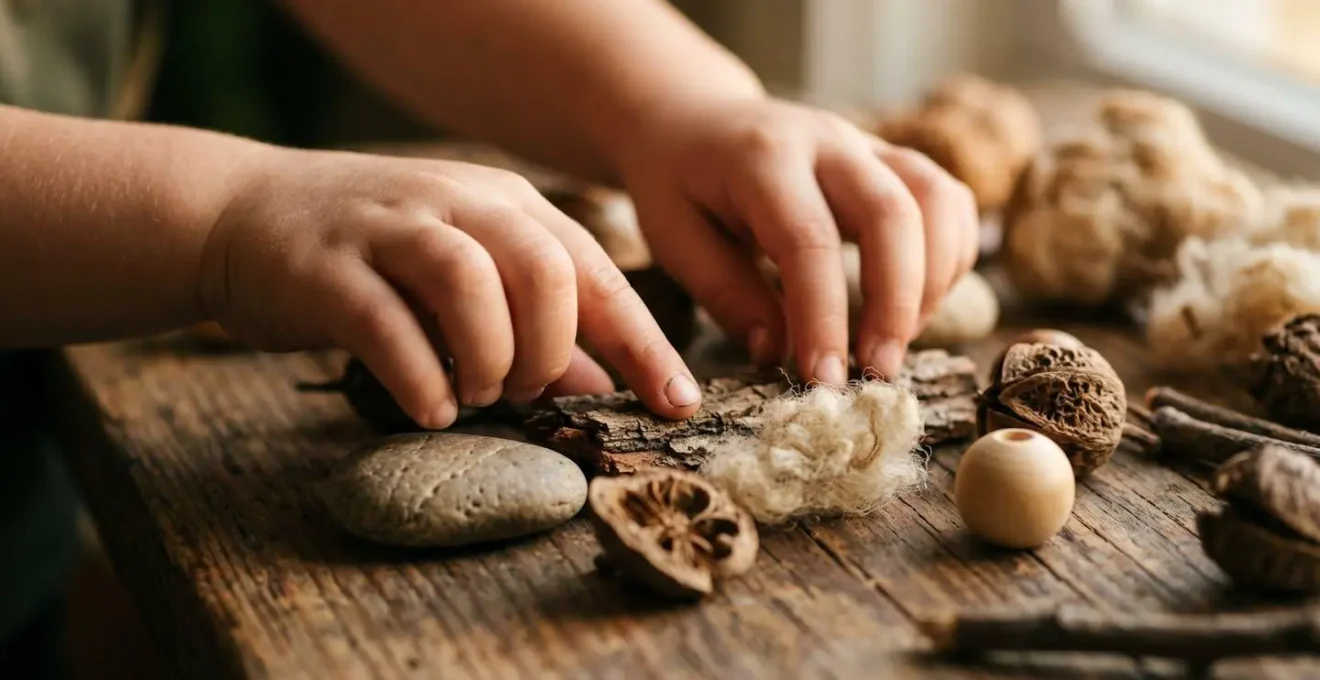
This approach finds validation in modern neuroscience. The part of the brain responsible for impulse control, planning, and long-term thinking—the prefrontal cortex—is the last to develop. Neuroimaging research reveals that the prefrontal cortex doesn’t fully mature until the early twenties. Waldorf’s emphasis on rhythm, imitation, and imaginative play in the early years respects this developmental timeline, building a strong foundation in the lower brain regions before demanding higher-order abstract thought. It prioritizes doing and feeling before formal intellectualizing, allowing a child’s capacities to unfold naturally.
Reggio Emilia: The Environment as the Third Teacher
Originating from the city of Reggio Emilia in Italy after World War II, this philosophy is built on a powerful and poetic idea: the environment itself is a crucial educator. In this model, children have three teachers: the parent, the classroom teacher, and the physical space they inhabit. This elevates the environment from a passive container for learning to an active participant in the educational process. It is a direct reflection of the community’s values and a space designed to provoke curiosity, foster relationships, and document the journey of learning.
In a Reggio-inspired space, every detail is intentional. Natural light is maximized. Mirrors are used to offer different perspectives. Materials are beautifully arranged on open shelves, inviting exploration and experimentation. This is the opposite of a cluttered, over-stimulating classroom. Instead, it is an orderly, beautiful, and complex space that communicates respect for the children and their work. A key feature is the “atelier,” or studio, where children can explore different artistic “languages”—from clay and paint to light and shadow—to express their ideas. Documentation is also vital; classroom walls are covered with photos of children engaged in projects, transcripts of their conversations, and their own artwork, making their learning visible to themselves, their parents, and their teachers.
Children’s Perceptions of Their Learning Environment
A qualitative study involving kindergarten students provides compelling insight into this very idea. Using photos they had taken themselves, children articulated how they saw their classroom as a direct support for their learning. According to the study published in the Journal of Childhood Studies, children described specific ways they learned through classroom materials, engaged in imaginative play, and made connections to their own lives by discussing the project documentation displayed on the walls. This confirms that children are keenly aware of their surroundings and perceive a well-designed environment as an active partner in their education.
For the parent acting as an Environmental Architect, the Reggio Emilia approach offers a profound lesson: our spaces talk. A home that is thoughtfully organized, filled with beautiful and open-ended materials, and that proudly displays a child’s creative process is a home that says, “Your ideas are important. Your work matters. You are a curious and capable creator.”
Forest School: Why Learning Outside in All Weathers Builds Resilience?
Forest School is less a rigid pedagogy and more an ethos, a commitment to long-term, child-led learning in a natural, woodland environment. A core tenet is that sessions happen regularly—often weekly—throughout the year, in all but the most extreme weather conditions. This consistency is key. It’s not about a one-off “nature walk.” It’s about building a deep, lasting relationship with a specific place and learning to navigate its changes, challenges, and opportunities through the seasons. This regular exposure to the real, unpredictable elements is precisely where resilience is forged.
When a child learns to stay warm on a cold day, finds shelter from the rain, or successfully navigates a muddy path, they are building more than just practical skills. They are developing emotional and physical resilience. They learn that they can be comfortable in uncomfortable situations, that they are capable of solving real-world problems, and that weather is not something to be feared but to be experienced. The natural environment provides a perfect level of risk and challenge that is often absent from sanitized indoor play spaces, allowing children to test their own limits in a supportive context.
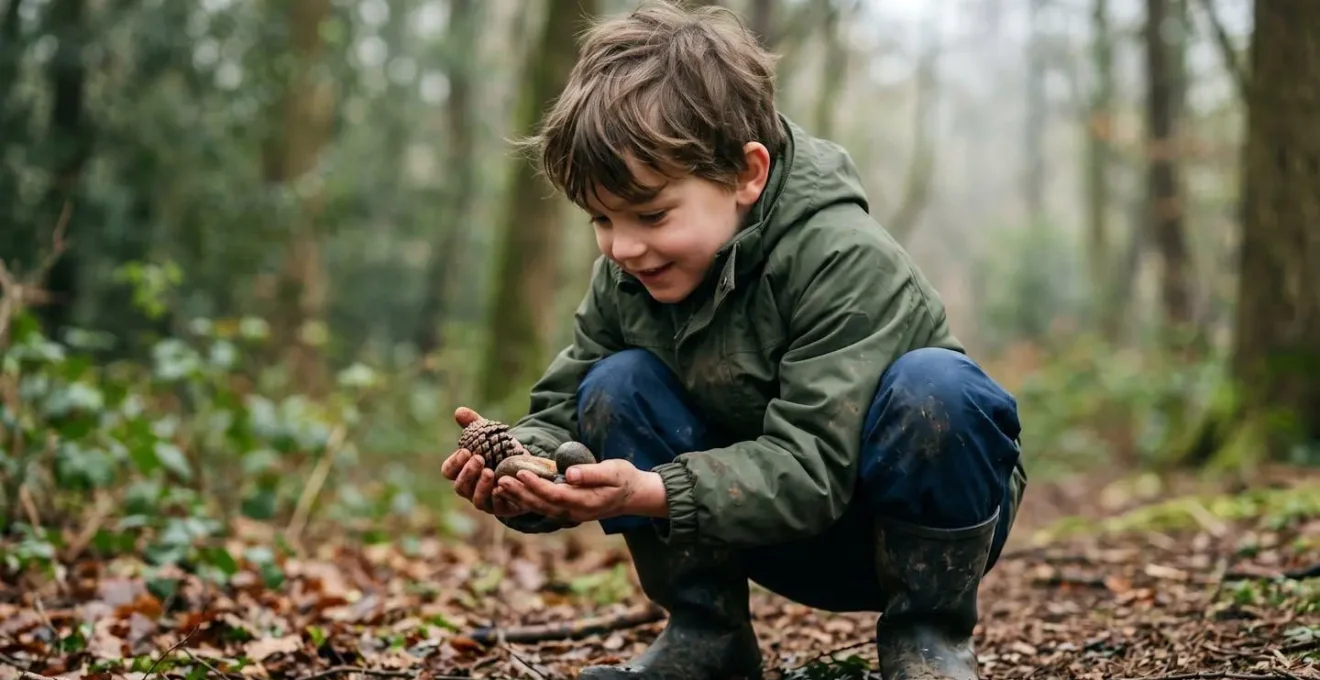
The benefits extend beyond grit. The sensory richness of the outdoors is calming and restorative for the nervous system. The vast, open space allows for big body movements that are essential for physical development and emotional regulation. This is not just an anecdotal observation; it’s backed by research. A 12-week study on the impact of a Forest School program found significant improvements in children’s well-being, noting that children themselves reported feeling “less tired, less bored, calmer and happier” after their time outdoors. Bringing this ethos home means prioritizing unstructured outdoor time, regardless of the weather forecast, and trusting in the immense developmental power of nature.
Learning Styles: Matching the Pedagogy to Your Child’s Personality
A common starting point for parents is to try and match an educational philosophy to their child’s perceived learning style or personality. Is my child a hands-on kinesthetic learner who would thrive in a Montessori environment? Is she a dreamy, imaginative soul who belongs in a Waldorf school? Is he a social collaborator perfect for a Reggio-inspired program? This desire to find the “perfect fit” is understandable, as it comes from a place of deep love and a desire to see our children succeed.
Comparison tables that break down the key characteristics of each approach can be a useful tool in this process. They provide a quick, high-level overview of the differences in structure, the role of the teacher, and the general focus of each philosophy. However, from the “Environmental Architect” perspective, the purpose of such a tool is not to make a definitive diagnosis and pick one single path. Instead, it should be viewed as a menu of brilliant ideas—a philosophical toolkit from which you can borrow.
The following table provides a summary of the defining features of these three major pedagogies. Rather than seeing them as mutually exclusive columns, try to see them as different ingredients you can use to create your own unique recipe for your family’s learning ecosystem.
| Characteristic | Montessori | Waldorf | Reggio Emilia |
|---|---|---|---|
| Learning Structure | Highly structured with defined materials | Fluid, rhythmic structure | Flexible, project-based, emergent curriculum |
| Child’s Role | Individual work, self-paced learning | Play-based, imaginative exploration | Collaborative learning, co-learner with teacher |
| Teacher’s Role | Observer and guide | Teacher-led instruction in early years | Facilitator, co-learner, collaborator |
| Environment Focus | Prepared environment supporting independence | Natural materials, homelike, minimal technology | Environment as ‘third teacher’, documentation-rich |
| Academic Introduction | Early academic exposure with concrete materials | Delayed formal academics until age 7 | Emergent, child-interest driven |
| Community Involvement | Moderate | High, essential partnership | Very high, parents as active partners |
A child might benefit from the structured, independent work of Montessori in the morning for focused tasks, and the imaginative, collaborative spirit of Reggio Emilia in the afternoon for a creative project. By understanding the core tenets presented in this comparative analysis, you can move beyond the pressure to choose one label and instead feel empowered to blend the elements that best serve your child and your family’s values at any given moment.
Open-Ended Toys: Why a Cardboard Box Is Better Than a Tablet?
In a world saturated with “educational” apps and electronic toys that promise to accelerate learning, it can feel counter-intuitive to suggest that the most valuable toys are often the simplest. Yet, this is a core principle shared across many child-centered philosophies, particularly Waldorf. The concept of an “open-ended” toy is central: a toy that can be used in many different ways, limited only by the child’s imagination. A cardboard box is the ultimate example—it can be a car, a house, a rocket ship, a cave, or a drum. A tablet, by contrast, can only be a tablet, with its uses dictated by the software it runs.
The value of open-ended play lies in the cognitive heavy lifting it demands from the child. A toy that talks, lights up, and tells the child what to do places the child in a passive, receptive role. An assortment of simple wooden blocks, silk scarves, or natural stones requires the child to be the active creator of the play. They must invent the narrative, solve the structural problems, and imbue the objects with meaning. This process builds crucial executive function skills like problem-solving, planning, and creativity far more effectively than following pre-programmed prompts on a screen.
The materials themselves also matter. As practitioners of Waldorf education note, there is an inherent quality in natural materials that enriches a child’s sensory life and thinking. The warmth and texture of wood or wool provide a different, more grounding experience than cold, uniform plastic. This isn’t just about aesthetics; it’s about providing the developing brain with rich, authentic sensory information. The best play materials are often not toys at all, but a collection of “loose parts” that can be combined and re-imagined endlessly.
- Choose materials with multiple uses: wooden blocks, silk scarves, natural stones, and simple wooden figures can transform into countless play scenarios.
- Prioritize natural textures over synthetic: wood, cotton, wool, and silk engage sensory development more richly than plastic.
- Select faceless or simple-featured dolls: this allows children to project their own emotions and narratives onto the toy.
- Include loose parts: sticks, shells, fabric pieces, and cardboard that children can arrange, build, and reimagine freely.
- Avoid battery-operated or screen-based toys in early years to preserve the child’s role as the active creator.
The “Yes” Space: An Area Where Everything Is Safe to Touch
One of the most draining aspects of parenting a toddler or young child can be the constant refrain of “No, don’t touch that!” It creates a dynamic of conflict and can stifle a child’s innate drive to explore their environment. The concept of a “Yes’ Space,” popular in Montessori and RIE (Resources for Infant Educarers) circles, offers a powerful antidote. It is a room or a designated area in the home where everything within the child’s reach is safe for them to touch, explore, and play with. It is an environment entirely curated for their developmental needs.
Creating a ‘Yes’ Space is a foundational act for the parent as an Environmental Architect. It is a physical manifestation of trust and respect for the child’s competence. Instead of constantly redirecting or correcting, the parent can relax and observe, knowing the child is in a completely safe and enriching environment. This dramatically reduces conflict and frees up the child’s energy for its most important work: learning through exploration. It might mean gating off a section of the living room, securing all furniture to the walls, covering outlets, removing breakable objects, and stocking the area with a small, rotating selection of high-quality, open-ended toys.
This isn’t about giving the child an entire house with no boundaries. It is about creating a specific zone where they have total autonomy. This experience of freedom within safe limits builds confidence and self-regulation. A prime example of this principle in action is the Montessori floor bed, which radically transforms an infant’s autonomy from the very beginning.
The Autonomy of the Montessori Floor Bed
In Montessori Nido (infant) communities, babies sleep on low floor beds instead of in cribs. As described by educators at Guidepost Montessori, this seemingly small design detail creates a major shift. A baby is no longer dependent on an adult to lift them in or out of a caged environment. From the moment they can move, they have the freedom to roll, crawl, or slide off their mattress to explore their safe, prepared ‘Yes’ Space. Their sleep environment is not a cage, but an invitation to movement and independence, perfectly exemplifying how a thoughtfully designed space supports a child’s capability.
The ‘Yes’ Space is more than just baby-proofing; it is a profound philosophical statement. It tells the child, “In this space, your curiosity is welcome, your choices are respected, and you are free to be the capable explorer I know you are.”
Key takeaways
- Focus on principles, not labels: Borrow the best ideas from each philosophy to create a custom learning ecosystem for your child.
- The environment is a teacher: Intentionally designing spaces (like a ‘Yes’ Space or using Reggio Emilia principles) fosters independence and reduces conflict.
- Open-ended, natural materials are superior to single-purpose, electronic toys for developing creativity and problem-solving skills.
Stimulating Homeschooling and Creativity: Setting Up for Success
Whether you are a full-time homeschooling parent or simply want to create a home that supplements a traditional school experience, the goal is the same: to create a stimulating environment where creativity and a love of learning can thrive. The principles we’ve explored from Montessori, Waldorf, and Reggio Emilia are not just for classrooms; they are the very building blocks for a successful home learning setup. Success is not measured by worksheets completed, but by the level of a child’s engaged, focused, and joyful exploration.
The role of the parent-as-educator shifts from being a “teacher” who deposits information to being a “facilitator” and “observer.” Your job is to prepare the environment, provide the right tools, and then step back to watch the magic unfold. This means curating a library of good books, stocking a craft area with high-quality, open-ended materials, creating cozy nooks for reading, and ensuring there is ample time and space for unstructured play. It also means bringing learning into the everyday rhythms of life—cooking becomes a lesson in math and science, gardening teaches biology and patience, and a walk in the park is a lesson in ecology.
Ultimately, there is no single “best” approach. The most successful and creative home learning environments are often a blend, a bespoke creation that reflects a family’s unique values and a child’s evolving interests. As one analysis of educational philosophies concludes, “The best approach is often a blend. For parents, the choice among these methods will depend on your child’s personality and learning style and your family’s values.” This reinforces our central theme: you are the architect. Your task is to build a flexible, loving, and engaging learning ecosystem that honors your child’s innate drive to learn.
Action Plan: Auditing Your Home’s Creative Environment
- Points of contact: List all the areas in your home where learning and creativity are encouraged or could be (e.g., play corner, kitchen table, garden, a specific windowsill).
- Collecte: Inventory your existing toys and materials, sorting them into two categories: open-ended (blocks, clay, scarves) vs. single-purpose (most electronic or character-based toys).
- Cohérence: Confront your environment with your family’s core values. If you value nature, how much access to natural materials and outdoor time is realistically provided?
- Mémorabilité/émotion: Identify what makes your child’s space uniquely theirs and emotionally engaging. What are their favorite, most-used items versus the things that just create clutter?
- Plan d’intégration: Create a simple, prioritized plan. What one piece of clutter can you remove today? What one open-ended material could you introduce this week?
Begin today by applying these principles, not as a rigid checklist, but as a source of inspiration. Transform your home into the dynamic, supportive, and bespoke learning ecosystem your child deserves.