

In summary:
- Ergonomic furniture isn’t a luxury; it’s a health strategy that adapts to your child’s rapid growth, preventing long-term postural problems.
- Investing in adjustable “grow-with-me” pieces offers significant long-term value, both financially and for your child’s physical development.
- Safety extends beyond posture to include tip-over prevention, non-toxic materials, and age-appropriate designs for sleep and play.
- A well-designed study corner, built on ergonomic principles, directly impacts your child’s ability to focus and learn effectively.
As a parent, you watch your child grow in what feels like the blink of an eye. Their clothes, their shoes, and yes, their furniture, are quickly outgrown. It’s tempting to grab the most convenient or cheapest option for their room. Many parents believe a simple desk and chair will suffice, or that childproofing is just about covering outlets. This approach, however, overlooks a fundamental truth I see daily in my work as a pediatric ergonomist: a child’s environment is not a static backdrop, but an active participant in their physical development.
The wrong furniture doesn’t just get too small; it can actively shape a developing spine in harmful ways, compromise safety, and even hinder focus. The constant cycle of replacing items is also a drain on finances and resources. But what if we shifted our perspective? What if furniture wasn’t just a disposable item, but a long-term investment in our children’s health and well-being? The key isn’t just to buy “kid-sized” furniture, but to create a dynamic, body-aware environment that anticipates and supports every stage of their developmental journey.
This guide moves beyond generic advice. We will explore the biomechanical principles that make furniture truly effective and safe. We will look at how to create spaces that foster independence and protect against hidden dangers like furniture tip-overs and toxic finishes. This is not about a one-time purchase; it’s about building a proactive strategy for nurturing healthy physical habits that can last a lifetime. By understanding the ‘why’ behind ergonomic design, you can make confident, informed decisions that protect both your child and your peace of mind.
To help you navigate this important topic, this article breaks down the essential components of a safe and ergonomic environment for your child. Explore the key areas below to build a space that truly supports their growth.
Summary: Child Safety and Ergonomic Furniture: Investing in Health and Peace of Mind
- Grow-with-Me Desks: Are They Worth the Investment?
- Floor Beds vs Cots: The Montessori Sleep Approach
- The 90-90-90 Rule: How a Child Should Sit for Homework
- Learning Towers: Safe Kitchen Observation for Toddlers
- Non-Toxic Finishes: Avoiding VOCs in Nursery Furniture
- Ergonomic Chairs for Kids: Protecting Posture While They Learn
- Tip-Over Safety: Anchoring Bookshelves and TVs to Walls
- Designing the Perfect Study Corner: Boosting Focus for Homework
Grow-with-Me Desks: Are They Worth the Investment?
The initial sticker price of an adjustable “grow-with-me” desk can give any parent pause. When a standard child’s desk costs significantly less, is the higher upfront cost truly justified? From a pediatric ergonomics standpoint, the answer is a resounding yes. This isn’t just about saving money in the long run; it’s about providing a consistent, correct ergonomic fit during the most critical years of spinal development. A child’s body changes dramatically from preschool to high school, and a static desk is only correctly sized for a brief window of that time.
The true value lies in its adaptability. A desk that is too high forces a child to shrug their shoulders and elevate their arms, creating tension in the neck and upper back. A desk that is too low encourages slouching, putting immense pressure on the lumbar spine. An adjustable desk eliminates this mismatch entirely. It can be set to the precise elbow height needed for a relaxed posture, and then readjusted every few months as the child grows. This continuous support fosters healthy postural habits that become second nature.
Case Study: The Long-Term Value of Adaptability
Investing in a single piece of adaptable furniture can fundamentally change a family’s purchasing cycle. Parents who chose high-quality adjustable study tables found they were able to avoid buying new desks every two to three years. This single investment served their children from the scribbling days of preschool, through the detailed art projects of elementary school, and into the intensive study sessions of their teenage years. The economic benefit is clear, but the real dividend is the uninterrupted ergonomic support provided throughout a child’s entire education.
Financially, the logic is undeniable. While a fixed-size desk may need to be replaced 3-4 times during a child’s school years, a single high-quality adjustable desk can last for the entire duration. Research shows that quality adjustable desks can have a lifespan of 10-15 years, compared to just 2-3 years for their static counterparts. This is the definition of a smart, long-term investment in both your child’s health and your family’s budget.
Floor Beds vs Cots: The Montessori Sleep Approach
The transition from a cot to a “big kid bed” is a major milestone. However, the Montessori approach challenges this traditional path by advocating for a floor bed from a much earlier age. The core idea is to foster independence and respect for the child’s natural movements. A floor bed removes the physical barrier of a cot, allowing a toddler to get in and out of bed on their own. This autonomy can empower a child, build their confidence, and encourage them to listen to their own body’s sleep cues.
From an ergonomic and developmental perspective, this approach offers several benefits. It supports natural motor development by allowing free movement, unlike the containment of a cot. However, this freedom comes with a critical responsibility for the parent: creating an entirely safe room. The room itself becomes the “crib.” This means all furniture must be anchored, electrical outlets covered, and any potential hazards removed. The sleep space is no longer just the bed, but the entire bedroom environment.
It is crucial to balance this philosophy with established safety guidelines. As a pediatric specialist, I always refer parents to official recommendations. For instance, the American Academy of Pediatrics defines a safe sleep space for infants under 12 months as a firm surface in a crib, bassinet, or play yard. A floor bed is typically considered for toddlers who are already mobile and past the highest-risk period for SIDS.
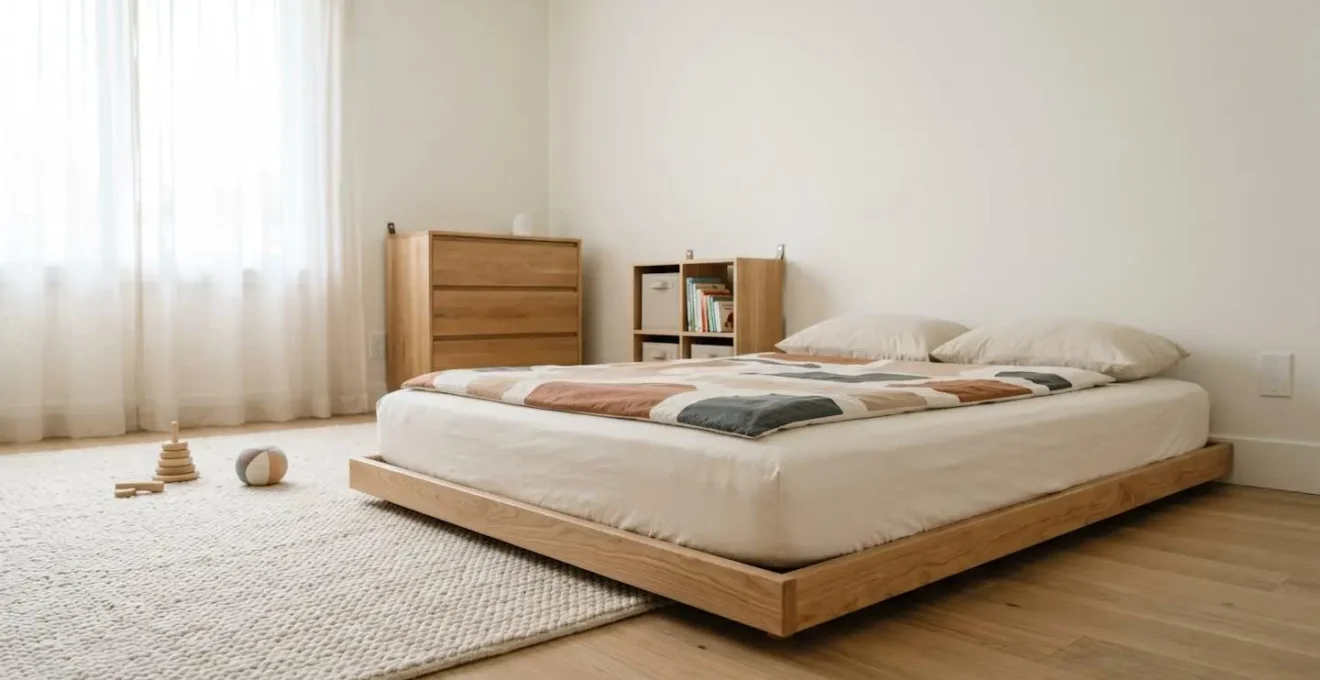
Implementing a floor bed safely requires meticulous attention to detail. It is not simply a matter of placing a mattress on the floor. The type of mattress, its placement, and the surrounding environment are all critical factors in creating a space that is both liberating and secure. The following checklist provides a framework for parents considering this approach, ensuring that freedom does not come at the expense of safety.
Your Action Plan: Safe Floor Bed Setup
- Select the Right Mattress: Use a firm crib or twin mattress placed directly on the floor. Avoid soft adult mattresses or memory foam, which can pose a suffocation risk.
- Ensure Proper Placement: Position the mattress away from walls on at least one open side to prevent the child from becoming wedged between the mattress and the wall.
- Practice Safe Bedding: For children under 12 months, use only a fitted sheet. Do not add loose blankets, pillows, bumpers, or any soft objects to the sleep area.
- Childproof the Entire Room: Before introducing the floor bed, anchor all furniture, cover outlets, secure cords, and remove any object the child could pull down or be harmed by. The room must be 100% safe for unsupervised exploration.
- Consider Airflow: In humid climates, a very low frame (1-2 inches off the floor) can help with air circulation and prevent mould growth under the mattress.
The 90-90-90 Rule: How a Child Should Sit for Homework
The “90-90-90 rule” is the cornerstone of pediatric seating ergonomics. It’s a simple, memorable guideline that provides a powerful baseline for establishing a healthy sitting posture. This rule describes the ideal joint angles for minimizing physical strain and maximizing stability and focus during seated tasks like homework or drawing. It ensures that the body is in a neutral, supported position, which is especially important for a growing child whose skeletal structure is still developing and susceptible to the effects of poor posture.
So, what does it mean? Imagine your child sitting at their desk. The rule dictates that there should be a 90-degree angle at their hips, a 90-degree angle at their knees, and a 90-degree angle at their ankles, with their feet resting flat on a stable surface. This alignment creates a stable base of support, distributes weight evenly, and promotes a natural S-curve in the spine. When the feet are dangling, the child loses stability, causing them to either perch on the edge of their seat or wrap their feet around the chair legs, both of which introduce strain and distraction.
Achieving this ideal posture according to ergonomic guidelines is the goal, but it doesn’t always require purchasing expensive specialized furniture. With a bit of creativity, you can adapt your existing setup to better fit your child. The key is to observe your child in their chair and identify where the support is lacking. Are their feet dangling? Is their back unsupported? Simple modifications can make a world of difference in preventing the fidgeting and discomfort that often stem from poor ergonomic support.
Here are some simple, budget-friendly hacks to help achieve the 90-90-90 posture using items you likely already have at home:
- Foot Support: If your child’s feet don’t reach the floor, use a stack of sturdy books, a yoga block, or a small storage box as a makeshift footrest. The goal is a flat, stable surface.
- Lumbar Cushioning: A rolled-up towel or a small, firm cushion placed behind the lower back can provide essential lumbar support and encourage the natural curve of the spine.
- Elbow Height: Adjust the chair height (using cushions if necessary) so that when the child’s shoulders are relaxed, their elbows rest at a 90-degree angle on the desk surface.
- Movement Breaks: No matter how perfect the posture, static sitting is still taxing. Encourage your child to take active breaks every 20-30 minutes to stand, stretch, and move their body. This strengthens postural muscles and resets focus.
Learning Towers: Safe Kitchen Observation for Toddlers
Toddlers are naturally curious and want to be part of the action, especially in the kitchen. A learning tower, also known as a kitchen helper, is a brilliant piece of “developmental scaffolding.” It safely elevates a child to counter height, allowing them to observe and participate in daily activities. This isn’t just about keeping them entertained; it’s a powerful tool for learning, sensory development, and fostering a sense of belonging within the family. By participating in simple tasks like washing vegetables or stirring batter, a child develops fine motor skills, gains practical life experience, and builds confidence.
However, this elevation brings new safety considerations. The very nature of a learning tower—a small child standing at a new height—demands a rigorous approach to safety in both the product’s design and its use. A wobbly, unstable tower is a significant tipping hazard. Parents must prioritize models with a wide, heavy base and safety rails. Shockingly, recent investigations have shown that many products on the market do not meet basic stability standards. In fact, a staggering number of models have been found to be unsafe, with 13 out of 16 models failing stability tests in one report. This highlights the critical need for parents to research and choose a robust, well-designed tower.

Beyond the tower itself, the kitchen environment must be made safe for an elevated child. The tower creates a new “reach zone” for the toddler. Knives, glassware, small appliances, and hot surfaces that were previously out of reach are now potentially accessible. Before each use of the learning tower, a parent must perform a quick “safe zone” sweep of the countertop and surrounding area. This proactive approach ensures that the child’s kitchen involvement is a positive, enriching experience, free from preventable accidents.
To ensure your kitchen is a safe space for your little helper, follow this checklist:
- Strategic Positioning: Always place the tower away from the stove, hot appliances, and the sink’s hot water tap. Maintain constant, arm’s-reach supervision.
- Clear the Counter: Remove or secure all sharp objects (knives, peelers), breakable items (glass), and heavy objects from the area accessible to the child.
- Manage Cords: Tuck away or secure all appliance cords to prevent the child from pulling a heavy appliance, like a blender or toaster, down onto themselves.
- Ensure Stability: Place the tower on a flat, even floor surface, away from rugs that could slip. Regularly check that all screws and fasteners are tight.
- Footing is Key: Have the child use the tower with bare feet or non-slip shoes. Socks on a wooden platform can be very slippery.
Non-Toxic Finishes: Avoiding VOCs in Nursery Furniture
When we think of furniture safety, our minds often jump to sharp corners or stability. However, one of the most significant and overlooked dangers is invisible: the air quality in our child’s room. Much of the mass-produced furniture available today, particularly items made from composite woods like MDF or particleboard, is treated with finishes, glues, and resins that release Volatile Organic Compounds (VOCs) into the air. This process, known as off-gassing, can continue for years after the furniture is brought into your home.
Why is this a concern for a pediatric ergonomist? Because a child’s health is holistic, and their environment directly impacts their developing bodies. Children are uniquely vulnerable to the effects of VOCs. Their respiratory systems are still maturing, they breathe at a faster rate than adults, and they spend a significant amount of time sleeping and playing in their rooms. Exposure to common VOCs like formaldehyde, a known carcinogen frequently found in pressed-wood products, has been linked to a range of health issues, from eye and throat irritation to asthma and other long-term respiratory problems.
So, how can parents protect their children? The key is to be a vigilant and informed consumer. Prioritize furniture made from solid, natural materials like solid wood, which inherently contain far fewer chemicals than their composite counterparts. When looking at finished products, seek out those that use water-based, non-toxic paints and stains. These options release significantly fewer harmful chemicals compared to traditional oil-based finishes.
Furthermore, look for third-party certifications. Labels like GREENGUARD Gold are not just marketing terms; they represent a rigorous scientific standard. A product with a GREENGUARD Gold certification has been tested and verified to have low chemical emissions, making it a safer choice for indoor environments, especially for sensitive individuals like children. While these products may come at a slightly higher price point, the investment in cleaner indoor air quality for your child is invaluable for their long-term health.
Ergonomic Chairs for Kids: Protecting Posture While They Learn
A desk is only half of the ergonomic equation. The chair is the active partner in supporting a child’s posture, and its role is arguably even more critical. While a desk provides the work surface, the chair is what interacts directly with the child’s spine, pelvis, and legs. An ill-fitting chair can negate all the benefits of a perfectly height-adjusted desk, forcing the body into awkward, strained positions that can have lasting consequences.
From a biomechanical standpoint, the goal of an ergonomic chair is to support the natural S-curve of the spine and provide a stable base. This is particularly vital for children, whose bodies are in a constant state of growth. An adult’s spine is fully formed, but a child’s is still pliable and easily influenced by habitual postures. Consistent slouching or twisting in a poorly designed chair doesn’t just cause temporary discomfort; it can guide the growth of the spine into non-optimal patterns.
As experts in the field note, the developing nature of a child’s body makes proper support essential. According to FlexiSpot’s ergonomic research, this malleability is a key factor to consider:
Children’s bones are more malleable than adults’ because they haven’t yet fused together. Because their bodies are still growing, bad posture in children can result in permanent damage, especially later in life when these issues can cause greater problems.
– FlexiSpot Ergonomics Research, Guidelines for Children’s Ergonomic and Proper Sitting Posture
A good ergonomic chair for a child should have several key features. Height adjustability is non-negotiable, allowing the chair to grow with the child and ensure their feet can be positioned correctly (ideally on the floor or a footrest). Depth adjustability in the seat pan is also highly beneficial, ensuring there is no pressure behind the knees, which can restrict blood flow. Finally, adequate lumbar support is essential to maintain the inward curve of the lower back, preventing the C-shaped slouch that puts so much strain on the spine.
Key Takeaways
- Ergonomics for children is about creating “dynamic environments” that support growth, not just buying one-size-fits-all furniture.
- The 90-90-90 rule (hips, knees, ankles) is the foundational principle for healthy sitting posture at any age.
- Safety is multi-faceted: it includes furniture stability (anchoring), material safety (low-VOC), and age-appropriate design (floor beds, learning towers).
Tip-Over Safety: Anchoring Bookshelves and TVs to Walls
While ergonomic design focuses on the long-term health of a child’s developing body, a crucial aspect of furniture safety addresses a far more immediate and potentially tragic threat: tip-over accidents. Every year, children are seriously injured or killed when they climb on unanchored furniture like bookshelves, dressers, or TV stands, causing the item to fall on top of them. This is a completely preventable tragedy, and ensuring furniture stability is a non-negotiable responsibility for every parent and caregiver.
The physics of the problem are simple. Children are naturally inclined to climb, and a chest of drawers can look like a ladder, a bookshelf an exciting mountain. A top-heavy piece of furniture, especially when drawers are opened, can become unstable with very little force. Placing a heavy television on top of a dresser that isn’t designed to support it creates an even more dangerous situation. As a pediatric specialist, I consider a furniture stability audit to be as important as any other health check-up for a child’s environment.
The solution is straightforward and inexpensive: anchoring. Anti-tip kits, which consist of straps or brackets that secure a piece of furniture to the wall, are readily available and easy to install. Every tall, heavy, or potentially unstable piece of furniture in a home with children should be anchored. This includes items in the living room and parents’ bedroom, not just the child’s room. A child’s curiosity knows no bounds, and they will explore every part of the house.
In addition to anchoring, parents can take other steps to mitigate risk. When purchasing new furniture, look for items with a wider base and lower center of gravity. Store heavier items in the lower drawers or on the bottom shelves to increase stability. Finally, it’s crucial to remove temptations. Avoid placing toys, remote controls, or other desirable objects on top of tall furniture, as this can directly encourage a child to start climbing.
Your 5-Step Furniture Stability Audit
- Identify Hazards: Walk through every room in your home and list all tall or heavy furniture (dressers, bookshelves, TVs, chests of drawers) that could pose a tip-over risk.
- Acquire Hardware: Purchase anti-tip anchoring kits appropriate for each piece of furniture and your wall type (drywall, plaster, brick).
- Install Anchors: Follow the kit instructions to securely fasten every identified piece of furniture to the wall. This is not a task to postpone.
- Remove Temptations: Rearrange your home to keep interesting items like toys, tablets, and remote controls off the tops of furniture to discourage climbing.
- Perform a Shove Test: After anchoring, firmly but gently push on the top of the furniture to ensure it is secure and there is no wobble. Repeat this test periodically.
Designing the Perfect Study Corner: Boosting Focus for Homework
We’ve explored the individual components of ergonomic and safe furniture, from the desk to the chair to the materials. The final step is to synthesize these elements into a cohesive, functional, and inviting study corner. A well-designed space does more than just support good posture; it actively boosts a child’s ability to concentrate, engage with their work, and develop effective study habits. The environment becomes a silent partner in the learning process.
The foundation of this space is the ergonomic pairing of the chair and desk, adhering to the 90-90-90 rule we discussed. This physical comfort is the baseline, as a child who is constantly fidgeting to relieve physical strain cannot dedicate their full mental energy to learning. Research consistently shows a direct link between physical comfort and cognitive performance. For instance, studies have demonstrated that incorporating dynamic, ergonomically designed furniture can have a significant positive impact.
The Impact of Ergonomics on Learning
Research confirms that creating a physically supportive learning environment has a direct effect on a child’s engagement. An analysis of ergonomics for children found that adjustable furniture increases muscle movement and blood flow, fostering a ready mindset for learning. Educators who implemented these principles, combining height-adjustable desks and chairs with frequent movement breaks, observed marked improvements in student attention spans and a noticeable reduction in fidgeting and off-task behavior.
Beyond the core furniture, consider the broader environment. Adequate lighting is crucial to prevent eye strain; a combination of ambient room light and a dedicated, adjustable task lamp is ideal. Organization is also key. A cluttered space can lead to a cluttered mind. Simple storage solutions—drawers, shelves, and pen holders—teach organizational skills and ensure that all necessary supplies are within easy reach, minimizing distractions. Finally, try to locate the study corner in a relatively quiet area of the home to reduce auditory and visual interruptions. By thoughtfully designing this space, you are giving your child a powerful tool to support their academic journey.
By applying these principles, you are not just buying furniture; you are investing in a foundation of health, safety, and focus that will support your child for years to come. The next logical step is to perform a simple ergonomic and safety audit of your child’s current spaces to identify areas for improvement.