
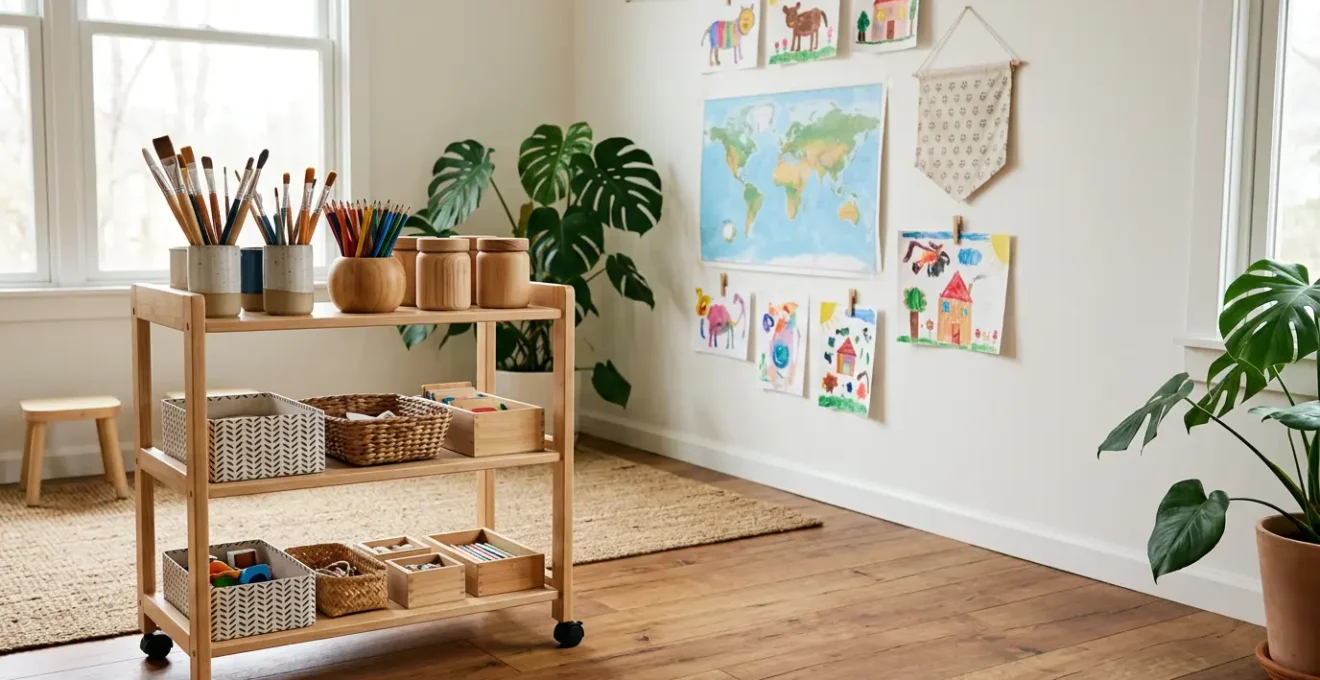
The key to successful home education is not replicating a school classroom, but creating a dynamic learning ecosystem that invites curiosity and autonomy.
- Focus on flexible, mobile stations like art carts and nature tables rather than rigid, dedicated rooms.
- Prioritize a natural “learning flow” and rhythm over a strict, clock-based schedule to follow a child’s interests.
Recommendation: Shift your mindset from ‘organizing supplies’ to ‘designing invitations to learn’ to build an environment where your child takes ownership of their education.
As a parent exploring home education, your first instinct might be to replicate the structure you know: a dedicated “school room,” a tidy desk, and a firm schedule. The internet is filled with images of perfectly organized spaces that look like miniature classrooms. While well-intentioned, this approach often misses the unique advantage of learning at home: flexibility. The goal isn’t to run a small-scale institution; it’s to cultivate a personal, engaging, and stimulating environment where creativity and curiosity can thrive naturally.
The common advice to “get organized” with endless bins or to “display your child’s work” on a bulletin board only scratches the surface. These are static solutions for a dynamic process. But what if the true key to a successful homeschool setup wasn’t about creating a perfect classroom replica, but about engineering a ‘learning ecosystem’? This means designing intentional spaces and routines that act as ‘invitations to learn’—setups that pull your child into discovery, encourage autonomy, and adapt to their natural intellectual flow.
This guide will walk you through a series of practical, powerful shifts in perspective and setup. We will explore how to transform common household items and areas into dynamic learning stations. From mobile art carts that spark creativity to nature tables that bring science indoors, you’ll discover how to reduce overwhelming ‘visual noise’ and build a rhythm that works for your family, fostering an environment where learning is not a task to be completed, but an adventure to be lived.
This article provides a comprehensive overview of how to create a stimulating learning environment at home. The following summary outlines the key areas we will cover, from practical setup ideas to the core philosophies that make home education effective.
Summary: A Consultant’s Guide to a Creative Homeschool Setup
- Art Carts: Mobile Stations for Creative Supplies
- The Learning Wall: Displaying Maps, Timelines, and Pride
- Headphones and Dividers: Creating Focus in Shared Spaces
- The Nature Table: Bringing the Outdoors In for Study
- Rhythm vs Schedule: Why Flow Works Better at Home
- The Clean Desk: Reducing Visual Noise for Better Concentration
- Sensory Bins: Creating Themed Bins with Rice, Pasta, or Sand
- Simple STEM Activities for Preschoolers: Science, Tech, Engineering, Math
Art Carts: Mobile Stations for Creative Supplies
One of the most effective tools in a homeschool environment isn’t a desk, but a set of wheels. An art cart transforms creative supplies from being stored away in a closet to becoming an open invitation to create. This simple piece of furniture excels in homes without a dedicated school room, allowing you to roll inspiration into the kitchen, the living room, or even outside. Its mobility empowers children to initiate their own projects, fostering a sense of autonomy and ownership over their creative impulses. The key is to organize it not just for tidiness, but for access.
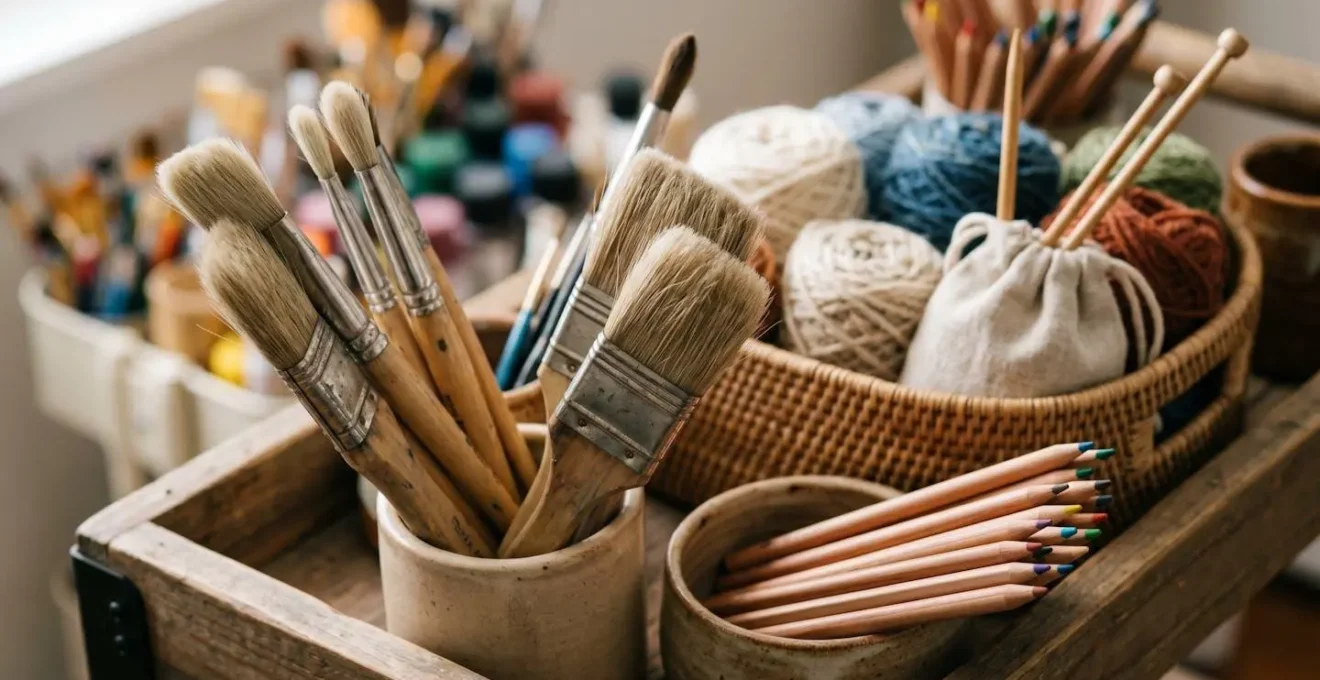
By arranging materials in an appealing, accessible way, the cart itself becomes a provocation. Use clear jars for pencils and brushes, open baskets for yarn and fabric scraps, and magnetic cups for small items. This setup minimizes the barrier between an idea and its execution. When a child sees the tools for painting or sculpting readily available, they are more likely to act on a creative spark. This approach shifts the dynamic from parent-directed activities to child-led exploration, which is a cornerstone of effective and joyful home education.
Your Action Plan: Setting Up an Effective Art Cart
- Choose a durable, three-tier rolling cart that can withstand daily use and position it at child height.
- Group related items together using bins, trays, or magnetic cups to keep the system organized and intuitive.
- Involve your child in organizing the supplies to foster a sense of ownership and responsibility for the materials.
- Rotate supplies weekly or bi-weekly to prevent overwhelm and keep the materials feeling fresh and engaging.
- Perform a full clean-out every few months to remove clutter, restock essentials, and reset the organization.
The Learning Wall: Displaying Maps, Timelines, and Pride
A learning wall is the evolution of the traditional bulletin board. Instead of being a static display for finished work, it is a dynamic, interactive space that documents the learning process itself. This is where maps are annotated during a geography lesson, a timeline grows as you study history, and key vocabulary words are added during a science unit. It’s a form of passive learning, where the environment itself constantly reinforces concepts. It becomes a living record of your family’s intellectual journey, making curiosity and discovery visible and celebrated.
The most powerful learning walls are not curated by the parent alone; they are co-created with the child. This builds immense pride and ownership. One highly effective approach is the student-led model, where children are empowered to add content themselves as they learn. For example, a successful implementation in a 5th-grade classroom, detailed by the Inquiring Minds Institute, shows children justifying their contributions to their peers, leading to rich discussions and deeper understanding. The teacher noted, “I don’t touch it. They know they can go add to it during class… This can lead to very fruitful discussions among the students.”
Case Study: Student-Driven Learning Walls
In Ms. Dixon’s 5th grade class, the learning wall became the heart of the inquiry-based unit. Centered around an essential question at the top, students independently added drawings, quotes from books, charts, and photos that connected to their studies. By having to explain *why* they chose to add a particular item, students moved beyond simple recall to active synthesis and analysis. This transformed the wall from a decorative element into a collaborative tool for constructing knowledge.
A learning wall, or a “Wonder Wall,” is more than just decoration; it’s a pedagogical tool. As the TCEA TechNotes Blog puts it, it “transforms a classroom into a space where curiosity is celebrated, questions lead to discovery, and students feel empowered to learn.” By making learning visible and collaborative, you create a powerful testament to your child’s intellectual growth.
Headphones and Dividers: Creating Focus in Shared Spaces
In many homeschooling families, a quiet, dedicated “school room” is a luxury. Learning often happens at the kitchen table amidst the daily hum of family life. This is where strategic tools for managing sensory input become critical. Noise-canceling headphones and simple tabletop dividers are not about isolation; they are about creating pockets of deep focus within a shared environment. They empower a child to take control of their auditory and visual space, a vital skill for concentration.
Headphones, in particular, can be a game-changer for children who are easily distracted or have sensory sensitivities. Research suggests that creating a quieter soundscape has a direct impact on academic performance. For example, studies indicate that students using noise-canceling headphones during study sessions achieve higher scores compared to those in noisy environments. A simple three-panel presentation board can serve as a visual divider, reducing peripheral distractions and signaling to other family members that focused work is in progress. This creates a “cone of concentration” without requiring a separate room.
Choosing the right type of headphones depends on your child’s needs, as different models serve different functions. A detailed analysis of headphone technology for learning highlights the key distinctions:
| Headphone Type | Primary Function | Best For | Key Features |
|---|---|---|---|
| Active Noise-Cancelling (ANC) | Blocks external distractions | Children with ADHD or high distractibility | Microphone detects sound waves and reproduces cancelling anti-phase signal; reduces low-frequency noise effectively |
| Passive Noise-Isolating | Physical sound blocking | Deep focus work requiring silence | Sound-absorbing foam creates physical barrier; no power source needed |
| Audio-Input Headphones | Delivers content while reducing ambient noise | Audiobook listening or educational media | Can play audio while providing some passive noise reduction; volume-limiting options available for children |
| Hybrid (Active + Passive) | Maximum noise reduction | Sensory-sensitive children or very noisy environments | Combines electronic cancellation with physical isolation; can fade in ambient sound when needed |
The Nature Table: Bringing the Outdoors In for Study
A nature table is a designated surface that serves as a bridge between the indoor learning environment and the natural world. It’s a hands-on, ever-changing museum curated by your child. This simple concept is another powerful invitation to learn, encouraging observation, classification, and a sense of wonder. The table might hold treasures from a recent walk: unusually shaped rocks, vibrant autumn leaves, empty snail shells, or bird feathers. It becomes a focal point for scientific inquiry right in your home.
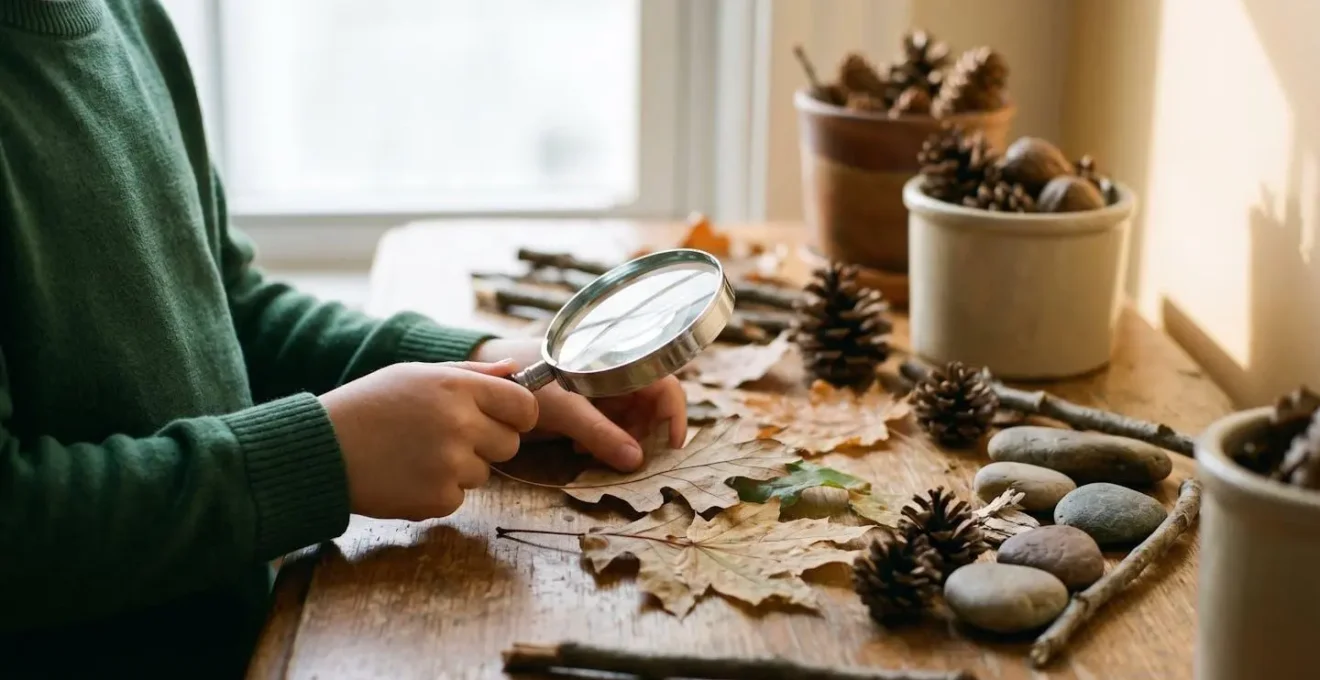
Equip the table with scientific tools like a magnifying glass, tweezers, and a small scale to elevate it from a simple display to a field station. Add relevant field guides to help identify specimens. This setup naturally introduces scientific practices. The benefits of this connection to nature are profound; a systematic review of 147 research studies found that nature-based learning leads to increased student engagement, academic improvement, and better social skills. A nature table is a simple way to bring these benefits indoors.
To be effective, the table must be dynamic. Rotate the items to reflect the current season or to align with topics you are studying. Is it spring? Add sprouting acorns and flower buds. Studying geology? Fill it with different types of rocks and crystals. This constant evolution keeps the space engaging and relevant, modeling the continuous changes of the natural world and reinforcing that learning is an ongoing process of discovery, not a static collection of facts.
Rhythm vs Schedule: Why Flow Works Better at Home
One of the biggest paradigm shifts for new homeschooling families is moving away from a rigid, clock-based schedule to a flexible, activity-based rhythm. A schedule says, “At 9:00 AM, we do math.” A rhythm says, “After breakfast, we have our focused academic time.” This subtle change has a profound impact, allowing for a natural learning flow that can follow a child’s curiosity and energy levels. If a math concept clicks and your child is deeply engaged, a rhythm allows you to extend that lesson without feeling the pressure of the clock.
This flexibility is a key reason home education can be so effective. It respects the child as an individual learner and allows the parent to be a responsive facilitator rather than a taskmaster. This approach is not about a lack of structure; it’s about a different *kind* of structure—one built around the natural flow of the day (e.g., quiet work in the morning, active projects in the afternoon, reading before bed). This adaptability fosters a more peaceful and productive learning environment, reducing power struggles and building a collaborative family culture. As experts at Classical Conversations note:
Homeschool spaces should reflect the flexibility and adaptability of learning together as a family. Just like a classical homeschool education moves beyond the limitations of a standard curriculum, homeschool spaces can embrace creativity and comfort.
– Classical Conversations, Homeschool Room Ideas: Practice, Fun, and Focused on Learning
This child-centered approach to time management also contributes to superior emotional development. It teaches children to listen to their own focus and energy, a crucial executive function skill. Research consistently supports this; a report from the National Home Education Research Institute found that in 87% of peer-reviewed studies, homeschooled students performed significantly better on measures of social and emotional development than their peers in conventional schools. Embracing rhythm over a schedule is a core part of creating that supportive environment.
The Clean Desk: Reducing Visual Noise for Better Concentration
The concept of a “clean desk” in a homeschool setting is often misunderstood. It’s not about sterile minimalism; it’s about intentionally reducing visual noise. Visual noise refers to any object in a child’s field of view that is not relevant to the task at hand. Piles of past assignments, unrelated toys, and excessive supplies can create a constant, low-level cognitive load, draining mental energy that could be used for learning. A clear workspace is a calm workspace, signaling to the brain that it’s time to focus on one thing.
This doesn’t mean the space should be empty. The key is intentional selection. The goal is what one expert calls “clean without being sterile,” allowing for personality through a few carefully chosen grounding items like a favorite smooth rock, a small plant, or a meaningful photo. These items can anchor a child without distracting them. This principle of environmental print also applies—educational materials that are seen daily are absorbed passively. A beautiful alphabet poster or a well-designed map can be part of the “clean” environment because they are relevant learning tools, not clutter.
An innovative way to reduce desk clutter is to utilize vertical surfaces. A wall coated with whiteboard paint or a large mounted whiteboard transforms an entire wall into a workspace. This is ideal for brainstorming, working through complex math problems, or practicing spelling. According to child development research, working on a vertical surface can also improve a variety of mental and physical skills. It naturally encourages better posture and strengthens core and shoulder muscles, which are important for developing fine motor control for handwriting. By moving the “mess” of creation onto a dedicated wall, the desk can remain a space of clear, focused thought.
Sensory Bins: Creating Themed Bins with Rice, Pasta, or Sand
Sensory bins are a cornerstone of early childhood and special education for a reason: they are incredibly powerful tools for learning through touch. A simple container filled with a base material like rice, sand, or water, along with themed objects, becomes a miniature world for exploration. But their utility extends far beyond simple play. With a little creativity, sensory bins can become dynamic, hands-on tools for teaching core academic skills in a way that is engaging and memorable for young learners.
The magic happens when you embed learning objectives within the tactile experience. This multisensory approach helps forge stronger neural connections. Instead of just drilling flashcards, a child can practice literacy and fine motor skills simultaneously. Here are a few examples of academic-focused bins:
- Literacy Bin: Hide magnetic letters in a base of colorful rice and have your child find them to spell out simple words.
- Math Bin: Use tongs or tweezers to sort different colored pom-poms into cups, practicing color recognition, counting, and one-to-one correspondence.
- Fractions Bin: Provide various sizes of measuring cups and scoops in a bin of dried beans or lentils to introduce concepts of volume and fractions in a tangible way.
Beyond academics, sensory bins are also invaluable for emotional regulation. A “calm-down” bin filled with cool, smooth sand and scented with a drop of lavender can be a soothing resource for a child feeling overwhelmed. Conversely, an “activation” bin with crunchy beans and bright, hidden objects can help wake up the senses before a focused learning task. For toddlers who still explore with their mouths, taste-safe options using cereal, cooked pasta, or a mix of cornstarch and water provide a safe and engaging experience.
Key Takeaways
- A successful homeschool environment is a dynamic ‘learning ecosystem’, not a static classroom replica.
- Prioritize mobile, accessible stations like art carts and nature tables to act as ‘invitations to learn’ that foster autonomy.
- Adopt a flexible ‘rhythm’ over a rigid ‘schedule’ to follow your child’s natural curiosity and create a more peaceful learning flow.
Simple STEM Activities for Preschoolers: Science, Tech, Engineering, Math
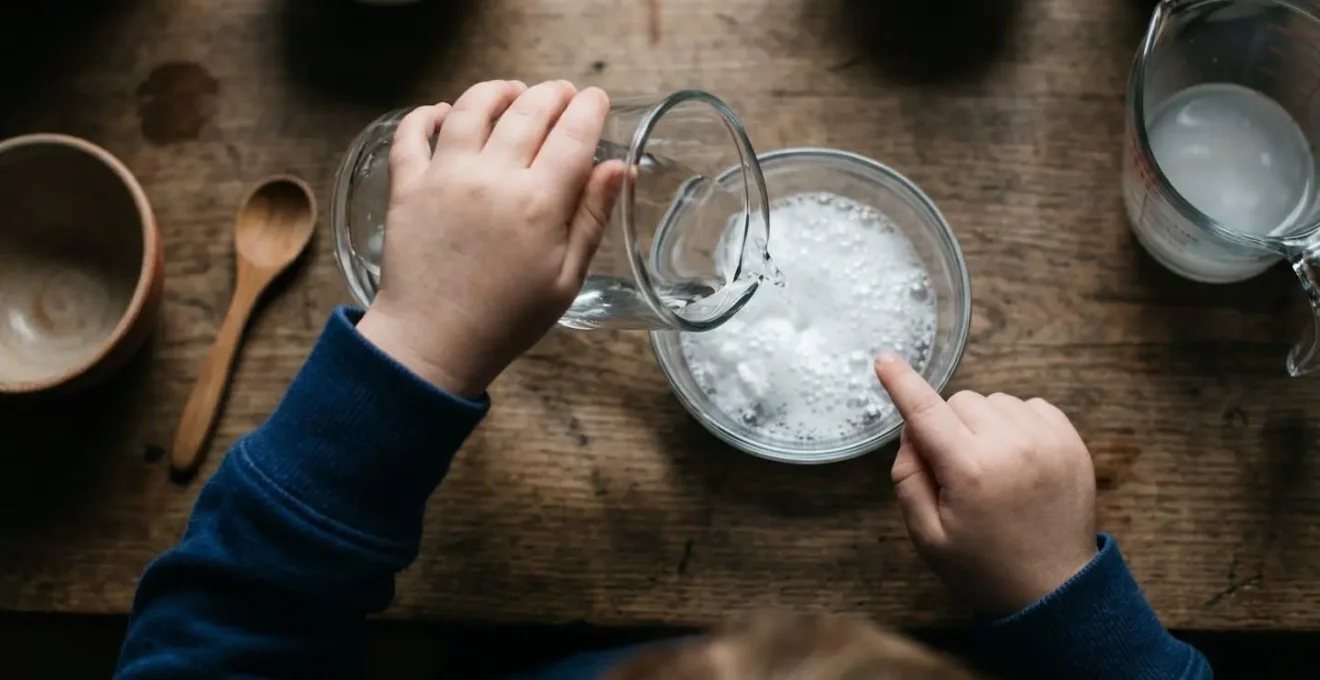
STEM (Science, Technology, Engineering, and Math) can sound intimidating, but for young children, it’s really just structured curiosity. The best STEM learning environment is not a lab with expensive kits, but the world around them—especially the kitchen. The kitchen is a place of transformation where children can safely observe chemical reactions, practice measurement, and see states of matter change firsthand. By reframing everyday tasks as scientific experiments, you build a foundational understanding of scientific principles.
Technology in early learning isn’t about passive screen time; it’s about creation. Challenge your child to become a producer, not just a consumer. This could be as simple as using a tablet to film a “nature documentary” in the backyard or creating a stop-motion video with clay figures. Engineering can be explored by building bridges for toy cars out of household materials, applying a simplified version of the design cycle: Ask, Imagine, Plan, Create, and Improve. These activities teach problem-solving and resilience in a playful context.
The goal is to cultivate a mindset of inquiry. Encourage your child to ask “What if…?” and “Why?” Here are some simple, powerful STEM activities you can do at home with preschoolers:
- Kitchen Chemistry: Mix baking soda and vinegar in a bottle with a balloon over the top to watch it inflate, demonstrating how a chemical reaction can produce a gas.
- State Changes: Observe butter melting in a pan, water boiling into steam, or juice freezing into popsicles to understand how matter changes between solid, liquid, and gas.
- Reverse Engineering: With supervision, let your child deconstruct an old, unplugged electronic device like a remote control or a toy to see the components inside and discover how it works.
By shifting your focus from creating a classroom to cultivating a learning ecosystem, you unlock the true potential of home education. The ultimate goal is to build an environment that is responsive, engaging, and empowers your child to take the lead in their own intellectual adventure. This foundation of curiosity and autonomy will serve them for a lifetime. To start your journey, begin with one small change, like setting up an art cart or a nature table, and watch how it transforms your day.